Hong Kong at a Human Pace: Food, Ferries, and the Vertical City

Quick Essentials
- 📍 Best Time to Visit: October through early December — humidity drops, skies clear, and the city finally feels walkable without wringing out your shirt
- ✈️ Getting There: Search flights to Hong Kong on Skyscanner | Direct from Vancouver, San Francisco, Los Angeles, New York, London, Sydney
- 🏨 Where to Stay: Browse hotels in Hong Kong | Our neighborhood picks below
- 🎟️ Don’t Miss: Private food tour through Hong Kong’s dai pai dong and cha chaan teng stalls
- 🚗 Getting Around: No car needed — grab an Octopus card at any MTR station for ferries, trams, and buses
- 💰 Budget Range: $150–$300 USD per day for comfortable mid-range travel; $400+ for splurge-tier hotels and fine dining
Hong Kong moves fast. The MTR swallows commuters whole and deposits them across the harbour in four minutes. Escalators carry pedestrians up the Mid-Levels so efficiently that walking feels like a political act. The city’s default speed is urgent, and most visitors match it — ticking through Victoria Peak, the Big Buddha, and a night market before flying out convinced they’ve seen the place.
They haven’t. Not really. Hong Kong reveals itself to people who resist the tempo. The city is dense, yes, but density here isn’t a problem to solve — it’s the entire point. Neighborhoods stack on top of each other like geological layers: a wet market below a temple below a rooftop bar below someone’s grandmother’s apartment. You experience this vertically, on foot, one lane at a time.
The real Hong Kong lives in the space between attractions. It’s the dai pai dong cook who’s been working the same wok station for thirty years, the Star Ferry crossing that costs less than a stick of gum, the double-decker tram that rolls through a century of streetlife at walking pace. None of it requires a ticket or a queue. It requires time.

When the City Feels Right
October changes everything. The summer humidity — the kind that fogs your glasses stepping out of any air-conditioned building — finally breaks. Skies sharpen. Temperatures settle into the low-to-mid twenties Celsius, which means you can walk Hong Kong’s hills without questioning your life choices.
This window runs through early December. By mid-December the temperature drops further but remains mild by most standards — light jacket weather, not winter gear. January and February bring Lunar New Year, which is spectacular but also means higher prices and booked-out restaurants.
Avoid June through September unless you enjoy 35°C heat, 90% humidity, and the occasional typhoon rearranging your plans. Hong Kong is technically a year-round destination, but the autumn months are when the city is at its most comfortable for the kind of slow, walking-heavy exploration that makes this place sing.
If you time it right, the Mid-Autumn Festival lands in late September or early October. Victoria Park fills with lantern displays, mooncakes appear in every bakery window, and the whole city takes on a warm, celebratory glow that doesn’t feel manufactured for tourists.
Where to Sleep Without Missing the Point
The first decision is which side of the harbour. Both are excellent. Both are connected by ferries and trains that run with Swiss precision. But they feel like different cities.
Sheung Wan, Hong Kong Island. This is where old Hong Kong and new Hong Kong negotiate in real time. Dried seafood shops on one block, a third-wave coffee roaster on the next. Man Mo Temple sits a five-minute walk from independent galleries. The streets are narrow and vertical, and walking them at dusk — when the incense from the temple drifts across Hollywood Road — is one of the best sensory experiences in the city. The Figo is a smart boutique pick here: thoughtfully designed rooms, a rooftop pool, and prices that don’t punish you for choosing the Island side.
→ The Figo, Sheung Wan
Tsim Sha Tsui, Kowloon. The classic. The waterfront promenade delivers Hong Kong’s most famous view: the Island skyline reflected in Victoria Harbour. Canton Road handles the luxury shopping, but the real draw is proximity — the Star Ferry terminal, the Hong Kong Museum of Art, Temple Street Night Market, and a dozen dim sum halls are all walkable. For the full experience, The Peninsula Hong Kong is the splurge that earns its price. The lobby alone is worth the visit, and the harbourfront rooms frame a view that has defined this city for a century.
→ The Peninsula Hong Kong
Sham Shui Po is for travelers who care more about food than thread count. It’s the grittiest, most food-obsessed neighborhood in Hong Kong — dai pai dong on every corner, fabric markets, electronics stalls, and zero pretension. The MTR gets you to Central in fifteen minutes. If eating is why you came, stay here.
→ Browse hotels in Sham Shui Po
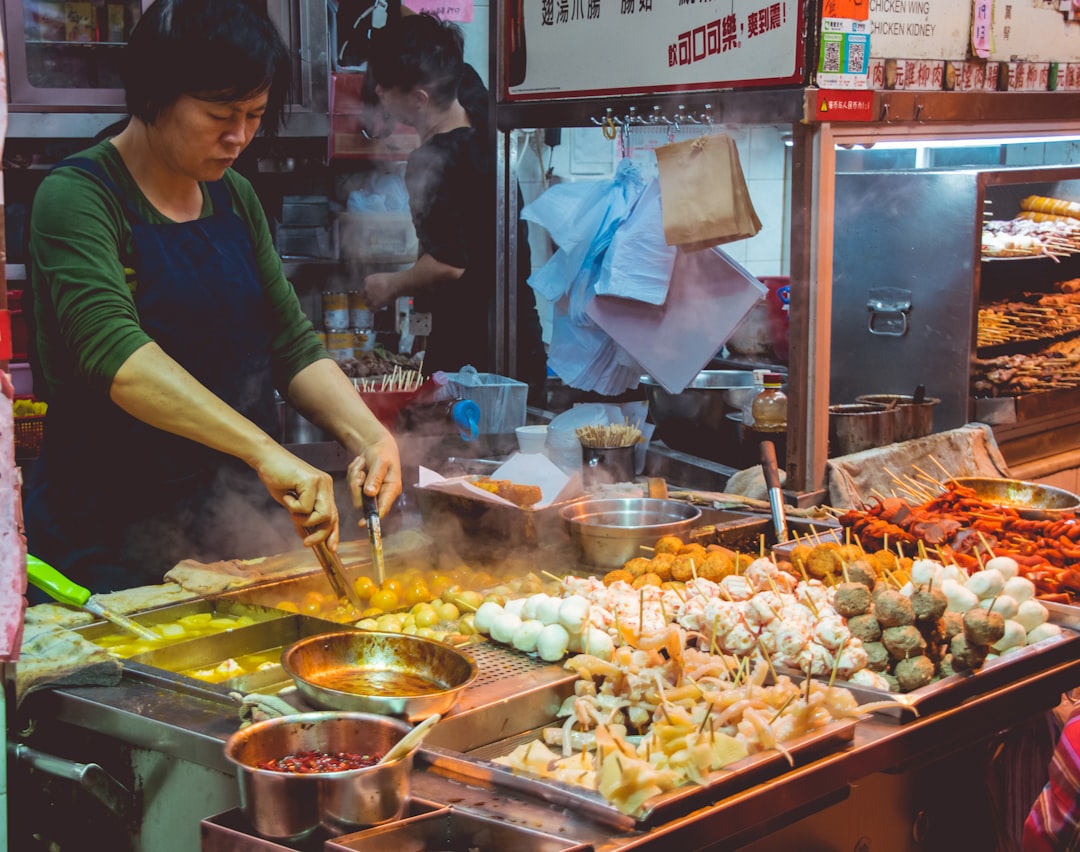
Eating Your Way Through the Layers
Hong Kong’s food scene doesn’t need a hard sell. It needs a map. The variety packed into this city’s small footprint is staggering, and the best meals often cost the least.
Start at a dai pai dong. These open-air street stalls are a dying breed — the government stopped issuing new licenses years ago, and the ones that remain operate under grandfather clauses. Sing Heung Yuen on Gough Street in Central draws lunchtime queues for its tomato noodles: a simple broth with instant noodles and canned tomato that somehow transcends its ingredients. In Sham Shui Po, Oi Man Sang cooks over jet-fuel burners for maximum wok hei — the smoky, seared flavor that defines Cantonese stir-fry. These places aren’t quaint. They’re essential, and they won’t exist forever.
Dim sum is non-negotiable. Tim Ho Wan earned a Michelin star and kept its prices absurdly low — the baked barbecue pork buns alone justify the trip. For the old-school experience, seek out a place that still does cart service, where the aunties wheel trays of har gow and siu mai past your table and you point at what you want. Lin Heung Tea House was the classic for this, though the dim sum landscape shifts — ask locally for the current best.
Roast goose. Kam’s Roast Goose or Yung Kee — either will deliver crispy skin, properly rendered fat, and rice soaked in the drippings. This is one of Hong Kong’s supreme pleasures, and it costs less than a mediocre sandwich in most Western cities.
→ Guided food tour through Hong Kong’s best street food stalls
The cha chaan teng. Hong Kong’s version of a diner, where the menu runs fifty items deep and everything arrives in under three minutes. Order a pineapple bun with butter — the bo lo yau. It’s not pineapple-flavored; the name comes from the crumbly crust pattern. Split it open, stuff in a cold slab of butter, and eat it before the butter melts completely. Wash it down with Hong Kong-style milk tea, which is strained through a cloth filter until it’s dense and creamy.
Egg waffles from a street vendor. Gai daan jai — the crispy, pillowy orbs sold from carts across the city. Quality varies wildly. The best ones are hot, golden, and slightly crisp on the outside with soft centers. Eat them walking.

What to Do When You’ve Already Seen the Skyline
Victoria Peak is fine. You’ve been, or you’ll go. Here’s what matters more.
Ride the Ding Ding end to end. Hong Kong’s double-decker trams run from Kennedy Town to Shau Kei Wan — the full route takes about eighty minutes and costs next to nothing. Sit on the upper deck, front row if you can get it. The tram rolls through a cross-section of Hong Kong Island’s life at walking pace: wet markets, office towers, residential blocks, temples, schools. There’s no audio guide. There doesn’t need to be. This is the city narrating itself.
→ Half-day city highlights tour with Peak Tram and Star Ferry
Take the Star Ferry at dusk. The Tsim Sha Tsui to Central crossing at sunset is the single best thing you can do in Hong Kong for under a dollar. The harbour opens up around you, the skyline shifts from daytime glass to evening glow, and for seven minutes the city feels almost still. Walk along the Central waterfront after you disembark.
Disappear into Sham Shui Po. Cross the harbour, exit the MTR, and just walk. The fabric market on Ki Lung Street is one of Asia’s best. The electronics stalls on Apliu Street are chaotic and wonderful. But the real draw is the food density — dai pai dong and noodle shops stacked along every block, most without English menus, all of them good. This is the neighborhood that food-obsessed locals drive across the city to eat in.
Take a sampan through Aberdeen. The floating village at Aberdeen is one of the last remnants of Hong Kong’s fishing-village heritage. A sampan ride through the working harbour takes twenty minutes and costs a few dollars. It’s touristy, yes, but the bobbing junks and the smell of diesel and salt water are genuine.
→ Aberdeen fishing village and sampan ride
Escape to Lantau if you need air. The Ngong Ping 360 cable car delivers mountain and harbour views, and the Big Buddha is genuinely impressive in scale. But the real reason to go is the quieter trails on the island’s western side — a reminder that Hong Kong is 75% green space, a fact the skyline never lets you guess.
→ Lantau Island and Big Buddha tour with Ngong Ping 360
Getting Around: The Ferry, the Tram, and Your Feet
Hong Kong’s MTR is one of the world’s best subway systems — fast, clean, air-conditioned, and relentlessly efficient. Use it when you need to cover distance. But don’t make it your default.
The Star Ferry and the Ding Ding tram are not just transport. They’re experiences. The ferry crosses Victoria Harbour in seven minutes and runs every few minutes during the day. The tram traverses the northern shore of Hong Kong Island at a pace that lets you actually see the city. Both cost almost nothing and both give you something the MTR never will: a view.
Walking is how you discover the city’s vertical layers. Hong Kong’s streets climb steeply, and the Mid-Levels Escalator — the world’s longest outdoor escalator system — connects Central to the residential slopes above. Ride it up, walk down through the side streets. This is where the good restaurants hide.
An Octopus card handles everything: MTR, trams, ferries, buses, and most convenience stores. Load one at any MTR station and stop thinking about money for the rest of the trip.
Plan Your Trip to Hong Kong
Best time to visit: October through early December — cool, dry, and clear. The city’s best walking weather.
✈️ Getting There
Search flights to Hong Kong on Skyscanner
🏨 Where to Stay
- The Figo, Sheung Wan — Boutique design with a rooftop pool, in the heart of Hong Kong Island’s most walkable neighborhood
- The Peninsula Hong Kong — The harbourfront grand dame of Kowloon, worth every dollar for the view and the history
🎟️ What to Book in Advance
- Private food tour: Dai Pai Dong and Cha Chaan Teng tastings
- Half-day city highlights with Peak Tram and Star Ferry
- Lantau Island and Big Buddha tour with Ngong Ping 360
📦 Pack Right
Lightweight crossbody bag — Hong Kong’s steep streets and crowded markets reward hands-free travel
Some links in this post are affiliate links. If you book through them, CuriosityTrail earns a small commission at no extra cost to you. We only recommend things we’d book ourselves.