The Real Toronto: How to Explore the City’s Extraordinary Neighborhood Diversity
Quick Essentials
- ✈️ Flights:
Search flights to Toronto
- 🏨 Hotels:
Browse hotels in Toronto
- 🎟️ Top Experience:
Kensington Market & Chinatown Food Walking Tour
- 🚗 Car Rental:
Compare rental cars in Toronto
Most people visit Toronto and stay downtown. They walk the Harbourfront, ride up the CN Tower, spend a couple of hours at the ROM, eat dinner somewhere on King West, and leave thinking they’ve seen the city. They haven’t, really. They’ve seen the lobby.
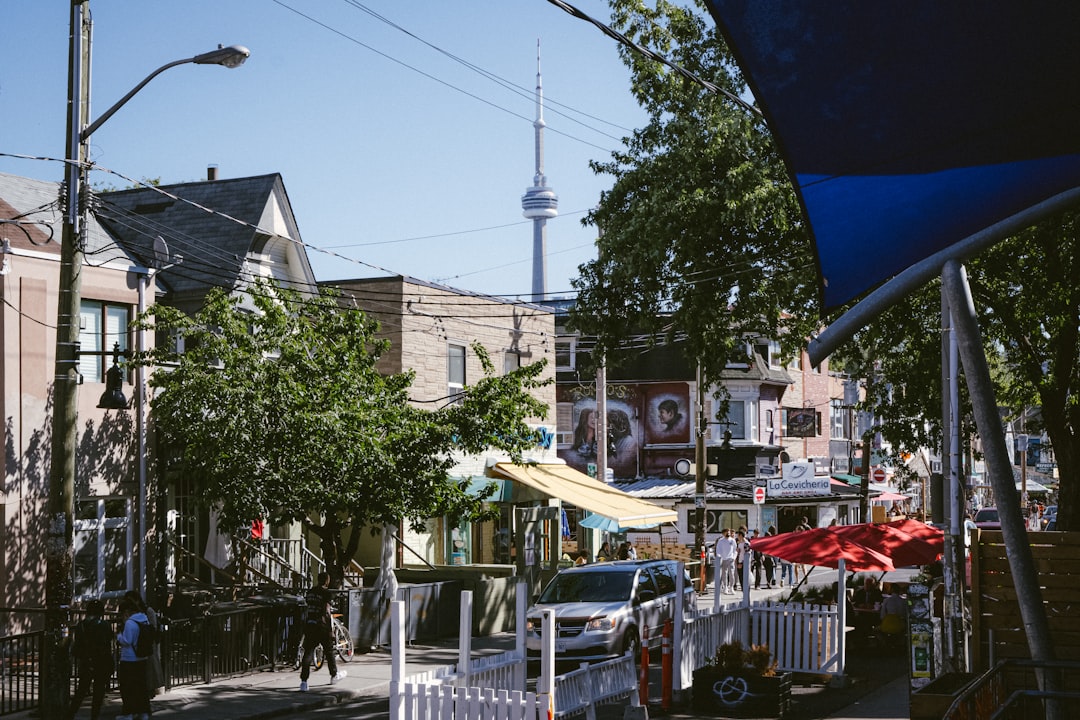
Toronto’s real character lives in its neighborhoods — over 170 of them, shaped by successive waves of immigration from every corner of the world. Each one has its own rhythms, its own food, its own architecture, its own story about who arrived and when. The downtown core is fine. It’s a perfectly adequate collection of glass towers and chain restaurants. But the city that people actually live in — the one that makes Toronto one of the most genuinely multicultural places on the planet — starts where the tourist maps end.
Food is the thread that connects all of it. You eat your way across Toronto’s neighborhoods and you start to understand the city in a way no museum exhibit or hop-on-hop-off bus can offer. A Jamaican patty in Kensington, Tibetan momos in Parkdale, dim sum in a Scarborough food mall, goat roti from a Trinidadian kitchen on the east side — each one tells you something about the community that built that block. That’s the trip worth taking.
Why the Neighborhoods Are the Point
Toronto’s diversity isn’t a marketing line. Nearly 80 percent of the city’s residents identify as visible minorities, and over 140 languages are spoken. But here’s the thing — that diversity isn’t concentrated in one photogenic district. It’s scattered across dozens of neighborhoods, each with a different origin story. Kensington Market was once the Jewish market district, then Portuguese, then a mosaic of everything. Koreatown took shape in the 1970s along Bloor Street West. Parkdale went from grand Victorian to working-class to one of the most interesting food corridors in the city, almost entirely under the radar.
The way to do Toronto properly is to pick four or five neighborhoods, spread them across the compass, and give each one a half-day. Walk, eat, look around. The streetcar system makes this absurdly easy. You don’t need a car. You barely need a plan.
Kensington Market and Chinatown: Where the Layers Run Deep
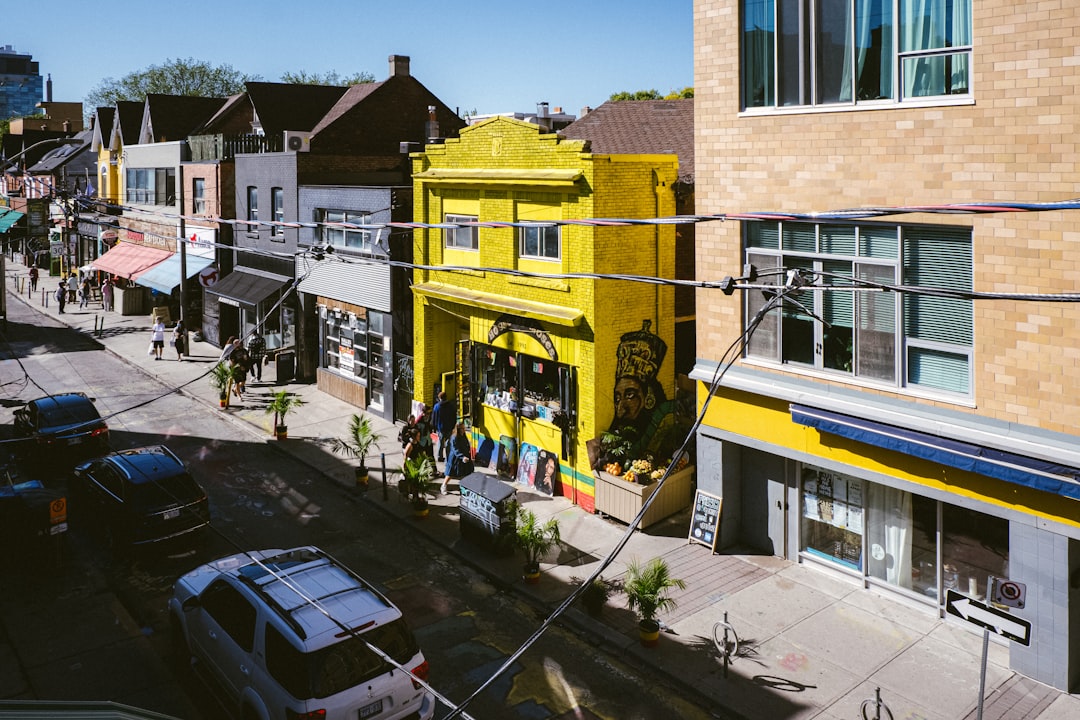
Kensington Market is the neighborhood that lands on every Toronto list, and for once, the hype is earned. It’s a tight grid of narrow streets packed with vintage shops, produce stalls, cheese vendors, and some of the most interesting casual food in the city. The key is that it doesn’t feel curated. It’s loud and slightly chaotic and smells like twelve different kitchens at once. That’s the charm.
Start at Torteria San Cosme for a torta that takes Mexican street sandwiches seriously. Walk a block and pick up a flaky Jamaican patty from Golden Patty — the pastry is turmeric-yellow, the filling is scotch bonnet–spiced, and one is never enough. Seven Lives does fish tacos that attract a queue, and they’re worth the wait. The market sprawls directly into Chinatown, where the bakeries and dumpling houses and roast meat shops take over. It’s one continuous walk, and you could spend an afternoon doing nothing else.
A guided food tour through both neighborhoods is actually worthwhile here. The Kensington Market and Chinatown walking tour covers ground you’d miss on your own and puts the immigrant history into context.
→ Kensington Market & Chinatown Food Walking Tour
The Danforth, Leslieville, and the East End
Everyone knows Greektown on the Danforth. The souvlaki shops and bakeries along Danforth Avenue east of Broadview station have been there for decades, and they’re still good. But keep walking east past Pape station and the strip evolves. Ethiopian and Eritrean restaurants have moved in alongside the Greek institutions, and some of the city’s best-kept dining secrets are on that stretch. Order injera and a selection of wots at one of the smaller spots and you’ll eat better than most downtown restaurants for a fraction of the price.
South of the Danforth, Leslieville has become one of Toronto’s most appealing neighborhoods for visitors who want a local pace. Queen Street East through here is lined with independent coffee shops, brunch spots, vintage furniture stores, and small galleries. It’s the kind of neighborhood where you sit in a window seat for two hours and don’t feel rushed. There’s no single must-do attraction — the neighborhood itself is the attraction.
Koreatown, Little Italy, and the West End Corridor
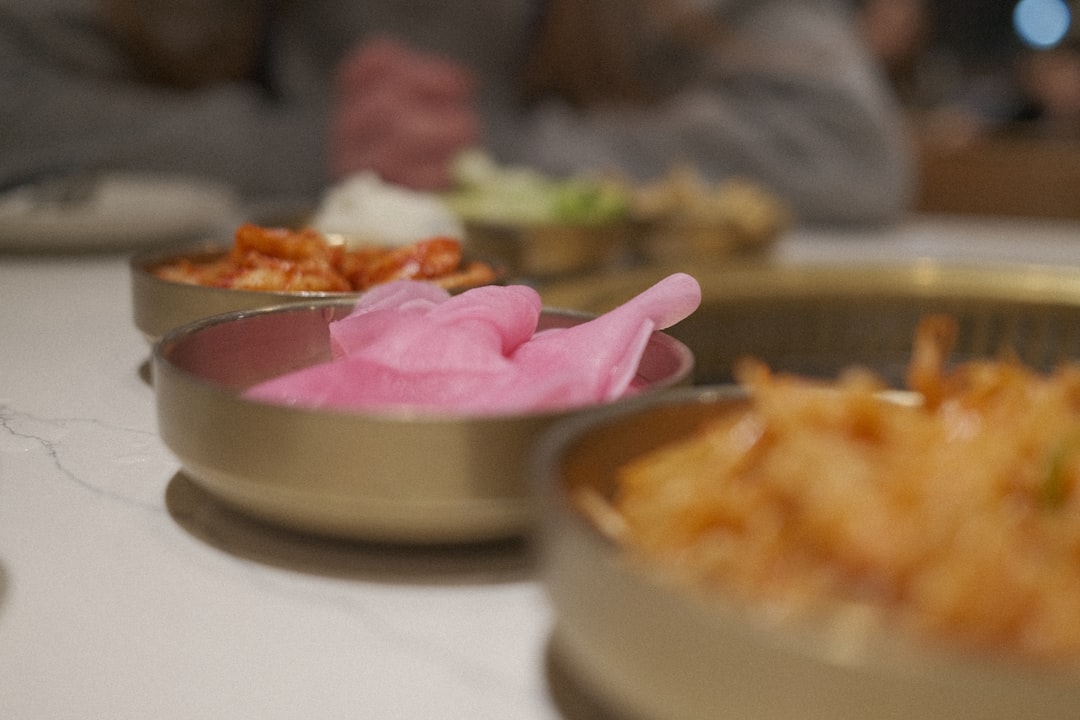
Bloor Street West between Bathurst and Christie stations is Koreatown, and it’s electric. Korean BBQ restaurants glow through fogged windows at night, and the karaoke bars stay open late. Mapo Korean BBQ is the one to try — order the bulgogi and the seafood pancake and you’ll be glad you skipped dinner downtown. Hodo Kwaja, a few doors down, makes walnut-shaped pastries filled with sweet red bean paste. They’re addictive and cost almost nothing.
A short walk south brings you to College Street and Little Italy, which has evolved well past its name. Yes, the old-school Italian espresso bars are still here, and they’re still excellent. But the strip now includes wine bars, ramen counters, and some of Toronto’s better cocktail spots. It’s a neighborhood that changed without losing its roots.
Parkdale: The Quiet Revolution on Queen West
Parkdale is where I’d send any experienced traveler who says they’ve already done Toronto. Queen Street West through this neighborhood has quietly assembled one of the most diverse food corridors in the city, and almost no visitors know about it. Within a few blocks you can get Tibetan momos, Sri Lankan hoppers, Guyanese cook-shop lunch, and some rather good craft beer. The buildings are Victorian, the rents are (relatively) lower, and the vibe is distinctly un-touristic.
The momos at Loga’s Corner are the ones to try. Steamed, with a fiery dipping sauce. Pair them with a Sri Lankan egg hopper from one of the nearby spots and you’ve had a lunch that most travel guides won’t mention for another five years. Parkdale doesn’t perform for visitors. That’s what makes it good.
Scarborough: The Suburbs Where Toronto Eats Best
This is the part where most travel writing fails Toronto. The suburban stretches of Scarborough — particularly around Midland and Finch, and the Pacific Mall area — contain some of the most extraordinary Chinese, South Asian, and Southeast Asian food in the city. Food courts in strip malls that look utterly unremarkable from the outside serve dishes that would cost three times as much in the downtown core. The quality is outstanding precisely because the audience is the community itself, not tourists.
Getting out here requires a bit more commitment — it’s a bus or subway ride from the centre. But if you care about eating well and seeing the parts of Toronto where diversity isn’t a brochure word but simply daily life, Scarborough is essential. This is where nearly half the city’s immigrant communities actually live. Skip it and you’ve missed the real story.
What to Eat and Where to Find It
Peameal bacon sandwich at Carousel Bakery, St. Lawrence Market. Salt-and-sugar brined pork loin rolled in cornmeal, served on a kaiser roll. It’s Toronto’s signature dish and it’s been made at this counter for over 50 years. Go Saturday morning.
Jamaican beef patty at Golden Patty, Kensington Market. Toronto has the largest Jamaican diaspora outside Jamaica. The patty is the proof — flaky, spiced, perfect walking food.
Trinidadian doubles from any good roti shop. Curried chickpeas sandwiched between two pieces of soft fried bara bread. Street food that’s become a citywide staple.
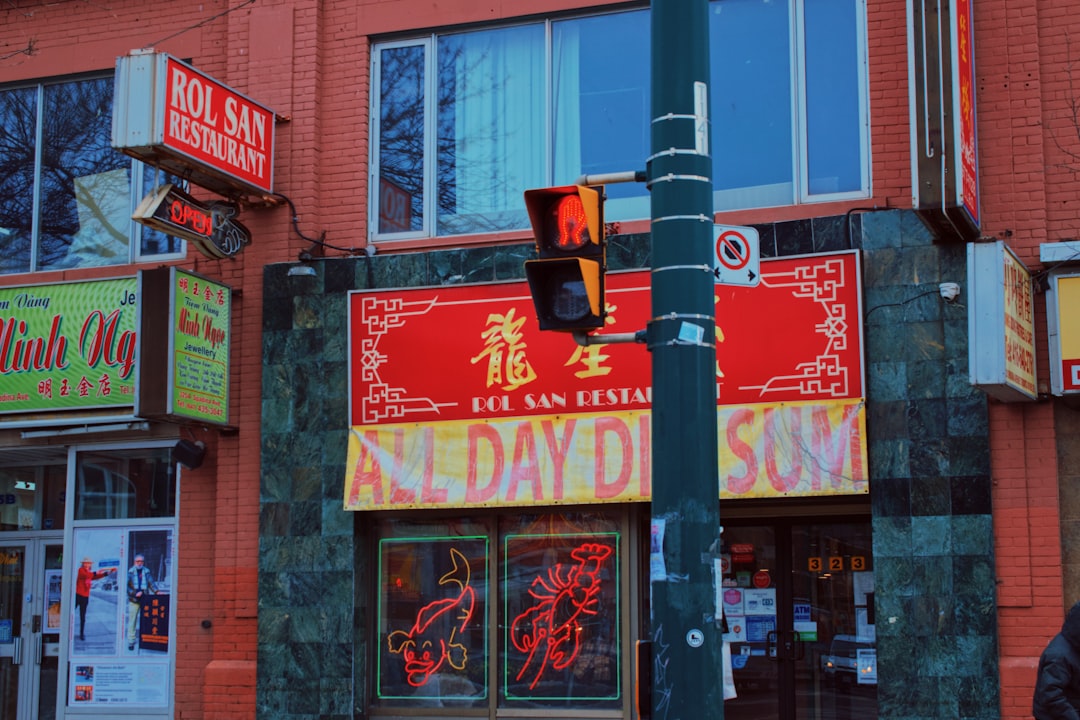
Dim sum in Scarborough or downtown Chinatown. Shrimp dumplings, char siu bao, congee. Toronto’s Cantonese dim sum scene is among the best in North America. The Scarborough spots are the ones the locals queue for.
Goat roti. Trinidadian-style roti wraps with curried goat are a Toronto essential. Find the old-school spots, not the trendy ones. You’ll know the right place by the queue and the worn-in décor.
The St. Lawrence Market and Distillery District food tour is a solid introduction if you want a guided start — it covers the peameal bacon sandwich and several other essential stops.
→ St. Lawrence Market & Distillery District Food Tour
When to Go and Where to Base Yourself
Timing matters more than usual in 2026. Toronto is hosting six FIFA World Cup matches in June and July, which means 300,000-plus extra visitors, strained transit, and hotel rates that make London look reasonable. If you can, come in May or September instead. May brings cherry blossoms in High Park and Doors Open Toronto, when 150+ normally closed buildings open to the public for free. September means TIFF — the Toronto International Film Festival — and the beginning of fall colour. Both months offer hotel rates 40–50% below summer peak.
Where to stay: Resist the temptation to book a downtown tower hotel. Stay in a neighborhood instead.
Queen West / West Queen West. Walking distance to Kensington Market, Little Italy, and Chinatown. Independent restaurants and galleries on every block. This is where you want to be if neighborhood culture is the point of your trip.
→ Browse Queen West hotels on Booking.com
Leslieville. Quieter, genuinely local, with easy streetcar access to the core. Great brunch spots and a village-within-a-city feel.
→ Browse Leslieville hotels on Booking.com
The Annex. Close to the University of Toronto, Koreatown, and the Royal Ontario Museum. Residential, bookish, with neighborhood pubs and easy subway access to everything.
→ Browse Annex hotels on Booking.com
Plan Your Trip to Toronto
Best time to visit: May through June or September through October — shoulder season rates, thinner crowds, and the best weather for walking neighborhoods all day.
✈️ Getting There
Search flights to Toronto on Skyscanner
🏨 Where to Stay
-
Queen West neighborhood — walking distance to Kensington, Little Italy, and Chinatown
-
Yorkville — Toronto’s most polished neighborhood for a splurge-worthy stay
🎟️ What to Book in Advance
-
Kensington Market & Chinatown Food Walking Tour
-
St. Lawrence Market & Distillery District Food Tour
-
Distillery District History & Culture Walk
Some links in this post are affiliate links. If you book through them,
CuriosityTrail earns a small commission at no extra cost to you.
Recommendations are chosen on merit; commissions never decide what’s included.