Wittenberg, Germany: A Thoughtful Traveler’s Guide to the Birthplace of the Reformation
Quick Essentials
- 📍 Best Time to Visit: May through early October — the old town is compact and best on foot, and June’s Luther’s Wedding festival fills the streets with costumed celebrations you won’t find anywhere else.
- ✈️ Flights: Search flights to Berlin | Direct trains from Berlin (1 hour), Leipzig (40 min)
- 🏨 Hotels: Browse hotels in Wittenberg | Three strong options below
- 🎟️ Top Experience: Luther 1517 – Wittenberg 360° Panorama
- 🚂 Trains: Regional trains from Berlin Hauptbahnhof (1 hour) or Leipzig (40 min) — no car needed
The Revolution That Started Small
You already know the broad strokes — ninety-five theses, a church door, the fracturing of Christendom. What surprises you about Wittenberg is the scale. This is not a grand capital. There is no monumental boulevard, no imperial architecture designed to intimidate. The town where Western Christianity split in two fits comfortably within a twenty-minute walk.
That modesty is the point. Wittenberg works on you precisely because it hasn’t been inflated into something it isn’t. The thesis door is there, yes — cast in bronze now, the originals long burned — but it faces an ordinary street. Luther’s house is large but domestic. The church where he preached every Sunday seats a few hundred. The revolution happened at human scale, and standing in these spaces, you feel that.
The other thing that catches you off guard: this is still a living German town. Not a theme park, not a heritage precinct roped off for tour groups. People buy bread on the Holzmarkt. Students cross the same squares Melanchthon walked. The Brauhaus pours beer in a courtyard that hasn’t changed purpose in four centuries. Wittenberg earns an overnight — or at least a long, unhurried day — because the history is inseparable from the town’s ongoing daily life.
The Reformation Trail: Seeing It Right
The sites are clustered and walkable, which means you don’t need a plan so much as a pace. Slow down. The temptation is to tick off the church, the house, the museum, and catch the next train back to Berlin. Resist that.
Luther House (Lutherhaus) is the essential stop — a former Augustinian monastery where Luther lived for thirty-five years with Katharina von Bora. The museum inside holds the first German-language Bible and enough original material to bring the intellectual revolution into focus. Give it ninety minutes, not forty-five. The upper floors are where it gets interesting. → Guided Reformation Walking Tour
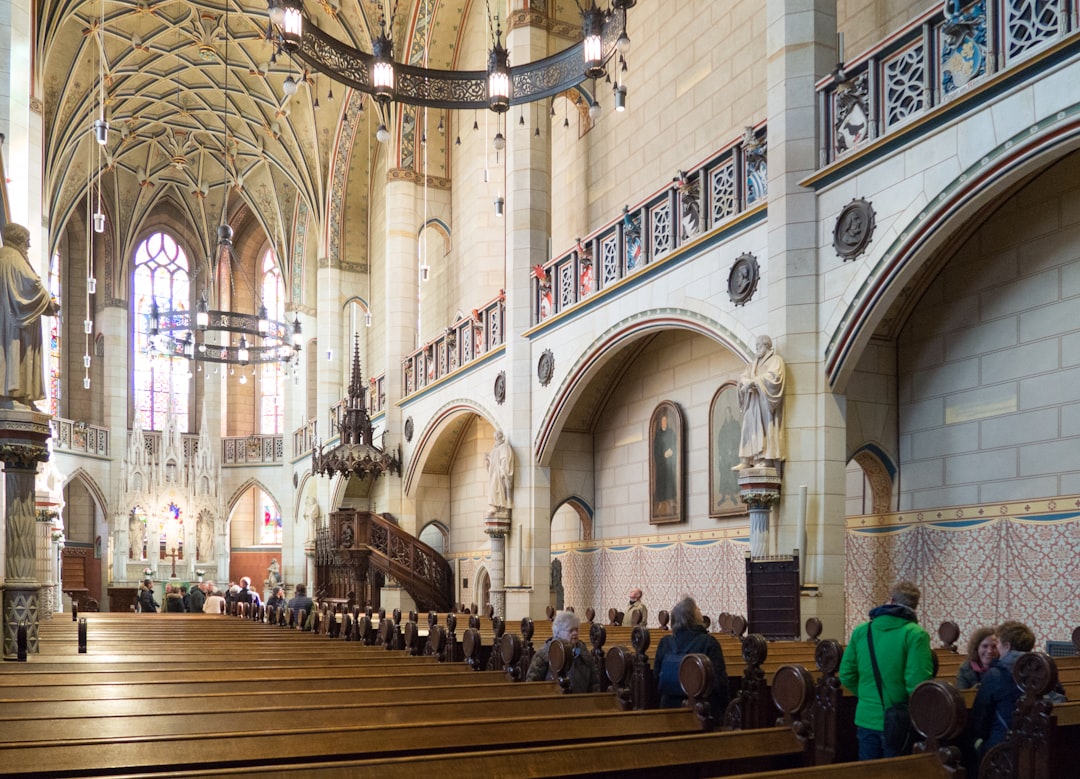
The Castle Church (Schlosskirche) draws every visitor to its bronze thesis door, but step inside. The interior was rebuilt in the 19th century — it’s not what Luther saw — but the tombs of Luther and Melanchthon are here, and the quiet is remarkable given the traffic outside.
Melanchthon House is the one most visitors skip, and it’s the one that deepens everything else. Philip Melanchthon was the intellectual engine of the Reformation — younger, more systematic, arguably more responsible for Protestant theology surviving Luther’s chaotic energy. His house is intimate and uncrowded. If you only have time for one house-museum, choose Luther’s. If you have time for both, Melanchthon’s is where you’ll linger.
Luther 1517 – Wittenberg 360° Panorama sounds gimmicky until you’re inside. Artist Yadegar Asisi built a 50-meter-wide, 250-foot-circumference painting that wraps completely around you — 16th-century Wittenberg at the moment the theses appeared. It works. The scale, the detail, the sound design. This is not a diorama. Give it twenty minutes. → Wittenberg 360° Panorama tickets
Lucas Cranach’s Courtyard is free, unmarked, and easy to walk past. Cranach was the Reformation’s visual propagandist — his workshop produced the woodcuts and portraits that carried Luther’s face and ideas across Europe. The courtyard itself is modest, but knowing what was made here changes how you see every painting in the Lutherhaus.
The Town Beyond the Trail
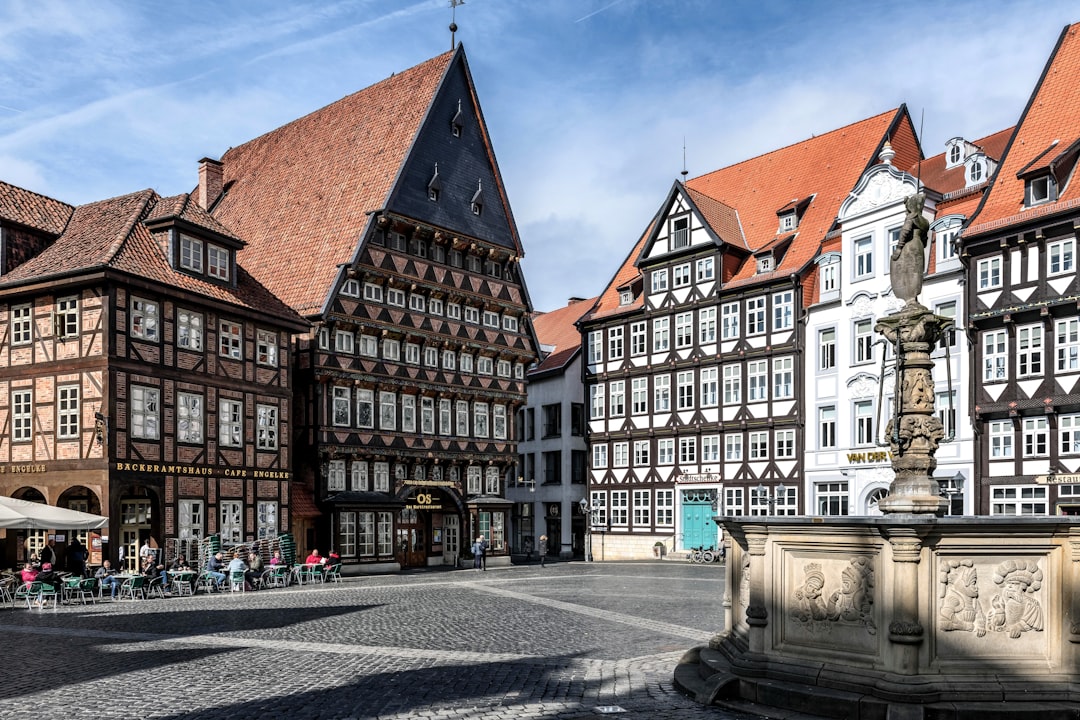
Wittenberg’s Altstadt rewards aimless walking. The Holzmarkt — the old wood market square — is lined with renovated Renaissance facades, and on weekday mornings it’s mostly locals at the bakeries. Kirchplatz, adjacent to St. Mary’s Church where Luther preached his sermons, has the particular quiet of a square that knows it’s important but doesn’t advertise the fact.
The Elbe runs along the town’s edge, and in summer the riverside paths are how locals spend their evenings. It’s flat cycling country — the regional bike paths heading east toward Dessau and the Bauhaus sites make a strong argument for an extra day if you have one.
The Table: Where to Eat in Wittenberg
German food gets dismissed too quickly by travelers who’ve been eating their way through Italy. Wittenberg won’t change anyone’s religion on that front, but it feeds you well if you know where to sit.
Wittenberger Kartoffelhaus Zum Schwarzen Bär is the local institution — hearty potato dishes in preparations you didn’t know existed. The building itself is one of the oldest in town. It’s not subtle food, but it’s specific and satisfying after a day of walking.
Brauhaus Wittenberg sits in the Beyerhof courtyard and brews its own Kuckucksbier. The portions are generous, the menu is unashamedly Saxony-Anhalt — pork, dumplings, seasonal game — and the courtyard seating in summer is the best dinner atmosphere in town.
Café Klatschmohn handles the afternoon Kaffee und Kuchen tradition properly. Regional cake, good coffee, a pace that suggests you’re not going anywhere for a while.
Luthersgarten earns a mention for its terrace and solid traditional cooking — it draws both tourists and locals, which is usually a reliable signal.
When to Come
The church doors and the museums are year-round, but Wittenberg’s personality shows best between May and October.
Mid-June brings Luthers Hochzeit — Luther’s Wedding festival — a multi-day celebration of Luther and Katharina von Bora’s 1525 marriage. Costumed parades, medieval market stalls, performances in the streets. It’s the town’s most exuberant weekend.
Late October centers on the Reformationsfest around October 31. If the wedding festival is celebratory, the Reformation festival is more reflective — concerts, lectures, church services, a market on the square. Both events are worth timing a trip around if your schedule allows.
Summer weekdays offer the quietest experience. The train from Berlin takes barely an hour, which means weekend day-trippers peak on Saturdays. Come on a Tuesday in July and you’ll have the Melanchthon House nearly to yourself.
Where to Sleep
Wittenberg is small enough that location barely matters — everything is walking distance. But character differs.
Hotel Alte Canzley sits directly beside the Castle Church. You step out the door and you’re facing the thesis door. The building is historic, rooms are comfortable, and the position is unbeatable for atmosphere. Mid-range pricing for what you get. → Hotel Alte Canzley, Wittenberg
Brauhaus Wittenberg doubles as a hotel — sleep above the brewery courtyard, walk downstairs for Kuckucksbier. Rooms are straightforward but clean, and the location in the old town is excellent. A strong choice if you want character over polish. → Brauhaus Wittenberg
Best Western Soibelmanns is the practical choice — 4-star, modern, a short walk from Lutherhaus. Not atmospheric, but reliable for travelers who prioritize a good night’s sleep over historic charm. → Best Western Soibelmanns Wittenberg
Getting Here
Wittenberg sits on the main rail line between Berlin and Leipzig. From Berlin Hauptbahnhof, regional trains take about an hour; ICE trains are faster but less frequent to this stop. From Leipzig, it’s 40 minutes.
The train station is a five-minute walk from the old town’s eastern end. No taxi needed, no bus required. You walk from the platform into the Reformation’s geography.
For travelers with a car, Wittenberg works as a half-day stop between Berlin and Dresden, or Berlin and Leipzig. Parking is available near the station and along the Elbe.
Making It Count
A focused half-day covers the Castle Church, Lutherhaus, and a meal. A full day adds Melanchthon House, the 360° Panorama, Cranach’s courtyard, and a proper wander through the Altstadt. An overnight lets you catch the town after the day-trippers leave — evening in the Brauhaus courtyard, morning light on the Holzmarkt before the tour buses arrive.
The experience deepens with context. Read a short biography of Luther before you come — not for the theology, but for the human drama. A monk who challenged an empire, married a nun, raised six children, and reshaped a civilization — all from this modest town on the Elbe. The place makes more sense when you arrive knowing the story.
Plan Your Trip to Wittenberg
Best time to visit: May through early October — June for Luther’s Wedding festival, late October for the Reformationsfest.
✈️ Getting There
Search flights to Berlin on Skyscanner — then a 1-hour regional train to Wittenberg.
🏨 Where to Stay
- Hotel Alte Canzley — directly beside the Castle Church, historic atmosphere at mid-range prices
- Brauhaus Wittenberg — sleep above the brewery courtyard with the town’s best beer downstairs
🎟️ What to Book in Advance
- Guided Reformation Walking Tour
- Luther 1517 – Wittenberg 360° Panorama
- Day Trip from Berlin with Reformation Guide
Some links in this post are affiliate links. If you book through them, CuriosityTrail earns a small commission at no extra cost to you. Recommendations are chosen on merit; commissions never decide what’s included.