Le Musée Marmottan Monet – Pars 16e
If you purchase through these links, we may earn a small commission at no extra cost to you.
Tucked away in the quiet elegance of Paris’s 16th arrondissement lies a treasure trove that will make any art lover’s heart flutter—the Musée Marmottan Monet. Though less crowded than its famous cousins like the Musée d’Orsay or the Louvre, this gem offers something they don’t: the largest collection of Claude Monet’s works in the world, in an intimate setting that feels like stepping into the artist’s private world.
But before we’re swept away by the brushstrokes of Impressionism, let’s talk about the house itself. The museum is housed in a former hôtel particulier, a grand private mansion originally owned by Paul Marmottan, an art historian and collector with a passion for Napoleon-era paintings. The mansion became a museum in 1934, following Marmottan’s death and bequest of the estate and his collections to the Institut de France. With its wood-paneled salons, marble staircases, and elegant chandeliers, the building still whispers the splendor of a bygone Parisian age.
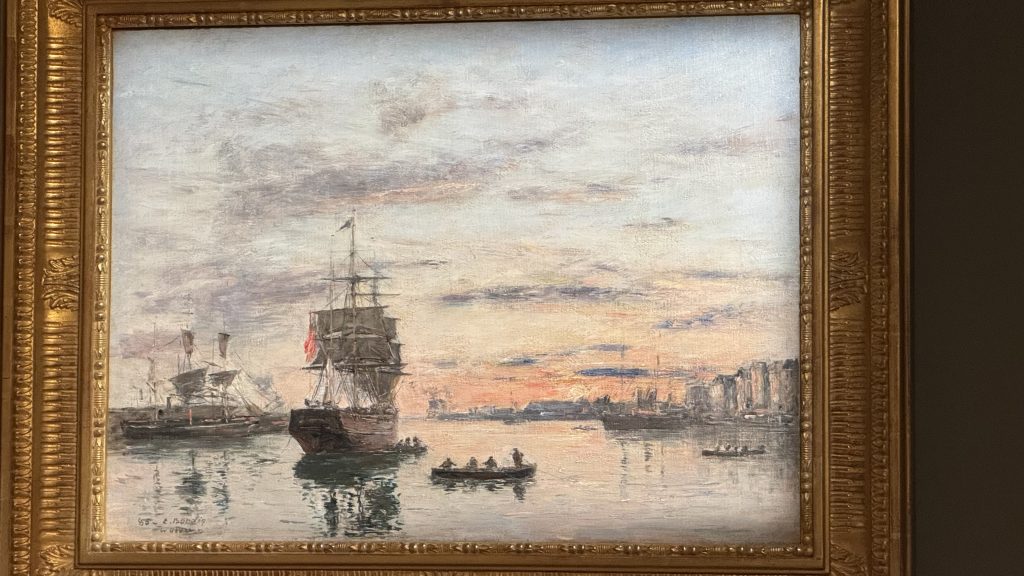
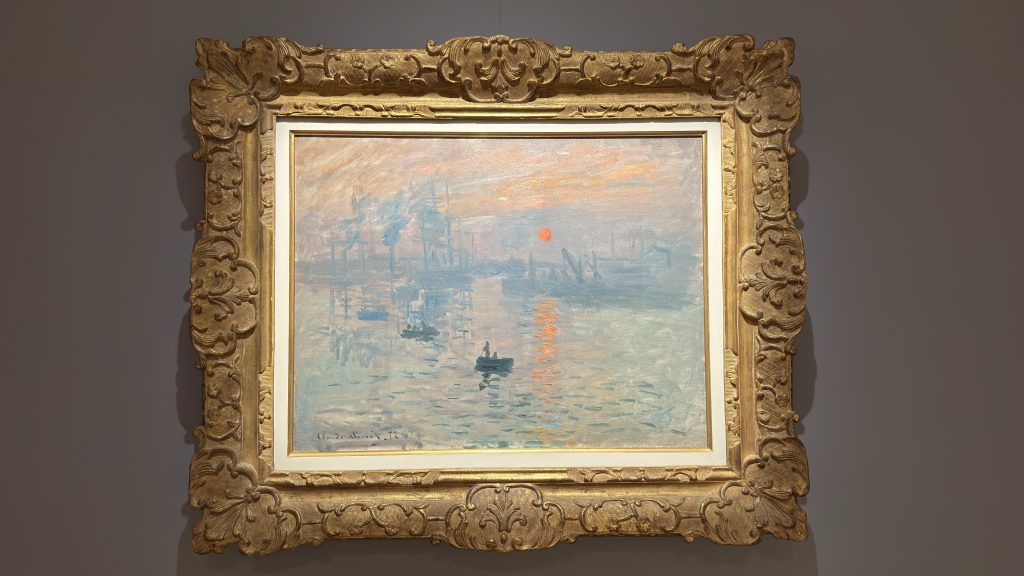
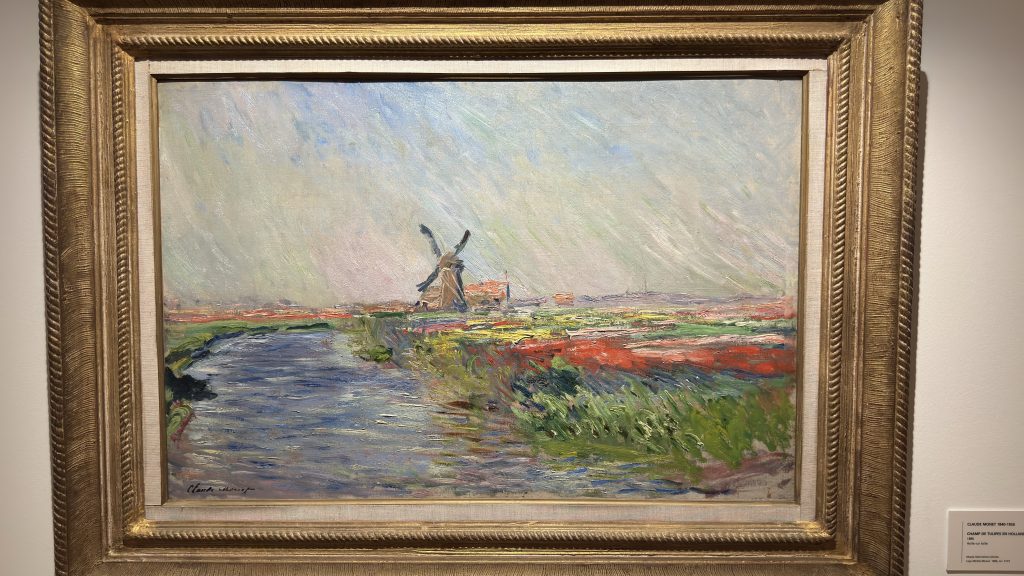
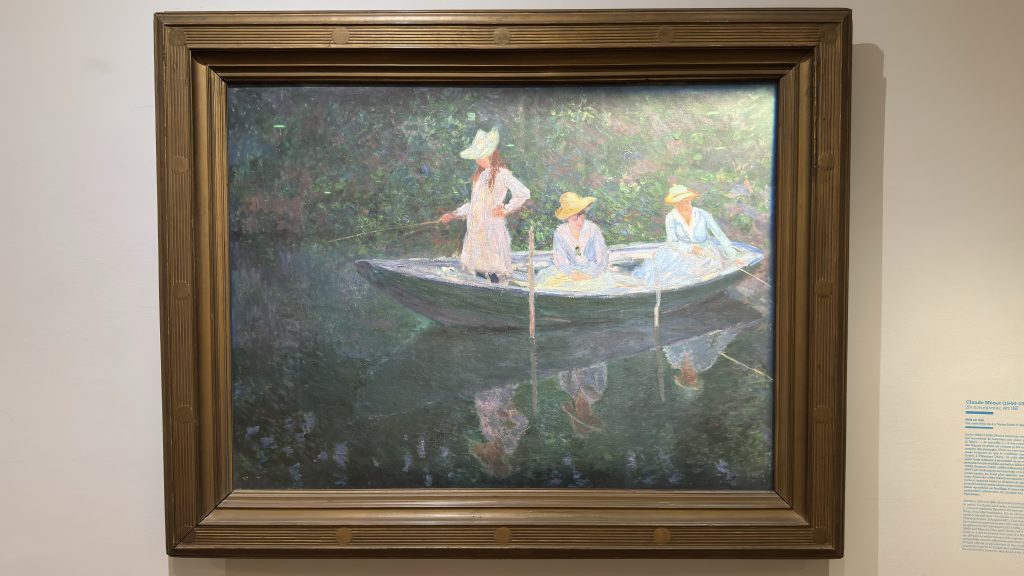
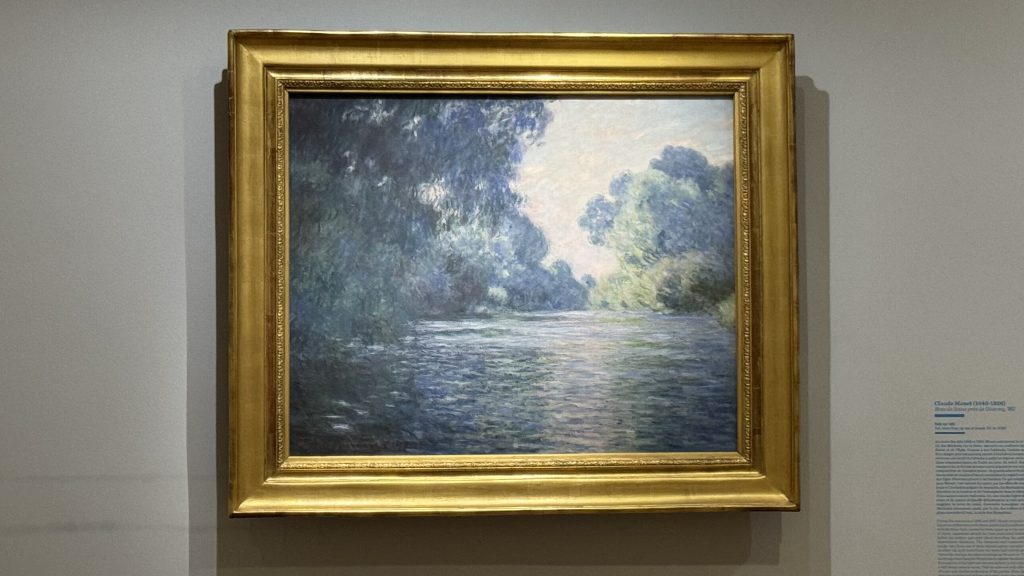
And yet, the soul of the museum is deeply Impressionist.
Descend to the lower level—a softly lit, serene space designed to cradle Monet’s luminous canvases. It’s here you’ll find his iconic Impression, soleil levant (Impression, Sunrise), the very painting that gave the Impressionist movement its name. The walls bloom with water lilies, haystacks in changing light, the Japanese bridge from Giverny… it feels less like a gallery and more like a dream.
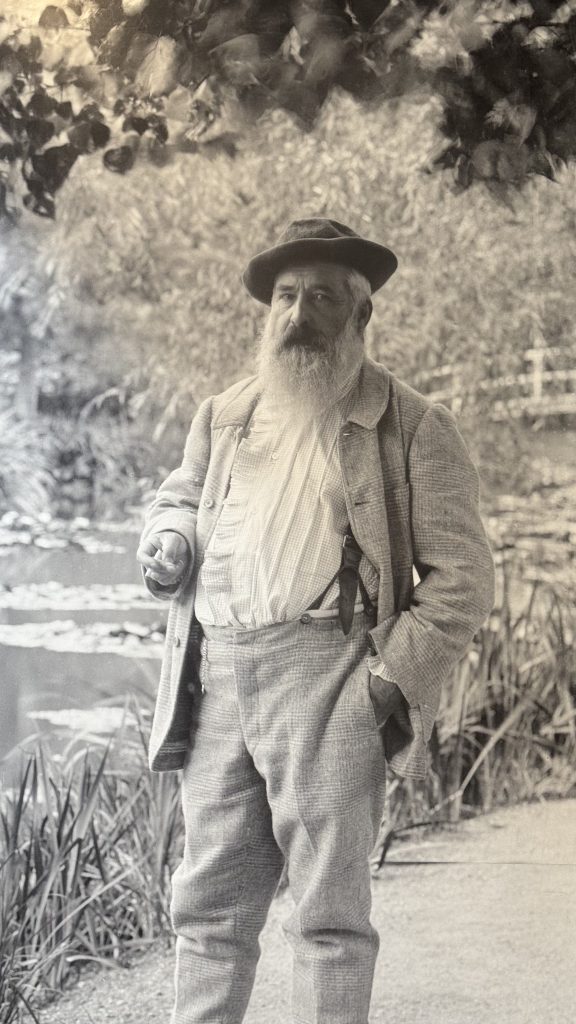
Venture upstairs, though, and you’ll find a small reality check: the top two floors are not air-conditioned. In the warmer months, prepare for a bit of a sultry stroll through some incredible but slightly stuffier rooms. Still, the light that pours through the tall windows adds a natural glow that feels fitting for an exhibition devoted to capturing fleeting moments in nature.
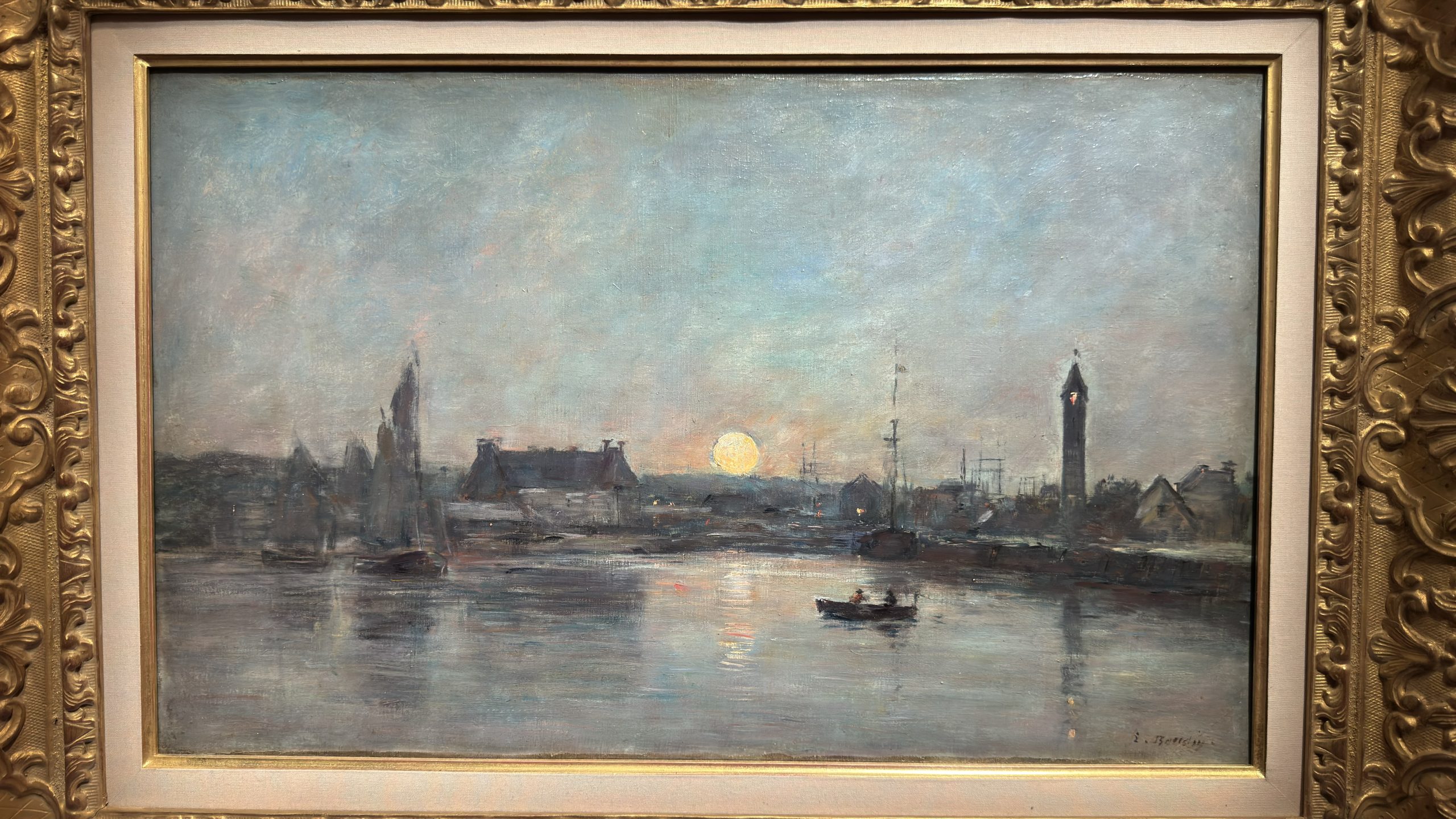
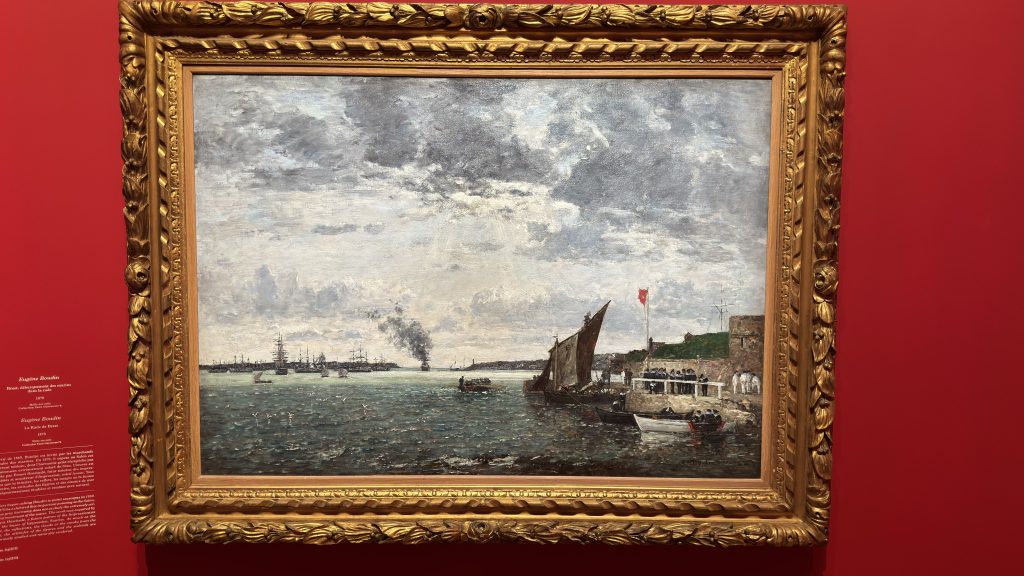
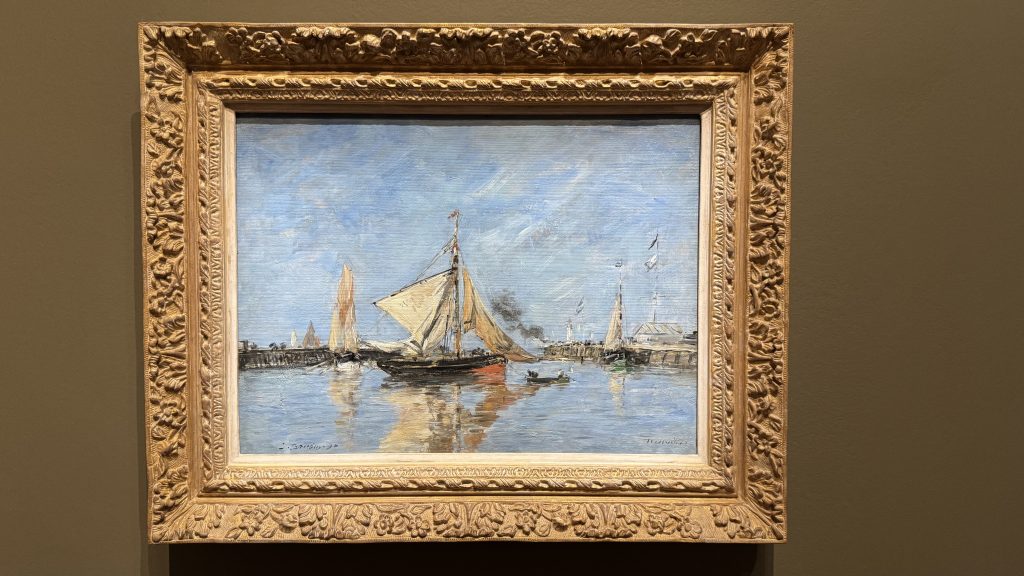
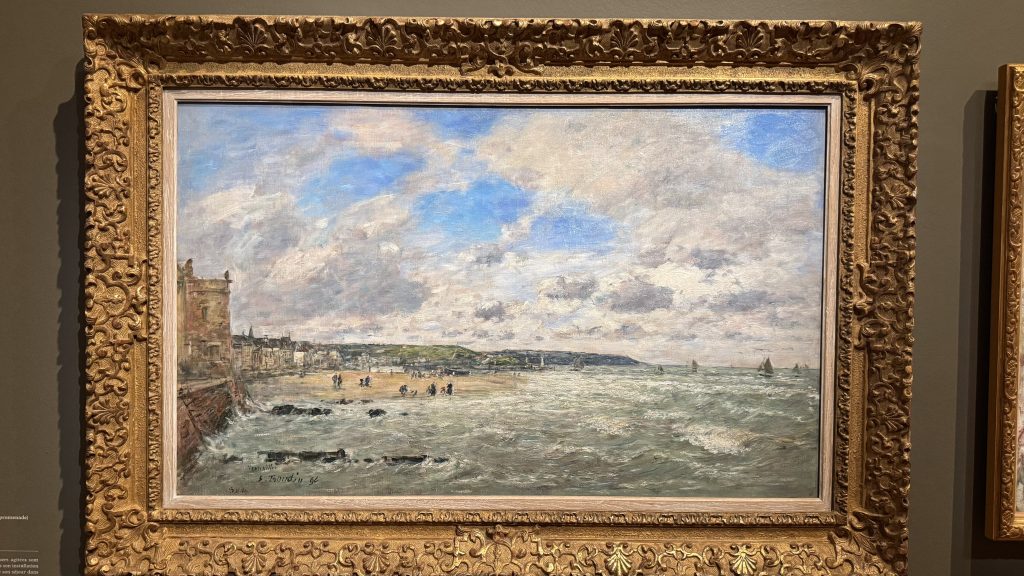
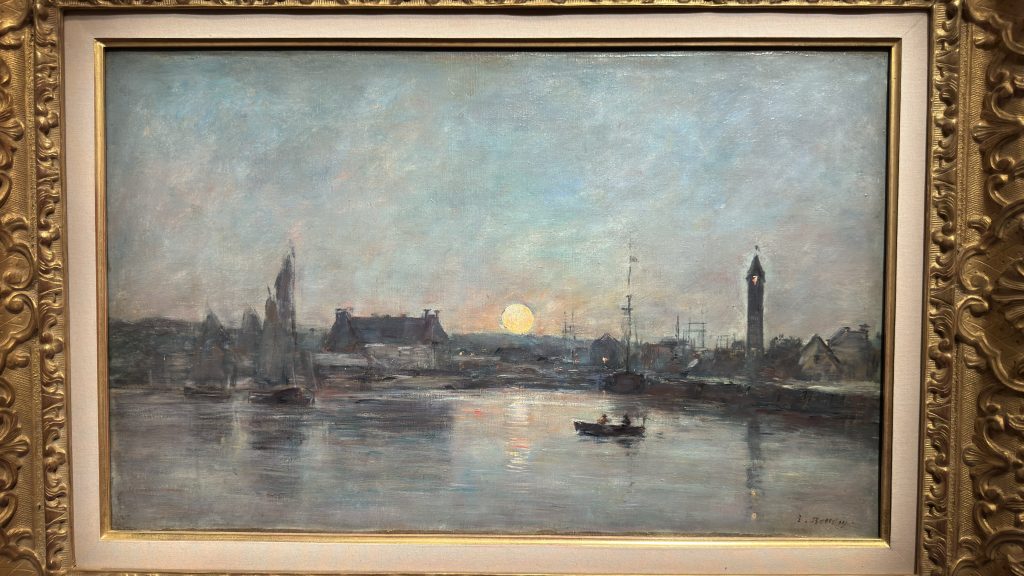
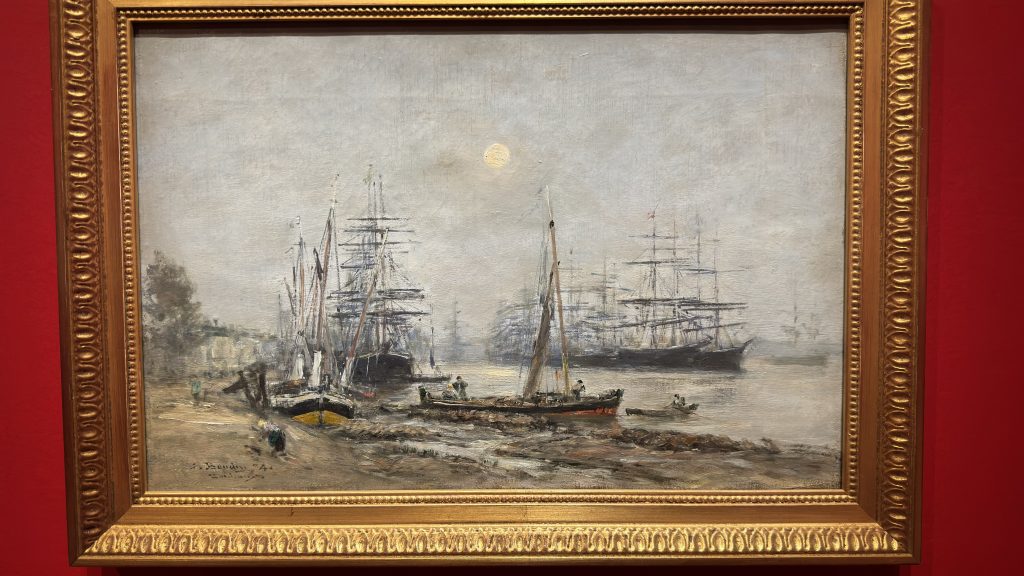
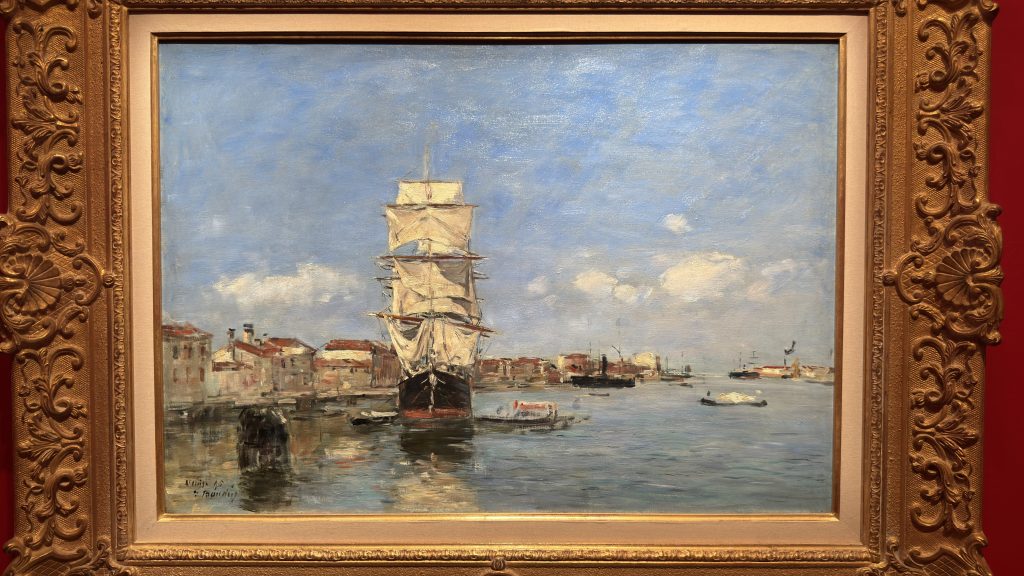
And on my visit, an unexpected delight: a special exhibit devoted to Eugène Boudin, Monet’s mentor and one of the earliest French landscape painters to work en plein air. Boudin’s coastal skies, beach scenes, and atmospheric seascapes quietly echo the beginnings of Impressionism. It was Boudin who encouraged the young Monet to paint outdoors and chase the changing light—without him, the world may never have seen the shimmering visions that Monet would later create.
Together, the works of Boudin and Monet form a poignant dialogue—a bridge between inspiration and evolution. It’s a rare treat to see mentor and protégé side-by-side, the gentle skies of Boudin leading us into the kaleidoscopic worlds of Monet.
Whether you’re a seasoned art historian or a curious traveler seeking a quieter, more personal Parisian museum experience, Musée Marmottan Monet is a marvel. Come for the art, stay for the atmosphere, and don’t forget a fan if you’re visiting in July!