Visiting Antigua Guatemala, Guatemala: A Complete Guide
Quick Essentials
- 📍 Best Time to Visit: January through March — dry season, peak coffee harvest, and clear volcano views every morning.
- ✈️ Getting There: Search flights to Guatemala City on Skyscanner | Direct from Houston, Miami, Los Angeles, and Dallas. Antigua is a 45-minute shuttle ride from the airport.
- 🏨 Where to Stay: Browse Antigua Guatemala hotels on Booking.com
- 🎟️ Don’t Miss: Acatenango Volcano overnight hike with Fuego eruption views on GetYourGuide
- 💰 Budget Range: $80–$180 per day for mid-range to comfortable; $250+ for converted-convent suites and private guides.
Antigua doesn’t rush you, and that’s the point. The city sits in a valley between three volcanoes — Agua, Fuego, Acatenango — and its grid of cobblestoned streets dead-ends into views of all three. Earthquake rubble from 1773 was never fully cleared; instead, the baroque church ruins were absorbed into the landscape like old furniture. You eat lunch in a courtyard where a convent wall collapsed two centuries ago and bougainvillea grew over the gap.
The danger with Antigua is treating it as a checkbox — a day trip from Guatemala City, a stepping stone to Lake Atitlán. It rewards the opposite. Give it three or four days and fall into its cadence: morning coffee on a rooftop with Fuego smoking in the distance, an afternoon chocolate workshop in a building that used to be a monastery, and a long dinner on a courtyard where the waiter already knows you prefer the pepián with extra tortillas. This is a city that is better slow.
What surprises experienced travelers is how much is packed into so few blocks. The historic center is compact — fifteen minutes on foot from end to end — but every street has a wooden door hiding a garden, a ruin, a kitchen. The quality of food has quietly risen in the last few years, the boutique hotel scene rivals anything in Oaxaca, and the volcano hikes out the back door are genuinely world-class. Antigua has arrived without losing its unhurried soul.
Walking the Ruins
Antigua was the colonial capital of Central America for two hundred years before earthquakes flattened it. The Spanish rebuilt three times, then gave up and moved the capital to Guatemala City. What they left behind is extraordinary.
Most visitors photograph the Santa Catalina Arch and the Cathedral, and both are worth your time. But the ruins that will stay with you are quieter. La Recolección, an 18th-century Recollect monastery on the west side, has pillars that rise thirty feet into open sky, their carved friezes still sharp enough to read. You’ll likely have the courtyard to yourself mid-morning. Iglesia de Candelaria, in a residential neighborhood to the northeast, is half-collapsed and completely unmarked — carved arches frame the sky, and the silence is total.

The Convent of the Capuchins is the most visited ruin, and for good reason: the circular cells, the underground bath, the walled gardens. Go early if you can, but even at midday it’s meditative rather than crowded. The trick with Antigua’s ruins is ignoring the map and following the rooflines — anywhere you see crumbling stone rising above a residential wall, there’s probably something worth stepping inside.
Volcano Country
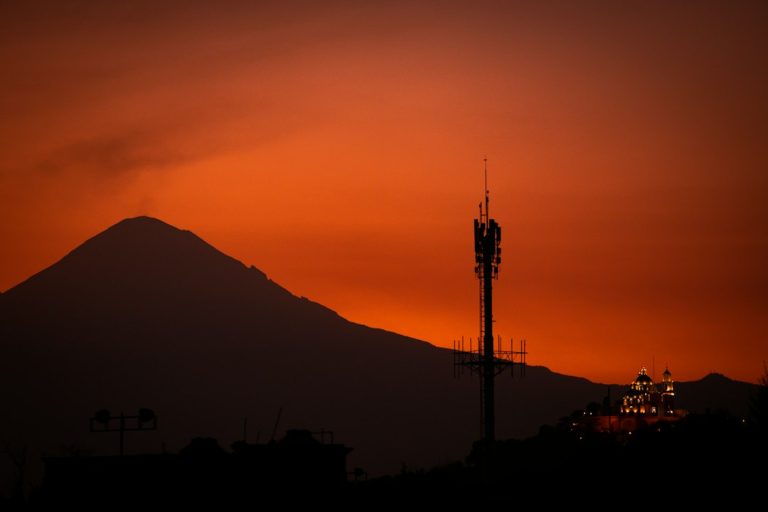
Three volcanoes ring the city, and at least one of them is erupting right now. Fuego throws incandescent arcs of lava every fifteen to twenty minutes, day and night, and the best way to watch is from the ridge of its neighbor, Acatenango.
The Acatenango overnight hike is Antigua’s signature adventure. Guided groups leave town in the morning, climb through cloud forest to a base camp at 3,600 meters, and spend the night watching Fuego perform. The eruptions after dark — red lava against black sky, the rumble arriving a few seconds after the flash — are hard to describe without sounding melodramatic, so I won’t try. Book it. Acatenango Volcano overnight hike on GetYourGuide

If an overnight at altitude isn’t your thing, Pacaya is the gentler option. It’s a half-day trip: a moderate 3.5-mile hike to the rim of an active crater where, yes, you can roast marshmallows on volcanic vents. It sounds gimmicky. It isn’t — the volcanic landscape is lunar and genuinely strange. Pacaya Volcano half-day hike on GetYourGuide
From almost every rooftop terrace in Antigua, you can see Fuego erupt while you eat breakfast. It becomes weirdly normal by day three.
Cacao, Coffee, and the Kitchen
Guatemala sits at the crossroads of two things the world cannot get enough of: cacao and coffee. Antigua happens to be the best place to experience both.
The ChocoMuseo runs a two-hour bean-to-bar workshop in a converted colonial building. You’ll trace the process from raw cacao pod to finished chocolate, learn the Mayan ceremonial origins, and take your own truffles home. It’s well-run, not touristy, and genuinely interesting even if you’ve done similar workshops elsewhere. Antigua Guatemala chocolate-making workshop on GetYourGuide
For coffee, go to Finca Filadelfia. This farm has been growing beans in Antigua’s volcanic soil since 1864 — the altitude, the mineral-rich earth, and the dry microclimate produce some of the most respected beans in Central America. The tour walks you from cherry to cup, and the tasting at the end makes clear why Antigua coffee commands the price it does. Finca Filadelfia coffee tour on GetYourGuide

For cacao in a different register, stop by Ek Chuah — named after the Mayan god of cacao — for a cup of thick, spiced ceremonial hot chocolate made from beans grown less than fifty kilometers away. Fernando’s Kaffee is the other essential stop: fifteen years of perfecting small-batch chocolate in a quiet shopfront.
The Table: What to Eat in Antigua
Start with pepián. Guatemala’s unofficial national dish is a slow-cooked stew — chicken or beef in a sauce of roasted tomatoes, tomatillos, peppers, ground pumpkin seeds, and sesame. It’s heavier than you expect, deeply savory, and nothing like the Mexican moles it occasionally gets compared to. La Casa de las Sopas does it well, in a dining room that takes its soups seriously.
Jocón de pollo is the lighter counterpart: chicken braised in a tart green sauce of tomatillos, cilantro, and green onion. The name comes from the K’iche’ Mayan word for “five greens,” and the color is startling — bright green, almost electric. Rincón Antigüeño serves it in a setting that matches: traditional, unhurried, and built for long meals.
Kak’ik is the deep cut — an ancient Mayan turkey soup spiced with achiote and cilantro. Not every restaurant attempts it. When you find it, order it. It is nothing like the turkey you know.
For a broader sweep, take a small-group food tour through the colonial center. The good ones hit ten or more tastings in a couple of hours — fresh tortillas, street-stall tamales, market fruit you won’t recognize — and the guide context turns eating into education. Antigua Guatemala small-group food tour on GetYourGuide
Where the Doors Are Open: Where to Stay
Antigua’s best hotels are behind unassuming wooden doors. Push one open and you’re in a garden courtyard with a fountain, volcanic stone walls, and a level of quiet that doesn’t seem possible on a cobblestoned street.
El Convento Boutique Hotel occupies a restored convent with walled gardens in the historic center. The rooms are spacious, the common areas feel genuinely old rather than staged-old, and you’re a three-minute walk from everything. This is the pick for atmosphere without fuss. El Convento Boutique Hotel on Booking.com
Meson Panza Verde is a different proposition — a chic boutique hotel in the southern part of town that also houses one of Antigua’s best restaurants. The courtyard dining room is where you want to eat at least once, and staying here means you don’t have to walk home afterward. Seven rooms, an art gallery, and a rooftop with Fuego views. Meson Panza Verde on Booking.com

Posada del Angel is the quieter choice. Set in a residential neighborhood, it has seven individually styled rooms, a rooftop terrace that frames Agua and Fuego perfectly, and the feeling of staying in someone’s rather beautiful home. The walk to the center takes ten minutes and passes through streets that feel like the city before the tourists found it. Posada del Angel on Booking.com
Planning It
When to go: The dry season runs November through April. January to March is the sweet spot — warm days, cool evenings, clear volcano views, and the coffee harvest at its peak. April can be dusty. May starts the rains.
Semana Santa: If you visit during Holy Week (late March or early April), you’ll witness one of the most extraordinary religious celebrations in the Americas. Purple-robed cucuruchos carry massive floats over handmade alfombras — carpets of colored sawdust, flowers, and pine needles that take hours to create and minutes to destroy. It is theatrical, devout, and deeply moving. But know this: hotel prices triple, rooms book two to three months in advance, and the city swells from 45,000 residents to 200,000 visitors. Plan accordingly or come a different week.
Getting around: The historic center is entirely walkable. Fifteen minutes covers the longest diagonal. For the volcano hikes, shuttle pickups are included in guided tours. For day trips — Chichicastenango’s highland market, the giant kites of Sumpango on Día de los Muertos — private shuttles are cheap and easy to arrange.
Practical notes: The Guatemalan quetzal is the currency; many places accept US dollars but change is given in quetzales. ATMs are plentiful in the center. Tips of 10% are standard but not always expected. Antigua is one of the safest cities in Guatemala, but keep normal city awareness at night.
Ready to Plan Your Trip to Antigua Guatemala?
You’ve done the reading. Here’s everything you need to make it happen.
🎟️ What to Book in Advance
- Acatenango Volcano overnight hike with Fuego eruption views
- Finca Filadelfia coffee farm tour
- Browse more Antigua Guatemala experiences on Viator
Some links in this post are affiliate links. If you book through them, CuriosityTrail earns a small commission at no extra cost to you. Recommendations are chosen on merit; commissions never decide what’s included.