Visiting Santa Fe, New Mexico: A Complete Guide
Quick Essentials
- 📍 Best Time to Visit: September through early November — the summer crowds thin out, the high-desert light turns golden, and Zozobra kicks off a three-week run of festivals.
- ✈️ Getting There: Search flights on Skyscanner | Direct from Dallas, Denver, Phoenix, and Los Angeles to Santa Fe Regional (SAF), or fly into Albuquerque (ABQ) and drive the scenic hour north.
- 🏨 Where to Stay: Browse Santa Fe hotels on Booking.com
- 🎟️ Don’t Miss: Canyon Road Art & History Walking Tour on GetYourGuide
- 💰 Budget Range: $200–$400 per day for comfortable mid-range to splurge travel as a couple, including dining and one experience.
Santa Fe doesn’t really look like America. That sounds like a throwaway line until you arrive and realise you mean it literally. The earth-coloured walls, the flat rooflines, the way buildings seem to grow from the ground rather than sit on it — the whole city presents as a landscape that decided, at some point, to become a town.
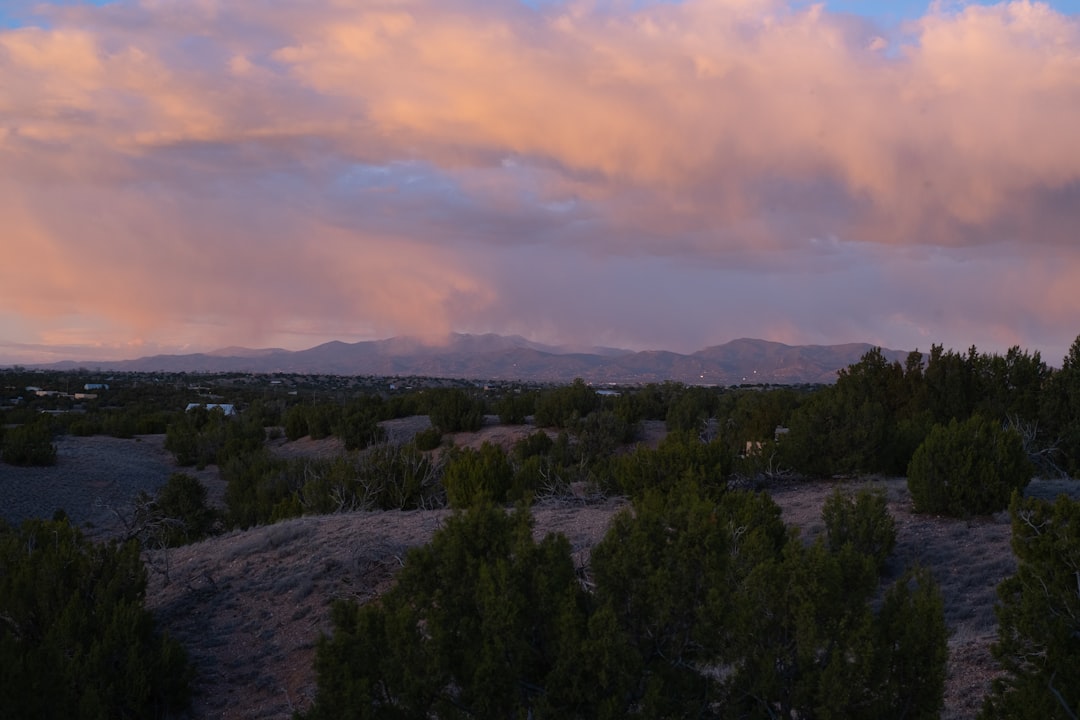
At 7,000 feet, the air is thin and dry and absurdly clear. Light here doesn’t behave the way it does at sea level. Shadows are sharper. Colours are more saturated. Georgia O’Keeffe spent decades trying to explain this in paint, and the fact that thousands of artists followed her here tells you she was onto something that words struggle with. But I’ll try.
What makes Santa Fe worth the trip for someone who’s already been places — who’s done Barcelona and Kyoto and the predictable American cities — is that it doesn’t compete on those terms. It’s a small city of about 90,000 people with the cultural density of somewhere five times its size. Over a hundred galleries on a single half-mile street. A food tradition that predates European contact. Architecture preserved by law to look the way it’s looked for centuries. It’s a place that rewards slow attention, which is another way of saying it rewards the kind of traveller who reads this site.
The Light That Started It All
O’Keeffe arrived in 1929 and never really left. The high desert did something to her work that New York couldn’t — gave it space, stripped it of clutter, flooded it with a quality of illumination that she spent years rendering as bright white form and weighty dark shadow. The Georgia O’Keeffe Museum, a quiet adobe building a block off the Plaza, houses a rotating selection that contextualises her obsession with this landscape. It’s small enough to see properly in an hour, which is part of its charm — no museum fatigue, just a focused encounter with an artist and the landscape that consumed her.
But the light isn’t a historical curiosity. It’s the reason Santa Fe has the gallery density it does, and it’s the first thing you’ll notice if you’re paying attention. At 7,000 feet the atmosphere is thinner, the UV more intense, the shadows cut harder. Colours that would read as muted at sea level become almost aggressive here. Late afternoon on Canyon Road, when the sun drops behind the Sangre de Cristos and the adobe walls go from ochre to deep amber — that’s the moment. Photographers know this. So do the gallery owners, who time their openings accordingly.
The Santa Fe Workshops still run photography courses that take you into the landscapes O’Keeffe painted — the badlands at Ghost Ranch, the red rock canyons near Abiquiú, the Jemez Mountains. If you’ve got a camera and half an interest in why light matters, the surrounding country will keep you occupied for days. Even without a camera, the drive north through the Española Valley toward Ghost Ranch is worth the afternoon. The landscape shifts from high-desert scrub to painted cliffs in a way that makes the car feel like an unnecessary layer between you and the place.
Canyon Road: A Half-Mile of American Art
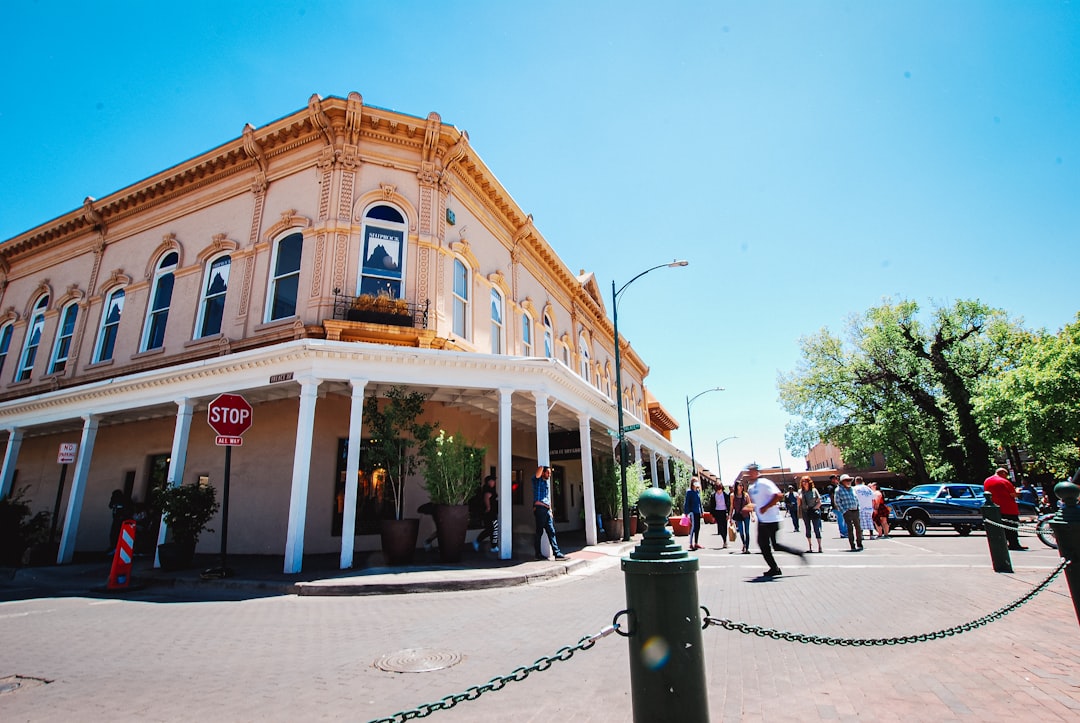
Canyon Road has over a hundred galleries packed into what was once a residential lane of small adobe houses. The buildings remain. The art has moved in. The result is something genuinely unusual: an outdoor-scale gallery district you can walk in twenty minutes but will want three hours for.
The range is wider than you’d expect. Yes, there’s Western art — bronze cowboys, turquoise jewellery — but there’s also serious contemporary work, abstract sculpture, photography, and Native American art that has nothing to do with the tourist shops on the Plaza. Nedra Matteucci Gallery opens with a sculpture garden that stops you before you reach the front door. Canyon Road Contemporary Art has been serving collectors for over 35 years without ever feeling stuffy about it.
The Spring Art Festival in May and the Christmas Eve farolito walk in December are the marquee events, but any given Friday evening in summer, galleries open their doors and pour wine and the whole street becomes a slow-moving social event. It’s the kind of thing that sounds touristy on paper and turns out to be genuinely charming in practice.
Canyon Road Art & History Small-Group Walking Tour
Adobe as Identity
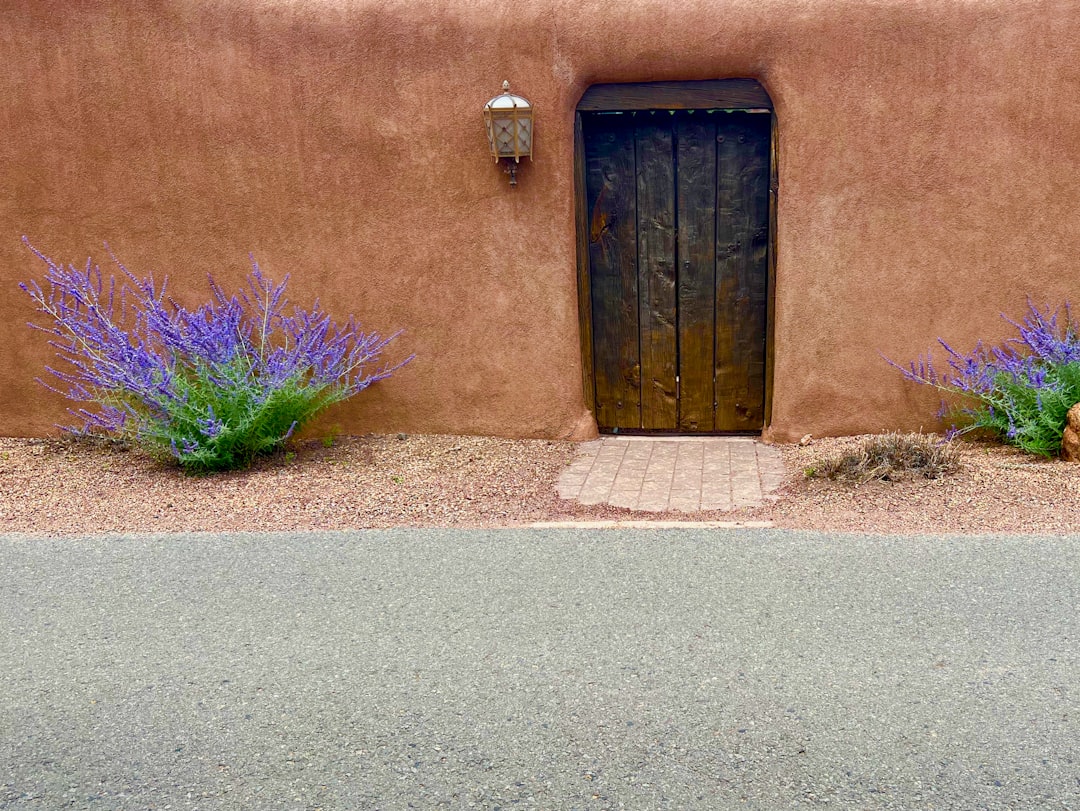
Santa Fe enforces a building code that requires new construction in the historic district to conform to the Pueblo Revival style. This is why the city looks the way it does — not through accident or nostalgia, but through deliberate preservation. The rounded adobe walls, the vigas (wooden roof beams) protruding from facades, the flat rooftops — all mandated. Even the colour palette is controlled. You will not find a neon sign in the historic centre.
The Oldest House on De Vargas Street claims to be the oldest European-origin structure in America. Whether the claim holds up to academic scrutiny matters less than the fact that the building exists in a neighbourhood, Barrio de Analco, where the surrounding structures look much the same. Walk through this district slowly. The San Miguel Chapel, a block away, dates to roughly 1610 and still holds services. The walls are four feet thick and the interior smells of old wood and candle wax.
John Gaw Meem, the architect sometimes called the father of Santa Fe style, spent the early 20th century formalising the aesthetic into what became Territorial Revival — blending traditional pueblo forms with modern livability. His fingerprints are everywhere, from the New Mexico Museum of Art on the Plaza to the Cristo Rey Church, which contains one of the largest adobe structures in the country. The result is a city where new buildings are required to look old, and old buildings are maintained with a devotion that most American cities reserve for monuments.
For architecture, the buildings tell you what this city values. And what it values, fundamentally, is continuity. The adobe isn’t decoration. It’s identity.
Eating the Three Sisters
Pueblo food traditions here predate anything you’d recognise as American cuisine. The foundation is the Three Sisters — corn, beans, and squash — cultivated together in a system where each plant supports the others. Blue corn, ground from an ancient strain, shows up everywhere: enchiladas, pancakes, piki bread so thin it’s nearly translucent.
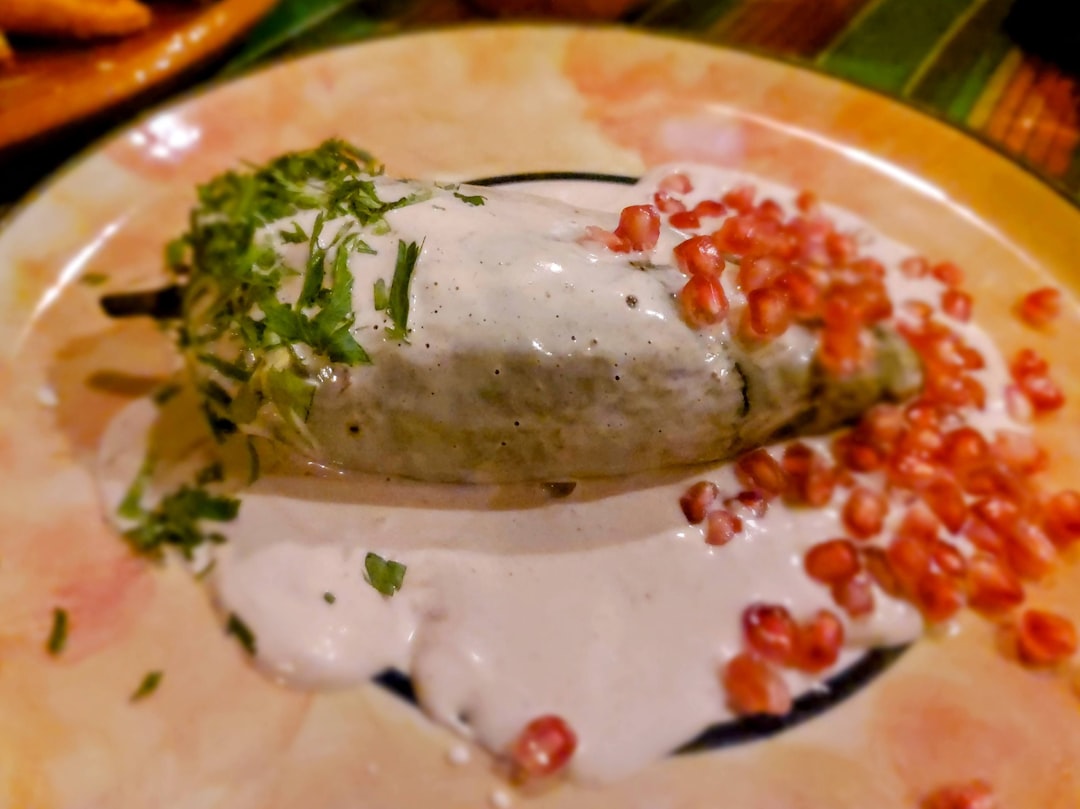
The chile is the other constant. Red or green — the state question is “red or green?” and the correct answer, if you want both, is “Christmas.” A plate of Christmas-style enchiladas over blue corn tortillas with a fried egg on top is the definitive Santa Fe meal. It’s not fancy. It’s foundational.
Amaya, at Hotel Santa Fe — partially owned by Picuris Pueblo — is the best entry point to pueblo food traditions done with care. The blue corn pancakes at breakfast are worth rearranging a morning for. For something more casual, Tesuque Village Market, about fifteen minutes north, serves breakfast burritos that locals will drive out of their way for. And yes, Santa Fe Bite’s green chile cheeseburger deserves every award it’s won.
For a splurge, Geronimo on Canyon Road occupies a 250-year-old adobe and serves a menu that respects the local food traditions while pushing them forward. It’s the only Mobil four-star restaurant in New Mexico, and the setting alone is worth the reservation.
The Art Beyond the Galleries
Meow Wolf’s House of Eternal Return is the counterweight to Canyon Road’s polish. Installed inside a converted bowling alley, it’s an immersive art experience — over 70 interconnected rooms, each built by different artists, linked by a loose narrative that you’re free to ignore in favour of simply wandering through doors inside refrigerators and climbing through unlikely passages. It’s strange and ambitious and unlike anything else in the country. Allow two hours at minimum. Kids will want longer, and you may find yourself wanting longer too.
Meow Wolf: House of Eternal Return tickets
The Santa Fe Indian Market, held each August, is the largest juried Native American art show in the world. Over a thousand artists from hundreds of tribes exhibit work that ranges from traditional pottery and weaving to contemporary sculpture and digital art. If your timing aligns, this alone justifies the trip. The quality is extraordinary, and buying directly from artists — hearing the story behind a piece of Zuni inlay or a Navajo weaving — is a fundamentally different experience from browsing a gallery. Arrive early on Saturday morning. The serious collectors do.
The Santa Fe Opera runs late June through August in an open-air theatre tucked into the hills north of town. The setting — desert sky overhead, Jemez Mountains in the background — elevates even operas you’d otherwise skip. Tailgating in the car park beforehand is a tradition: bring a good bottle of wine, set up a folding table, and join the pre-show scene. It’s one of the more civilised parking-lot experiences in America.
The Quiet Side
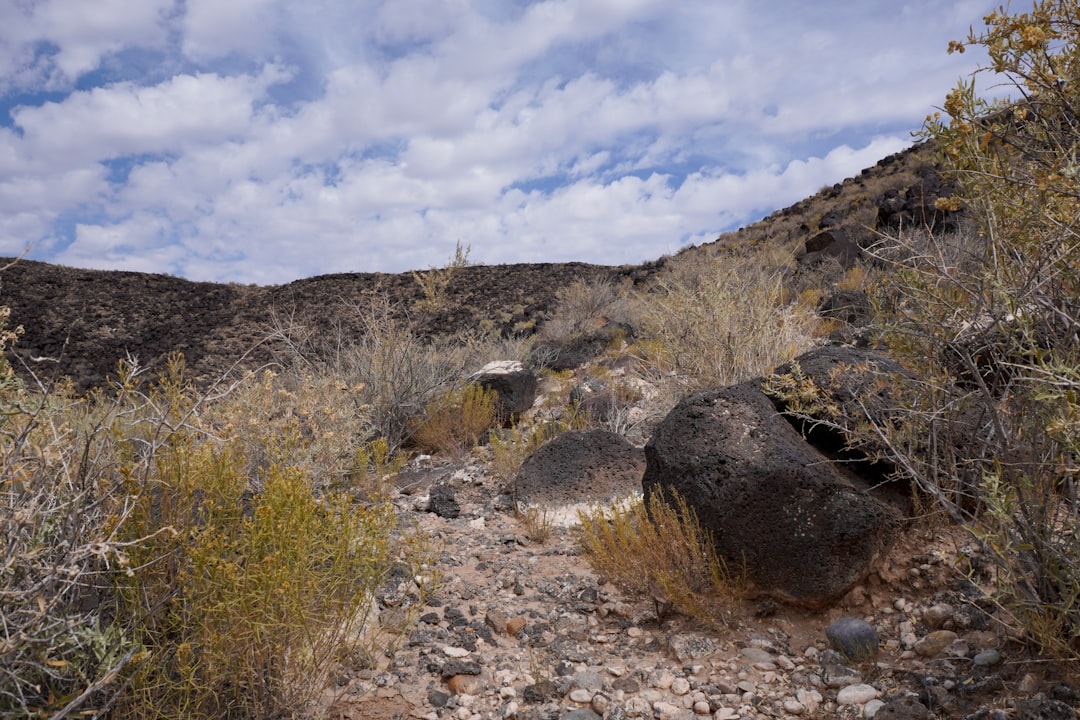
La Cieneguilla Petroglyph Site sits fifteen minutes from downtown. Over 4,400 images carved into basalt between the 13th and 17th centuries. No admission fee. No visitor centre. Just a dirt trail, volcanic rock, and ancient art in open desert. The carvings include animal figures, geometric patterns, and human forms, all etched by Pueblo peoples whose descendants still live in the surrounding communities. Most visitors to Santa Fe never hear about it, which is exactly why it’s worth the drive. Go in the morning when the low sun rakes across the rock faces and the carvings stand out in sharp relief.
El Rancho de las Golondrinas, twenty minutes south, is a 200-acre living history ranch with 18th- and 19th-century adobe buildings and working farm demonstrations. It’s the kind of place that sounds like a school field trip and turns out to be genuinely moving — a sense of how people lived in this landscape before the galleries arrived. The Spring and Harvest Festivals, when the ranch comes fully alive with blacksmithing, weaving, and traditional cooking demonstrations, are the best times to visit.
And 109 East Palace Avenue, unmarked and easy to walk past, is the building where every scientist recruited for the Manhattan Project checked in before being driven to Los Alamos. Oppenheimer, Fermi, Feynman — they all came through this door. No museum. No plaque worth the name. Just a doorway that changed the course of history, sitting quietly between shops on a commercial street. The drive up to Los Alamos itself, through the Jemez, is spectacular and takes about forty-five minutes.
Bandelier National Monument Day Trip from Santa Fe
When to Go and Where to Stay
September is the sweet spot. The summer crowds have thinned, daytime temperatures sit comfortably in the 60s and 70s, and the festival calendar peaks. Zozobra — the burning of a 50-foot marionette called Old Man Gloom — kicks off Fiesta weekend in early September. The Wine & Chile Fiesta follows later in the month with over 70 chefs and sommeliers running tastings across the city.
May and June are the other strong window. Dry, mild, and uncrowded before the July monsoon season arrives. Winter is quiet and cold — highs in the upper 40s — but hotel rates drop 30–40% and restaurant reservations are easy to come by.
Rosewood Inn of the Anasazi is the one to book if you want Santa Fe distilled into a hotel. Adobe walls, crackling fireplaces, and a culinary program led by a James Beard semifinalist. Steps from the Plaza.
Rosewood Inn of the Anasazi on Booking.com
La Fonda on the Plaza has the location and the history — it’s sat at the end of the Santa Fe Trail since the 1920s. The rooftop Bell Tower Bar, open in summer, is where you go for a margarita with a Sangre de Cristo sunset.
La Fonda on the Plaza on Booking.com
Inn of the Five Graces in Barrio de Analco goes maximalist: hand-crafted furnishings, vibrant textiles, mosaic-tiled bathrooms. It’s not for everyone, but if East-meets-West decor in a 400-year-old neighbourhood sounds appealing, this is the place.
Inn of the Five Graces on Booking.com
Ready to Plan Your Trip to Santa Fe?
You’ve done the reading. Here’s everything you need to make it happen.
🎟️ What to Book in Advance
- Canyon Road Art & History Walking Tour
- Meow Wolf: House of Eternal Return
- Browse more Santa Fe experiences on Viator
Some links in this post are affiliate links. If you book through them, CuriosityTrail earns a small commission at no extra cost to you. Recommendations are chosen on merit; commissions never decide what’s included.