Greenville, South Carolina: The Southern City That Rebuilt Its Downtown Around a Waterfall

Quick Essentials
- 📍 Best Time to Visit: Late September through early November — the festival calendar peaks, the humidity retreats, and the foothills start turning copper and gold.
- ✈️ Getting There: Search flights on Skyscanner | Direct from Atlanta, Charlotte, and Chicago O’Hare
- 🏨 Where to Stay: Browse Greenville hotels on Booking.com
- 🎟️ Don’t Miss: Downtown Greenville Food Tour on GetYourGuide
- 💰 Budget Range: $150–$300 per day for mid-range comfort; $350+ for tasting menus and boutique hotels
The Bridge That Changed Everything
Here’s a thing that doesn’t happen in most American cities: someone looks at a four-lane highway running through downtown and decides to tear it up. Then they uncover a waterfall that had been hidden underneath for decades, build a curved pedestrian bridge over it, and let the whole city pivot around that one decision.
That’s the Liberty Bridge story. And it tells you everything you need to know about Greenville, South Carolina.
Falls Park on the Reedy is 32 acres of landscaped gardens, river walks, and public art wrapped around a genuine waterfall in the middle of downtown. The bridge itself — a 345-foot curved suspension span with no visible supports from below — has become the city’s signature. At night, the falls light up and the bridge glows, and you’ll find couples and photographers competing for angles along the stone paths. It’s earned its postcard status, but the real story is what the park represents: a city that chose pedestrians over traffic and bet its revival on walkability.
Walk north from the falls and you’re on Main Street inside two minutes. No shuttle required. No Uber surge. Just sidewalks and a street that actually works.

Main Street, But Not the One You’re Thinking Of
Most “revitalized Main Streets” in the American South are a Starbucks, a tapas place, and three empty storefronts with optimistic Coming Soon signs. Greenville’s is different. It runs for nearly a mile and a half, it’s genuinely walkable, and the mix is real — not curated by a developer’s mood board.
You’ll find M. Judson Bookstore, an independent shop that stocks like someone actually reads. Mast General Store, which has been selling candy and cast-iron since before Main Street was fashionable again. Coffee Underground, literally below street level, where the Wi-Fi works and nobody rushes you. Between them: galleries you wouldn’t expect in a city this size, boutiques run by locals, and Dale Chihuly’s Rose Crystal Tower catching light outside the Greenville County Museum of Art.
The galleries are worth a pause. The Artists Guild Gallery at 200 North Main is a co-op — twenty-odd local artists showing painting, pottery, jewelry, and woodwork. Gallery One sits further south. Neither feels like a vanity project. The work is priced to sell and the quality is better than the tourist-town norm. For a city of 75,000 people, the density of genuine art spaces is surprising.
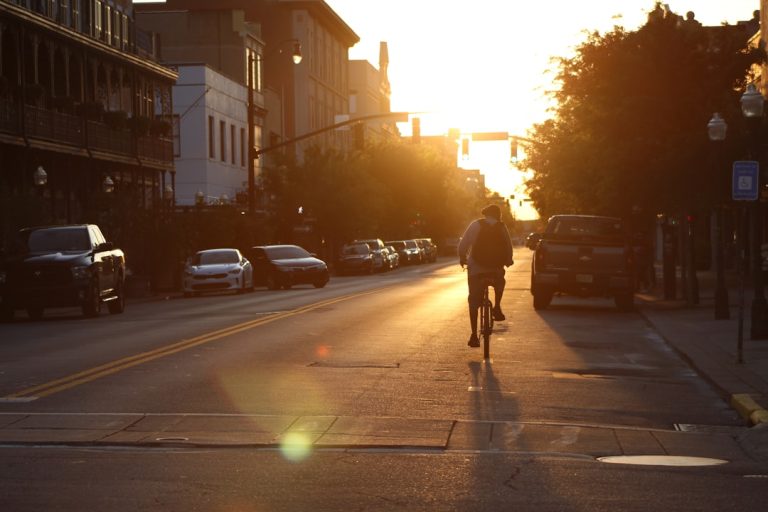
What makes Main Street work, though, isn’t any single shop or gallery. It’s the pacing. Wide sidewalks, mature trees, benches that people actually sit on. The street narrows through a series of gentle curves that break up sightlines and keep you curious about what’s around the next bend. It’s urban design that rewards walking — and in the American South, where most downtowns surrendered to parking lots decades ago, that’s rarer than it should be.
Where the Chefs Come to Cook
Greenville’s food moment isn’t hypothetical. The Michelin Guide arrived in late 2025, expanding into the American South, and Greenville collected four recommended spots in its first outing. Then Joe Cash at Scoundrel earned a Michelin star and landed on the 2026 James Beard Best Chef Southeast semifinalist list. For a city most people couldn’t find on a map five years ago, that’s a statement.
Scoundrel is the one to book first. Cash runs a tight bistro with steak frites, natural wines, and a room that feels like a neighborhood place rather than a destination restaurant. The energy is relaxed but the cooking isn’t casual. If you can get a table — and you should try — it’s the best argument for Greenville’s culinary seriousness.
Soby’s has been here longer and remains excellent. Their fried green tomatoes with pimento cheese is the dish everyone photographs, but the local mushroom dashi risotto is what you should actually order. The wine list is deep without being aggressive about it. This is date-night Southern cooking done properly.
The Anchorage sits in a converted firehouse in the Village of West Greenville and runs a tasting menu that’s Michelin-recommended for good reason. It’s the most ambitious kitchen in town, and the building itself — original brick, industrial bones — is half the experience.
For something newer, keep an eye on Little Secret in Woodside, where chef Conner Hinderks is doing pan-Asian dishes with Southern comfort underneath. And Swordfish Cocktail Club, a speakeasy that doesn’t advertise itself too hard, makes whatever you’re in the mood for and pairs it with a grilled cheese that has no business being that good at midnight.

The Art District You Didn’t See Coming
Most visitors to Greenville stick to Main Street, which is understandable — it’s very good at keeping you there. But the deeper story is a ten-minute walk west, in the Village of West Greenville.
This was a textile mill workers’ neighborhood. The houses were company-built. The lives were factory-scheduled. When the mills closed — Greenville was once called the “Textile Center of the World,” and that wasn’t hyperbole — the neighborhood hollowed out. What’s happened since is the kind of organic revival that can’t be engineered: artists moved in because rents were low, galleries followed, then restaurants, then murals.
Gaia’s “City of Altruism” mural is the one that stops you. It’s a large-scale piece celebrating Greenville’s textile heritage — the workers, the machines, the community that built itself around cotton. It’s on the side of a building you might walk past otherwise. That’s the Village in a sentence: you have to look.
The Greenville Center for Creative Arts anchors the neighborhood with rotating exhibitions and open studios. Combined with the 160-plus pieces of public art scattered across the city — including murals, sculptures, and installations you’ll stumble across without trying — Greenville has built an arts infrastructure that most cities three times its size would envy.
If you time it right, the First Fridays art walk brings the Village to life with open studios, gallery receptions, and street food. But even on an ordinary Tuesday afternoon, you can knock on a studio door and find someone working. That accessibility — artists who are actually present, not just represented — is what separates the Village from the gallery districts that exist mostly for real estate brochures.
Into the Foothills
Greenville sits at the edge of the Blue Ridge foothills, which means day trips that actually deliver. This isn’t “drive two hours to see a waterfall” territory. The mountains start close.
The Cherokee Foothills Scenic Byway (Highway 11) arcs through peach orchards and small towns, past Cowpens National Battlefield — a pivotal Revolutionary War site that most Americans have never heard of — and up to Table Rock State Park, where the hiking ranges from easy lakeside loops to a challenging summit climb with long views across the Upstate.
Travelers Rest, fifteen minutes north on the Swamp Rabbit Trail, is the kind of small town that cycling culture built. You can rent an e-bike downtown and ride the 22-mile greenway there, stopping at craft breweries and farm stands. The trail follows an old railroad bed, so the grades are gentle and the shade is reliable. Swamp Rabbit Trail e-bike tour on GetYourGuide
Pretty Place Chapel — formally the Fred W. Symmes Chapel — is thirty minutes from town and sits at 3,200 feet on Stone Mountain. It’s an open-air chapel with a glass wall behind the altar and panoramic Blue Ridge views that stretch to the horizon. There’s no entrance fee, no gift shop, no line on a weekday morning. Just the mountains and the silence. It’s the kind of place that makes you reconsider whether you’ve been looking at the right things.
The Textile Thread
You can enjoy Greenville without knowing its mill history, but you’ll understand it better if you do. This was a company town in the truest sense — textile mills built the housing, the churches, the schools. Neighborhoods like Monaghan and Brandon were mill villages where entire communities lived and worked within walking distance of the factory floor.
Drive through these neighborhoods today and you’ll see the bones: the mill buildings converted to lofts and breweries, the village streets still narrow and shaded, the churches still standing. The Upcountry History Museum on Main Street covers the arc from cotton to commerce, but the real texture is in the neighborhoods themselves. The Village of West Greenville is the most visible example, but it’s not the only one.
This heritage thread runs under everything in modern Greenville. The walkability, the scale, the neighborhood character — all of it traces back to mill town planning. The city didn’t invent its walkability. It inherited it, then had the good sense to invest in it. If you only do one thing outside of downtown, drive the old mill villages. Ten minutes in the car and you’ll see the city that made the city you’re walking through.
Where to Settle In
Grand Bohemian Lodge Greenville. Boutique, art-forward, and steps from Falls Park. The rooms have more character than the chain boutique formula usually delivers, and the on-site art gallery is genuinely curated, not decorative. If you want to wake up and walk to the falls with coffee, this is the one. Grand Bohemian Lodge on Booking.com
The Westin Poinsett. Built in 1925, renovated well, and sitting right on Main Street. The rooms are classic without being dated, and the rooftop bar earns its view. Walking distance to the Peace Center, galleries, and most of the restaurants mentioned above. Old-school elegance that doesn’t charge you extra for nostalgia. The Westin Poinsett on Booking.com
Aloft Greenville Downtown. Modern, clean, pet-friendly, and priced below the two options above. Just off Main Street, fully walkable. If you’re spending your budget on Scoundrel and the Anchorage — a reasonable strategy — this frees up the funds. Aloft Greenville Downtown on Booking.com
Ready to Plan Your Trip to Greenville?
You’ve done the reading. Here’s everything you need to make it happen.
🎟️ What to Book in Advance
- Downtown Greenville Food Tour
- Swamp Rabbit Trail E-Bike Tour
- Browse more Greenville experiences on Viator
Some links in this post are affiliate links. If you book through them, CuriosityTrail earns a small commission at no extra cost to you. Recommendations are chosen on merit; commissions never decide what’s included.