Visiting Mumbai, India: A Complete Guide
Quick Essentials
- 📍 Best Time to Visit: November through February — the monsoon has drained away, humidity drops to something human, and February lands the Kala Ghoda Arts Festival in the middle of it.
- ✈️ Getting There: Search flights to Mumbai on Skyscanner | Direct from London, Dubai, Singapore, and most major hubs
- 🏨 Where to Stay: Browse Mumbai hotels on Booking.com
- 🎟️ Don’t Miss: South Mumbai heritage walking tour on GetYourGuide
- 💰 Budget Range: $75–$180 per day mid-range; $300+ for the Taj and dinners at Trishna
Don’t Try to See Mumbai
Mumbai will not cooperate with a checklist. You can try. Plenty of travelers arrive with a list of twenty landmarks, a time budget of two days, and a taxi app, and they leave with nothing but sore feet and a sense of having been through a blender. The city has twenty million people, three distinct downtowns, a working fishing port inside the financial district, a Hindu temple older than most European cathedrals wedged behind a luxury apartment tower, and rush-hour local trains that carry more passengers per square meter than physics should allow.
Forty-eight hours is enough. Just not for everything.
The trick is to pick your Mumbai. Colonial Bombay, with its Gothic railway station and the Gateway of India and the Kala Ghoda art precinct, is one city. Street-food Mumbai — vada pav corners and Irani cafés and the evening chaat line at Chowpatty — is another, layered on top. Bandra and Bollywood are a third. Dharavi is a fourth. Do one properly. Do a second on day two. Leave the rest for next time. The city will still be here.
When to Go (and When to Absolutely Not)
November through February is the answer. Humidity is the villain in Mumbai, not heat, and the post-monsoon window is the one stretch when the city feels walkable before 9am and after 4pm. Days hit 28°C, nights cool to 19°C, the sky is usually clear, and the air loses that permanent-shower weight.
March and April get hot and stay hot. May is worse. June through September is the monsoon, and Mumbai’s monsoon is not a polite Vancouver drizzle — it’s 2,400 millimeters of rain in three months, streets turning into canals, trains halting, and the city moving inside. It’s a fascinating season if you’re ready for it, but it’s not a 48-hour-tourist season.
If you can time it, February is the sweet spot. The Kala Ghoda Arts Festival takes over the heritage precinct for nine days every February — free concerts, installations, street theater, and food pop-ups — and the 2026 edition runs the first half of the month. It’s Asia’s largest free arts festival and the single best reason to show up then.
South Mumbai: Colonial Bombay, Still Standing
If you only have one day, spend it in South Mumbai on foot. This is where the East India Company built its administrative spine, where the Victorians threw up Gothic Revival buildings with tropical modifications, and where the Art Deco boom of the 1930s put up the second-largest collection of Art Deco architecture in the world after Miami Beach. In 2018 UNESCO finally recognized the whole lot as the Victorian Gothic and Art Deco Ensembles of Mumbai — a single World Heritage Site covering the Oval Maidan and the buildings on either side of it.
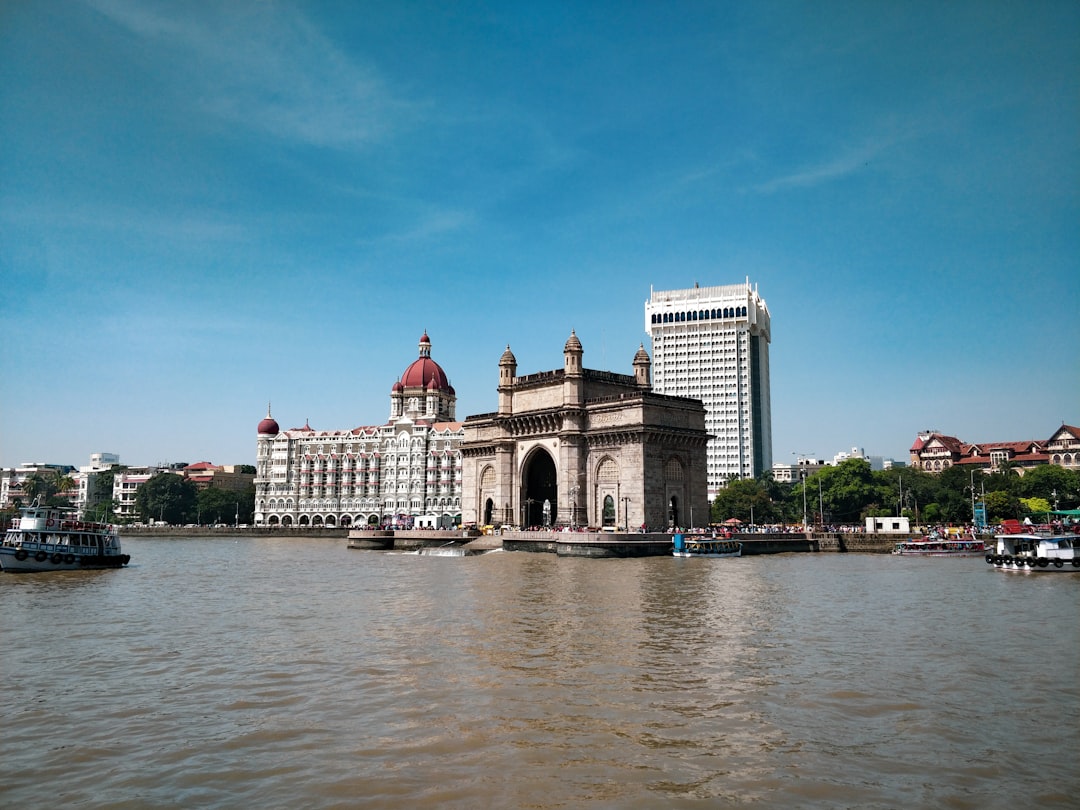
Start at the Gateway of India. Yes, it’s the obvious move. Do it anyway at 7am, before the crowds and the photographers and the boat touts arrive. The basalt arch was finished in 1924 for a king who’d died before it opened. The Taj Mahal Palace sits directly across the road — the original 1903 Taj, not the tower addition — and you should walk through the lobby at least once. The breakfast is not worth $50. The building is.
From there, walk inland through Kala Ghoda, Mumbai’s small, well-edited art precinct. The Jehangir Art Gallery, the Chhatrapati Shivaji Maharaj Vastu Sangrahalaya (which everyone still calls the Prince of Wales Museum), the David Sassoon Library, and the Army and Navy Building are all within four blocks. Bombay’s Irani cafés — the ones founded by Zoroastrian immigrants a century ago — are quietly disappearing, but Kyani & Co. (1904) and Yazdani Bakery (1953) are still open in Fort. Go for the bun maska and a strong chai. Don’t go for fast service.
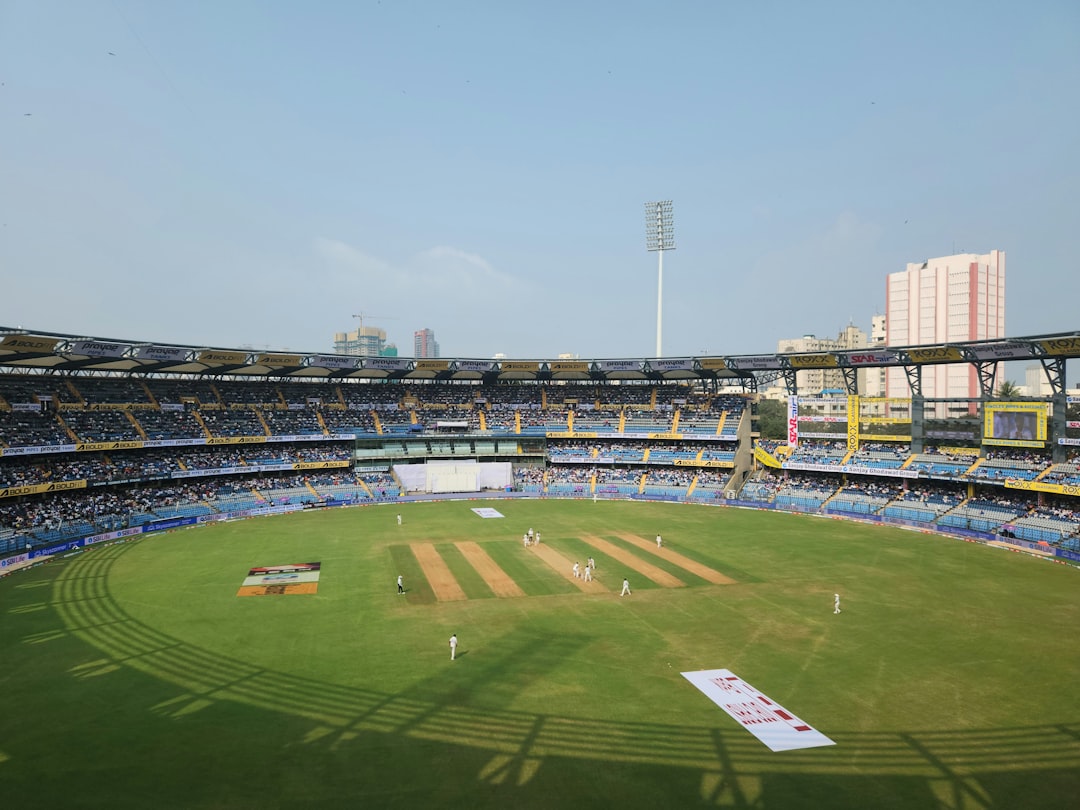
Keep walking. The Oval Maidan opens up in front of you — a cricket-playing green surrounded by the Gothic pile of the Bombay High Court and the Rajabai Clock Tower on one side, and the Art Deco apartments of Queen’s Road on the other. That’s the UNESCO site, literally in one panoramic turn. A guided walk here is worth it if you want the stories behind the buildings — there are good ones, and you’ll miss half of them alone.
South Mumbai heritage walking tour covering the Gateway, Taj, Kala Ghoda, and the UNESCO ensemble
The Street Food Rules You Need to Know
Here are the rules. Eat at places with queues of locals. Eat things that are cooked in front of you, hot. Skip the ice and the tap water. Carry hand sanitizer. That’s it. Follow those four and you can eat your way across Mumbai with confidence.
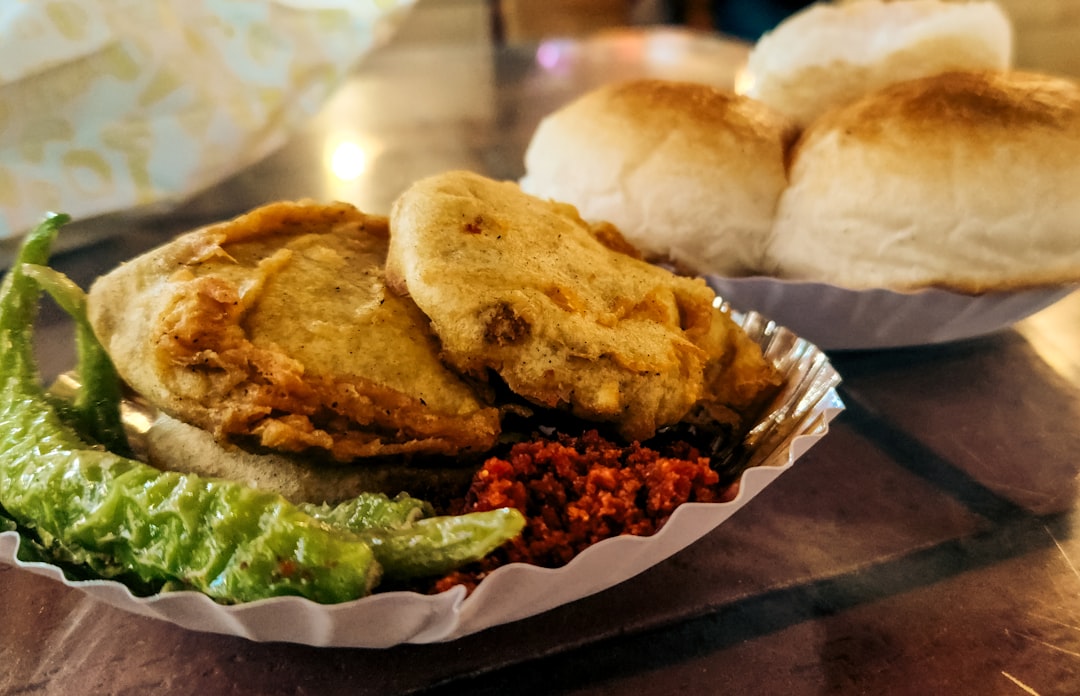
Vada pav is where you start. A spiced potato fritter, deep-fried, tucked inside a soft pav bun with green chutney and fried chilies. It’s Mumbai’s sandwich, the local answer to a hamburger, and you can get one for twenty rupees on a hundred corners. Ashok Vada Pav in Dadar has been at it since 1966 and is still the bar everyone else is measured against. Eat it standing up, on the pavement, with tea. That’s how it’s done.
Pav bhaji is next. Spiced vegetable mash, buttered to an obscene degree, served with soft pav buns you tear and dunk. Sardar Pav Bhaji in Tardeo is the consensus winner — also since 1966, also still running the line out the door at dinner. Order extra butter. You came to Mumbai.
For chaat — the whole family of savory snacks built around crisp fried dough, chutneys, yogurt, and pomegranate — the right move is Girgaon Chowpatty in the evening. Pani puri, bhel puri, sev puri, dahi puri: each one is a tiny architectural exercise in flavor. The beach-edge stalls at Chowpatty are known to every guidebook, which usually means I’d skip them. Here, don’t. The chaat is genuinely excellent, the light over the bay is the sunset you came for, and it’s one of the rare touristy things that’s still the local thing.
If you want someone else to do the navigating, a guided street food walk is genuinely useful in Mumbai. A local guide will take you into places you wouldn’t walk into alone, explain what you’re eating, and handle the hygiene math so you don’t have to.
Mumbai street food tour through the classic chaat and vada pav routes
Evening: Marine Drive and Chowpatty
Walk Marine Drive end to end at dusk. This is non-negotiable.
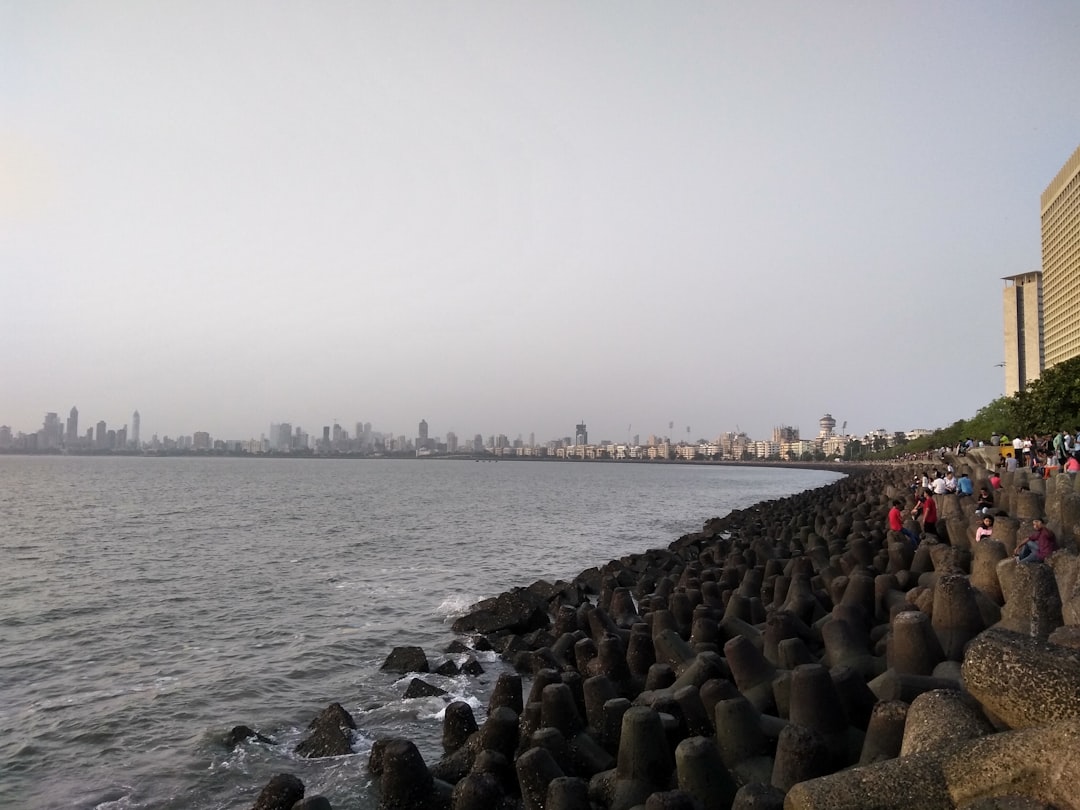
Start at the Nariman Point end, near Trident, as the sun starts dropping. The promenade runs 3.6 kilometers in a long, slow curve along Back Bay — the Queen’s Necklace, so named for the streetlights that come on one by one at dark and describe the arc from the air. On your landward side, Art Deco apartment buildings from the 1930s and 1940s run one after another, each one with the curved balconies and streamlined lines that defined that era: Soona Mahal, Chateau Marine, Oceana, the Dhun Building. This stretch is the reason Mumbai’s UNESCO listing exists alongside the Gothic one. Art Deco was a global style, but Bombay built more of it than almost anywhere else because Bombay was building when everyone else had stopped.
End at Chowpatty Beach. Don’t swim — the bay is not clean enough, and no one swims here. Do sit on the sand, eat the chaat, buy a kulfi faluda from Bachelorr’s (since the 1930s, still packed every night), and watch the city come on. The beach fills up with local families after dark. This is Mumbai unguarded.
If You Have a Second Day
You have three good options. Pick one. Don’t try to do two.
Dharavi. A community-run tour of the neighborhood Hollywood turned into a slum cliché will rewire how you think about Indian cities. Dharavi is a slum in the technical sense — unplanned, dense, unofficial — but the better description is that it’s Mumbai’s most productive square mile. It has an estimated $1 billion annual economy. It recycles the majority of the city’s plastic waste. It has a leather district, a pottery colony, a papadum-making street, and a hundred other micro-industries. The right tour operator — the pioneers reinvest most of their profits in a local NGO — will walk you through the industry and the homes, on the residents’ terms, with strict no-photography rules. Done this way, it’s the opposite of poverty tourism. Done the wrong way, it’s offensive. Pick the right operator.
Community-run Dharavi walking tour
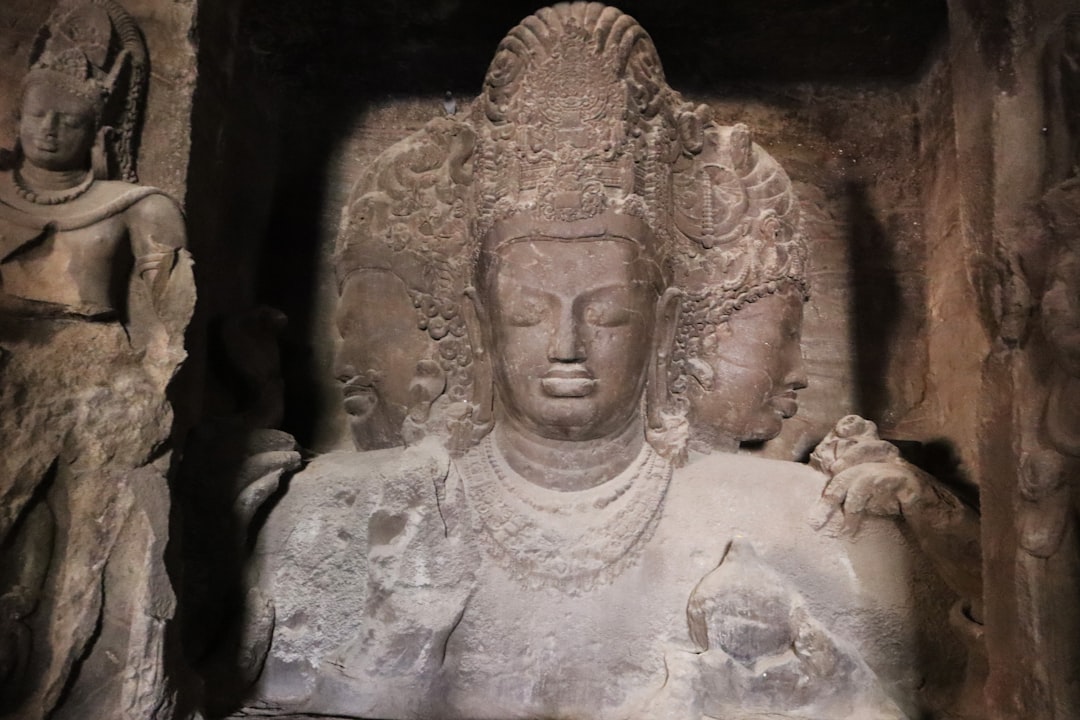
Elephanta Island. The ferry leaves from the Gateway of India, takes an hour each way, and drops you on an island in the harbor where 6th-century Hindu cave temples have been carved into the rock. The central Trimurti sculpture — a three-headed depiction of Shiva, twenty feet tall, cut from a single basalt face — is the reason to go. The ride across the harbor is its own thing: fishing boats, oil platforms, the receding skyline behind you. Allow half a day. Wear closed shoes; the path up to the caves is stepped and the monkeys are not shy.
Elephanta Caves half-day trip from Mumbai
Bandra. If you want a different Mumbai, take the local train up the western line to Bandra and spend the afternoon on Hill Road, Linking Road, and the Bandstand Promenade. This is where Bollywood lives. The cafés are good, the boutiques are interesting, the sea wall walk around to Bandra Fort is pleasant in the evening, and the Catholic-Mumbai neighborhoods — Ranwar, Chimbai — feel nothing like the rest of the city. It’s the “if this were a European city” Mumbai.
Where to Stay (and Why It Matters)
Mumbai’s traffic is bad in ways that require respect. A five-kilometer trip between Bandra and Colaba at the wrong time of day can take ninety minutes. Where you sleep determines what you can actually reach.
Colaba / Fort is the right call for a 48-hour first-timer. You can walk from your hotel to the Gateway of India, Kala Ghoda, the Oval Maidan, Marine Drive, and most of the UNESCO ensemble. Mid-range heritage places like Abode Bombay (a boutique hotel inside a restored 19th-century mansion) run $100–$150 a night. The Taj Mahal Palace itself is the splurge — book the heritage wing, not the tower, if you want the full 1903 experience. A harbor-facing room is worth the upgrade.
→ Hotels in Colaba on Booking.com
Bandra West is better for repeat visitors who’ve already done Colaba. Taj Lands End, Sofitel BKC, and a cluster of boutique properties along Linking Road put you in Mumbai’s most livable neighborhood — cafés, the Bandstand sea walk, Bollywood sightings at Pali Village Café, and some of the city’s best restaurants. Budget extra time for the commute to South Mumbai.
→ Hotels in Bandra West on Booking.com
Lower Parel / Worli is modern Mumbai — mill-district-turned-skyline — and the right base if you want rooftop bars, design hotels, and the Bandra-Worli Sea Link five minutes from your door. The Four Seasons with its AER rooftop is the headline here; the St. Regis is the other anchor. Good for one-night stopovers on business; less good for heritage sightseeing because everything you came to see is still 30 minutes south.
→ Hotels in Lower Parel on Booking.com
Getting Around (Trust the Locals, Not the Maps)
Mumbai’s local trains carry eight million people a day and are the fastest way to move north-south. Riding them during rush hour (8–10am, 5–8pm) is not recommended for a first-time visitor — it is physically intense, and you will not enjoy it. Mid-day and late evening, they’re fine and they’re fast. Buy a first-class ticket; it’s about thirty rupees and the carriages are less full.
For everything else, Uber and Ola work throughout the city and are cheap by any international standard. Auto-rickshaws are not allowed south of Bandra, so in Colaba and Fort you’ll use black-and-yellow Premier Padmini taxis — most of them still 1970s models, most of them still running. Insist on the meter.
From the airport (BOM): Plan 60–90 minutes to Colaba during the day, 45 at night. Prepaid taxi booths inside the terminal are the simplest option and the rates are posted. Uber is cheaper but pickups are a minor hassle.
Practical notes worth knowing: UPI payments (phone-based) are everywhere, but keep some small cash for street food and taxis. The water is not drinkable; buy bottled. Tipping is 10% at nice restaurants and is not expected at darshinis and street stalls. Dress modestly at religious sites — shoulders and knees covered — and bring socks, because you’ll be removing shoes. Mumbai is safer than its reputation, but keep an eye on your bag on the trains.
Ready to Plan Your Trip to Mumbai?
You’ve done the reading. Here’s everything you need to make it happen.
🎟️ What to Book in Advance
Some links in this post are affiliate links. If you book through them, CuriosityTrail earns a small commission at no extra cost to you. Recommendations are chosen on merit; commissions never decide what’s included.