Visiting Busan, South Korea: A Complete Guide
Quick Essentials
- 📍 Best Time to Visit: Late April through May or September through early November — spring is warm and rainless, autumn brings film festivals, fireworks over Gwangan Bridge, and comfortable walking temperatures.
- ✈️ Getting There: Search flights on Skyscanner | Direct from Seoul, Tokyo, Osaka, Taipei, Bangkok
- 🏨 Where to Stay: Browse Busan hotels on Booking.com
- 🎟️ Don’t Miss: Guided art walk through Gamcheon Culture Village on GetYourGuide
- 💰 Budget Range: $120–$250 per day for mid-range to splurge (hotels, meals, transport, one bookable experience)
Seoul absorbs all the first-timer energy. The palaces, the neon of Myeongdong, the K-pop mythology — it earns the attention. But Busan is what you go back to Korea for. It’s a port city that hasn’t fully polished itself for tourism, and that’s exactly the draw: raw seafood markets where the vendors are louder than the seagulls, hillside neighborhoods painted into open-air galleries, and a coastline that shifts from soft beach sand to dramatic cliffside temples within a single bus ride.
The pace here is different. Slower, saltier, shaped by the sea. Busan rewards the traveler who has already done the capital-city circuit and wants something with less choreography. Three to five days is the sweet spot — enough to let the city’s distinct districts reveal themselves without rushing between checkpoints.
Jagalchi and the Art of Eating in Busan
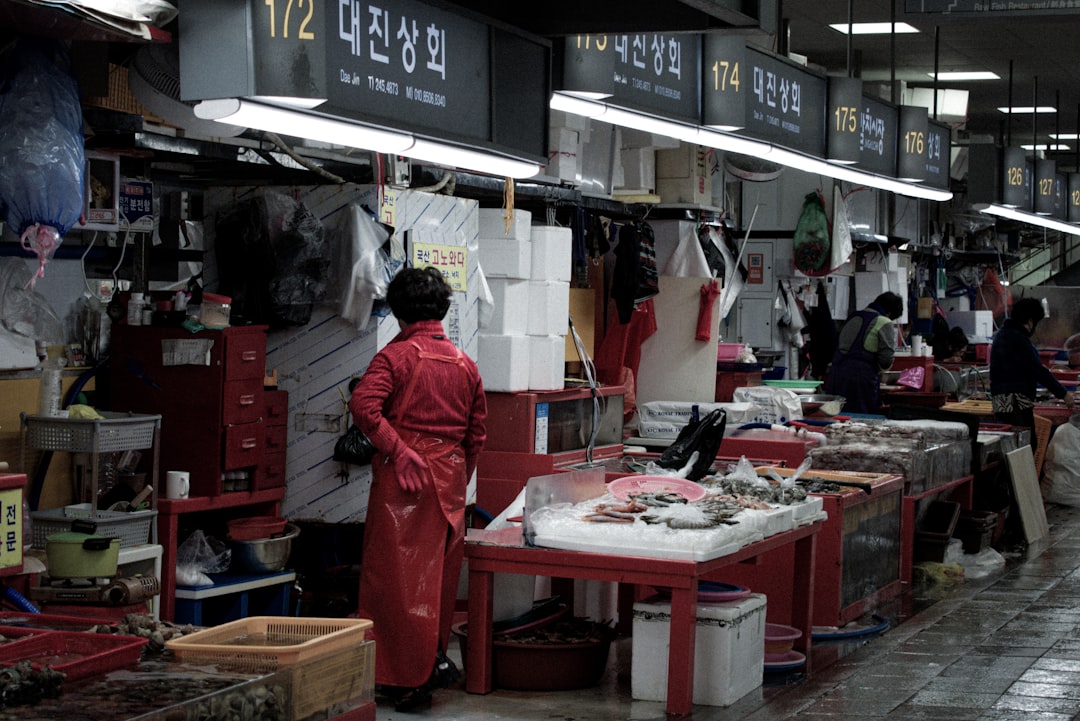
Start at Jagalchi. Not because it’s the obvious move, but because this market tells you everything about Busan in one visit. Korea’s largest seafood market sprawls across a multi-story building and a strip of outdoor stalls where fisherwomen — the jeonmae, many of them third-generation — sell what came in that morning. Point at a fish. It gets sliced. You eat it with soju at a plastic table overlooking the harbor. That’s the transaction. No reservations, no pretense.
The real Busan food vocabulary goes beyond the market, though. Dwaeji gukbap — a milky pork-bone soup served with rice and tender sliced meat — is the city’s working-class staple. Seomyeon’s Dwaeji Gukbap Street has the highest concentration of serious versions, most of which have been ladling from the same stock for decades. Eat there for lunch; it costs almost nothing and fuels a full afternoon of walking.
Milmyeon is the other signature: cold wheat noodles in a sweet-sour-spicy broth. It’s a summer dish technically, but locals eat it year-round and will argue passionately about whose is best. Then there’s ssiat hotteok at Gukje Market — seed-stuffed fried pancakes, nuttier and more complex than Seoul’s sweeter version. The lines move fast. Get two.
Eomuk — Busan’s fish cakes, famous across Korea — come skewered in steaming broth from stalls throughout Nampo-dong. Cheap, warming, and the kind of street food that makes a cold-weather visit worthwhile.
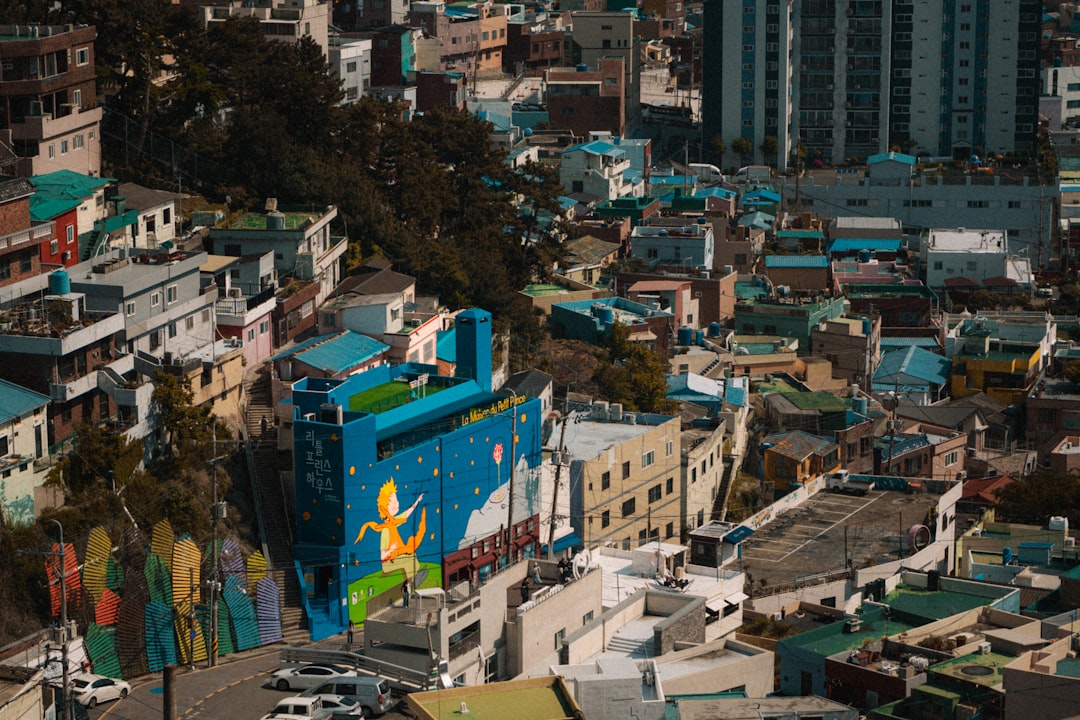
Gamcheon: The Hillside That Became a Canvas
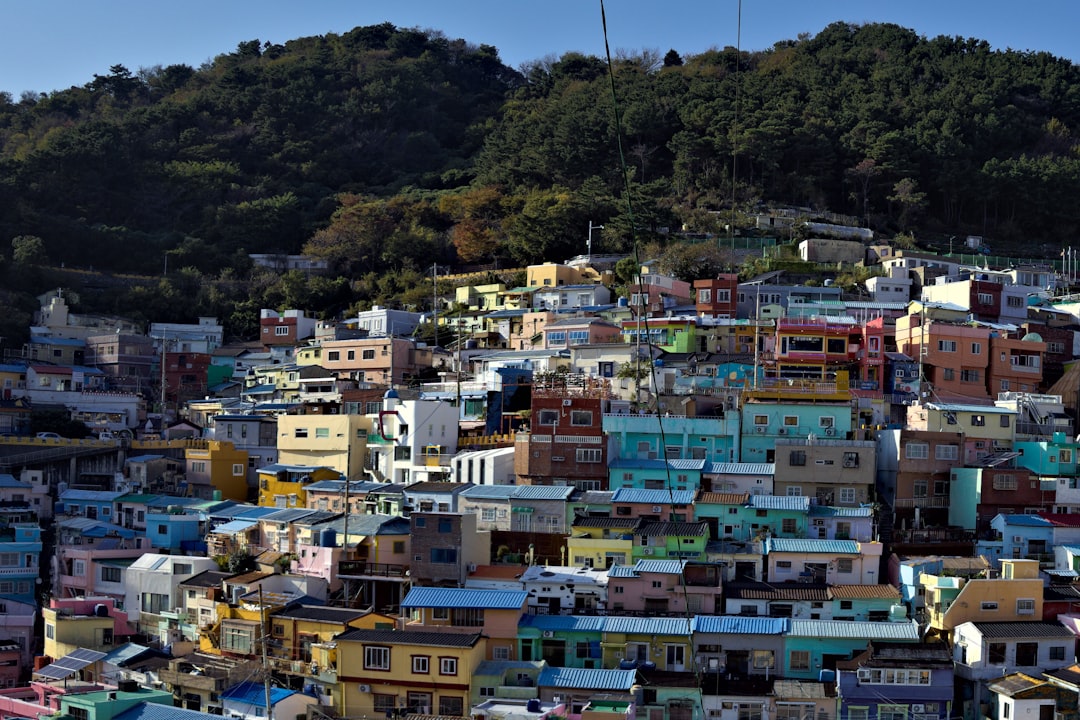
Gamcheon Culture Village started as a Korean War refugee settlement — terraced rows of improvised homes climbing a steep hillside above the harbor. In 2009, a community arts project turned it into something improbable: a pastel-colored open-air gallery where murals, sculptures, and indie cafés share space with the residents who never left.
It’s popular now. That needs saying. But the crowds thin beyond the main drag, and the upper lanes — steep, quiet, punctuated by unexpected installations — still reward aimless wandering. The village works best in the morning before tour groups arrive, or late afternoon when the light catches the colored walls and the harbor below turns gold.
The practical angle: wear comfortable shoes (the staircases are relentless), give yourself two hours minimum, and don’t skip the small galleries tucked into repurposed homes. The village map sold at the entrance gives you a stamp-trail route, but ignoring it is fine too.
Haedong Yonggungsa: A Temple Between Cliff and Sea
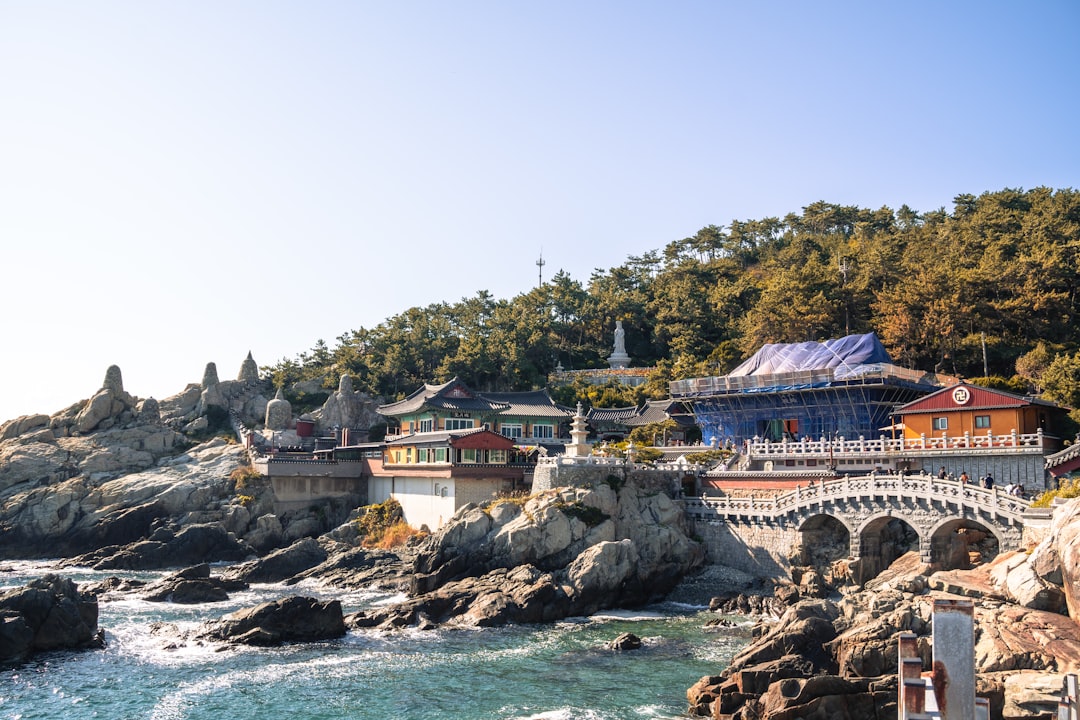
Most Korean temples sit in mountain forests. Haedong Yonggungsa sits on a cliff above the East Sea, reached by a descent of 108 stone steps, and the effect is completely different. Built in 1376, the temple complex clings to the rocks with the ocean crashing below — part spiritual site, part natural drama.
Come at sunrise. The golden light across the carved stone figures and the sound of waves beneath the prayer halls makes this one of the most atmospheric temple visits in the country. It’s roughly 30 minutes by bus from Haeundae, and the early timing means you’ll share it with monks and a handful of photographers rather than midday bus tours.
The Quieter Side: Huinnyeoul and Taejongdae
If Gamcheon is the hillside village everyone knows, Huinnyeoul is the one they haven’t found yet. Perched on the sea cliffs of Yeongdo Island, this smaller art village has ocean-view walking paths, a sea tunnel at the far end that opens to a dramatic cliff vista, and a fraction of the foot traffic. White and blue painted houses line narrow lanes above the water — someone will inevitably say “Busan’s Santorini,” but it has more texture than that comparison allows.
Combine it with adjacent Taejongdae Park for a half-day that covers Busan’s most dramatic coastal scenery. The cliffs here drop straight to the sea, and the walking trail through the forest and along the edge feels genuinely wild despite being twenty minutes from downtown.
Where to Base Yourself
Three neighborhoods, three different trips.
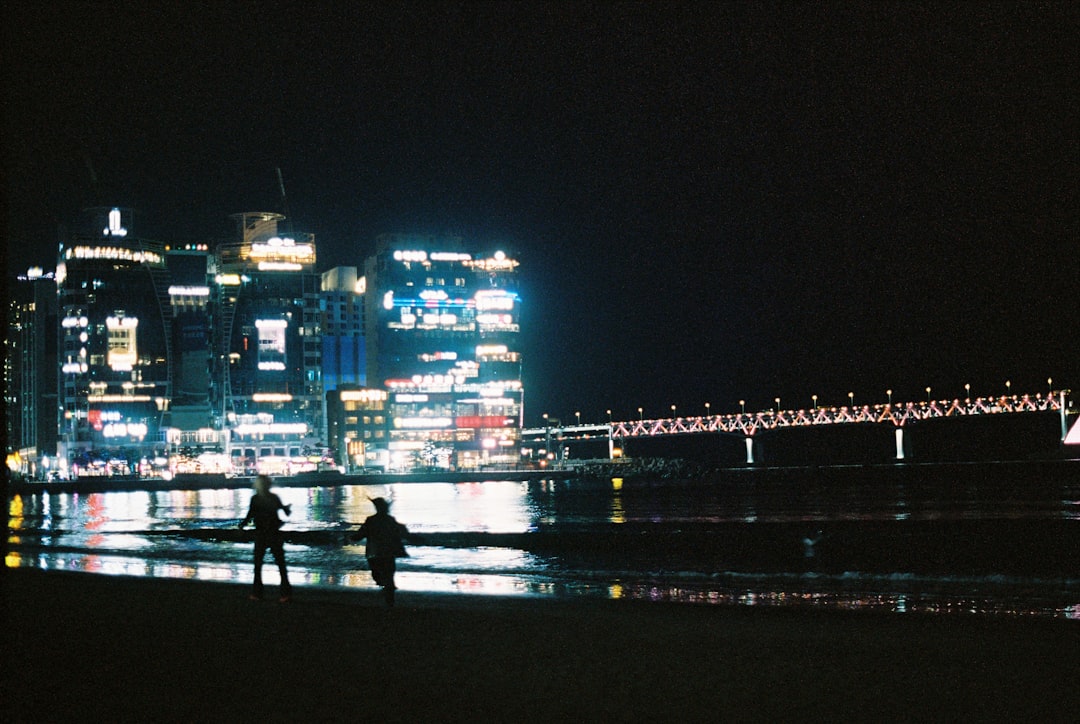
Haeundae is the beach district — high-rises, rooftop bars, the Blue Line Park sky capsule, and a long sandy shoreline. It’s the most expensive area but also the most walkable for coastal attractions. L7 Haeundae by Lotte puts you directly on the beachfront with views from the rooftop bar that justify the premium. → Browse Haeundae hotels on Booking.com
Seomyeon sits at the geographic center and the transit crossroads. More affordable, excellent for street food (it’s where Dwaeji Gukbap Street lives), and connected by subway to both the eastern beaches and the western markets. This is the smart base if you plan to cover the whole city efficiently. → Browse Seomyeon hotels on Booking.com
Nampo-dong drops you into the thick of market culture — Jagalchi, Gukje, BIFF Square, Busan Tower, and walking distance to Gamcheon are all at your doorstep. The neighborhood is grittier and less polished than Haeundae, which is part of its appeal. → Browse Nampo-dong hotels on Booking.com
Beyond the Obvious: What to Book
Gamcheon works fine on your own, but a guided art walk with a local adds the refugee history layer that the murals alone don’t explain. The story transforms pretty walls into something more significant. → Gamcheon Culture Village guided art walk on GetYourGuide
A Korean cooking class focused on Busan-style seafood — haemul pajeon, raw fish preparation, the local approach to jjigae — gives you something to take home beyond photos. Several good ones operate near Haeundae. → Busan seafood cooking class on GetYourGuide
The evening street food tour through Gukje Market and Nampo-dong covers ssiat hotteok, tteokbokki, eomuk, and enough context about each stall to make you feel like less of a tourist pointing randomly. → Busan evening street food tour on GetYourGuide
And if the weather cooperates, Spa Land at Centum City — a sprawling jjimjilbang (Korean bathhouse complex) inside what happens to be the world’s largest department store — is the perfect jet-lag recovery or rainy-day fallback. No booking needed; just show up.
Planning It: When, How Long, What to Know
Three to five days is right. Less than three and you’re sprinting between districts; more than five and you’re stretching thin unless you add day trips to Gyeongju or Tongyeong.
April–May gives you lotus lantern festivals, comfortable temperatures (16–24°C), and almost no rain. September–November brings the Busan International Film Festival (early October), the Gwangalli Fireworks Festival, and the Jagalchi Festival — all under clear autumn skies.
Summer works if you want beach energy — the Haeundae Sand Festival and Busan Sea Festival bring concerts and fireworks — but humidity is real and the beach crowds are dense.
The subway covers most key areas. A T-money card (tap-and-go transit card, available at any convenience store) is all you need. Between Haeundae and Nampo-dong, expect 30–40 minutes by train.
Tipping isn’t expected anywhere. Most restaurants are card-friendly, but market stalls and smaller street food vendors are cash-only — keep 50,000-won notes broken into smaller denominations.
Ready to Plan Your Trip to Busan?
You’ve done the reading. Here’s everything you need to make it happen.
Some links in this post are affiliate links. If you book through them, CuriosityTrail earns a small commission at no extra cost to you. Recommendations are chosen on merit; commissions never decide what’s included.