Zurich Beyond the Banks: Creative Neighborhoods, Lakeside Swimming & the Food Scene You Didn’t Expect
Quick Essentials
- ✈️ Flights:
Search flights to Zurich
- 🏨 Hotels:
Browse hotels in Zurich
- 🎟️ Top Experience:
Lindt Home of Chocolate Museum
- 🚗 Car Rental:
Compare rental cars in Zurich
Forget What You Think You Know
Zurich has a branding problem. Say the name and people picture bankers in dark suits crossing Bahnhofstrasse with somewhere expensive to be. That reputation isn’t wrong exactly — the financial district exists and it’s as buttoned-up as advertised. But it’s about as representative of the actual city as Wall Street is of New York.
The other Zurich is a city that swims to work. Where a repurposed railway viaduct houses a farmers’ market and a bag company turns old truck tarpaulins into design objects. Where the birthplace of Dada sits on a quiet lane in the old town, still staging provocations that most tourists walk past without noticing. The creative neighborhoods and lakeside culture here aren’t hidden — they’re just overshadowed by a three-letter banking reputation that doesn’t tell the whole story.
What makes Zurich genuinely interesting for someone who’s already done the European capitals is the contrast. Zürich West, the old industrial quarter, sits a twenty-minute walk from Niederdorf, the medieval old town. One gives you converted warehouses and street art. The other gives you painted facades and artisan chocolate. Both are doing something more interesting than the financial center ever bothered to advertise.
Zürich West: The Industrial Quarter That Reinvented Itself
If Zurich has a single neighborhood that disproves the banking cliché, it’s Kreis 5. The old factory district west of the Hauptbahnhof went through the conversion story you’ve seen in other cities — warehouses to galleries, breweries to bars — but did it with more restraint than most. The concrete and steel stayed. The neighborhood didn’t get precious about itself.
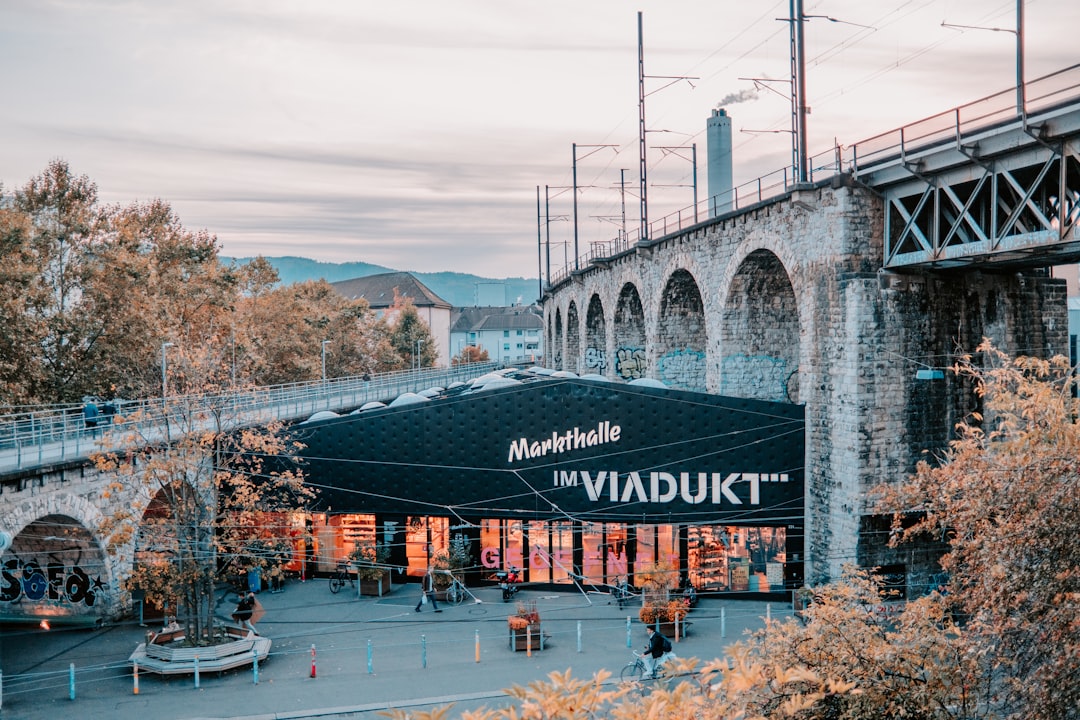
Im Viadukt is the centerpiece and the best introduction to this side of the city. The railway viaduct that cuts through the district was repurposed into a long stretch of independent shops, studios, delis, and a weekly farmers’ market. You can walk the length of it in twenty minutes and leave with olive oil from a tiny importer, a handmade notebook, and a very good espresso. It’s local commerce that happens to be architecturally interesting, not the other way around.
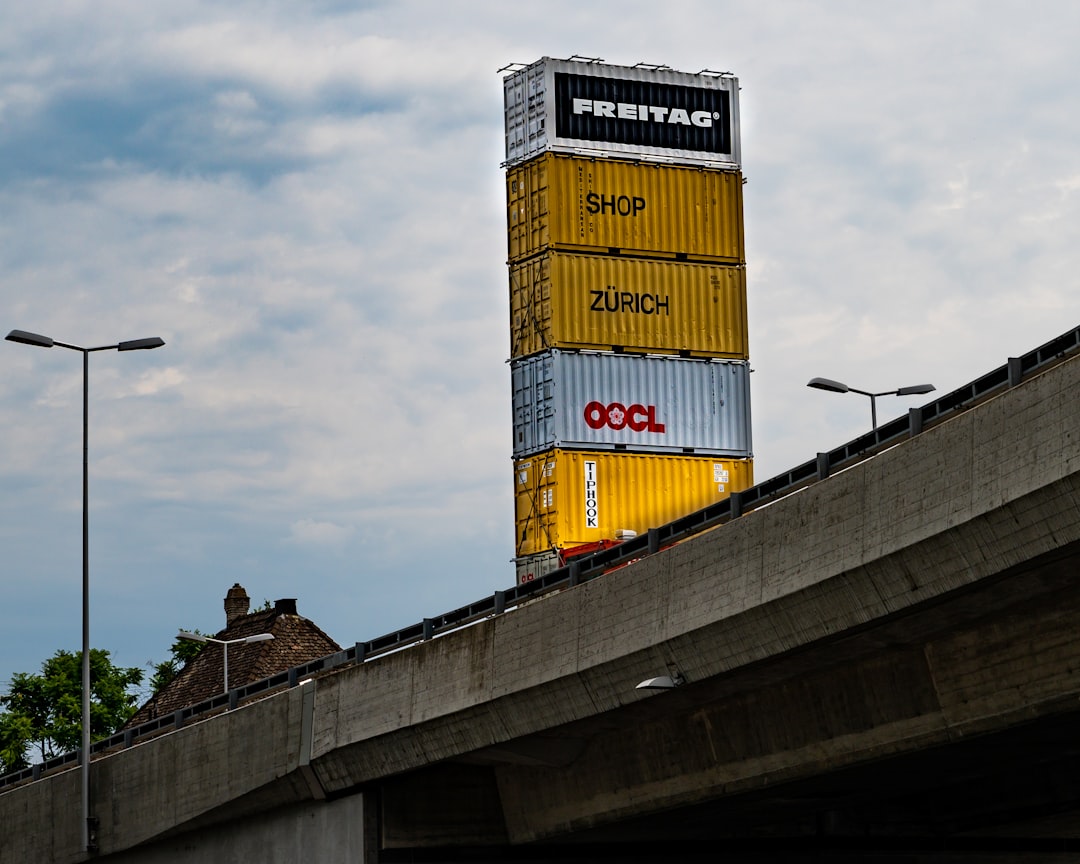
The Freitag Tower is worth the detour even if you never buy a bag. Seventeen shipping containers stacked into a tower, housing the brand’s flagship store and a rooftop lookout over the rail yards and the city. The views are unobstructed and free. Below it, the surrounding blocks are daubed with street art and house the kind of bars that don’t need a sign out front.
The brewery scene in this quarter has expanded considerably. Several taprooms occupy converted warehouse spaces and do proper craft beer — a welcome counter to the fondue-and-wine default. On a warm evening, the outdoor seating along the Viadukt fills with a crowd that looks nothing like the Bahnhofstrasse lunch rush.
Niederdorf and the Old Town: Where Dada Started and the Lanes Still Surprise
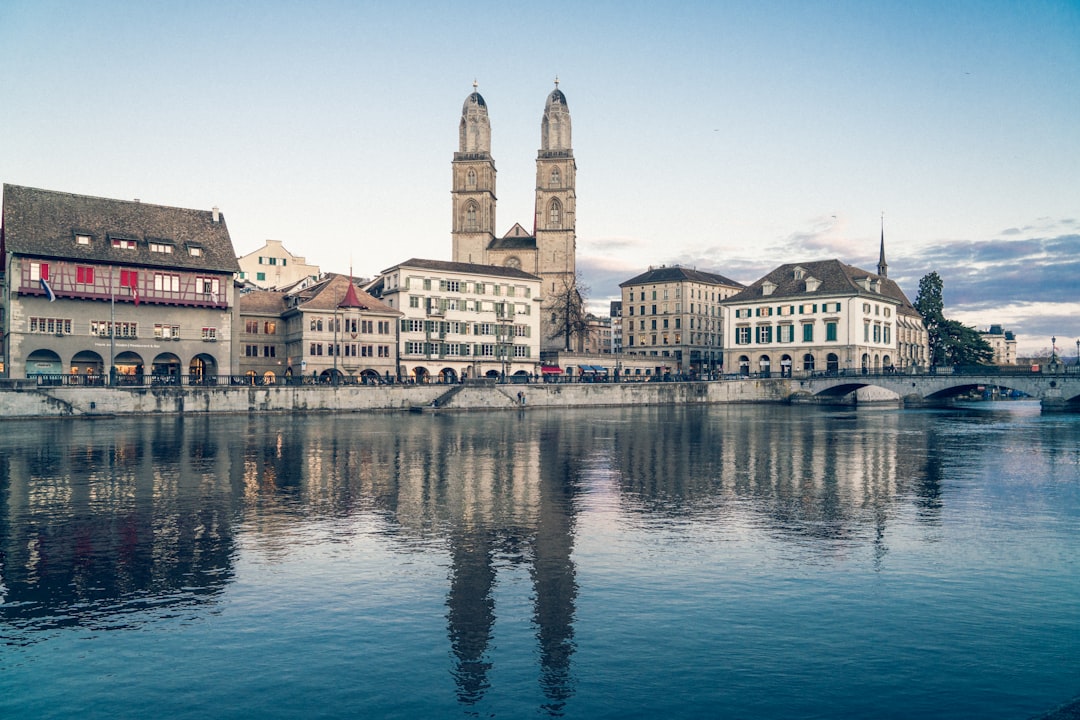
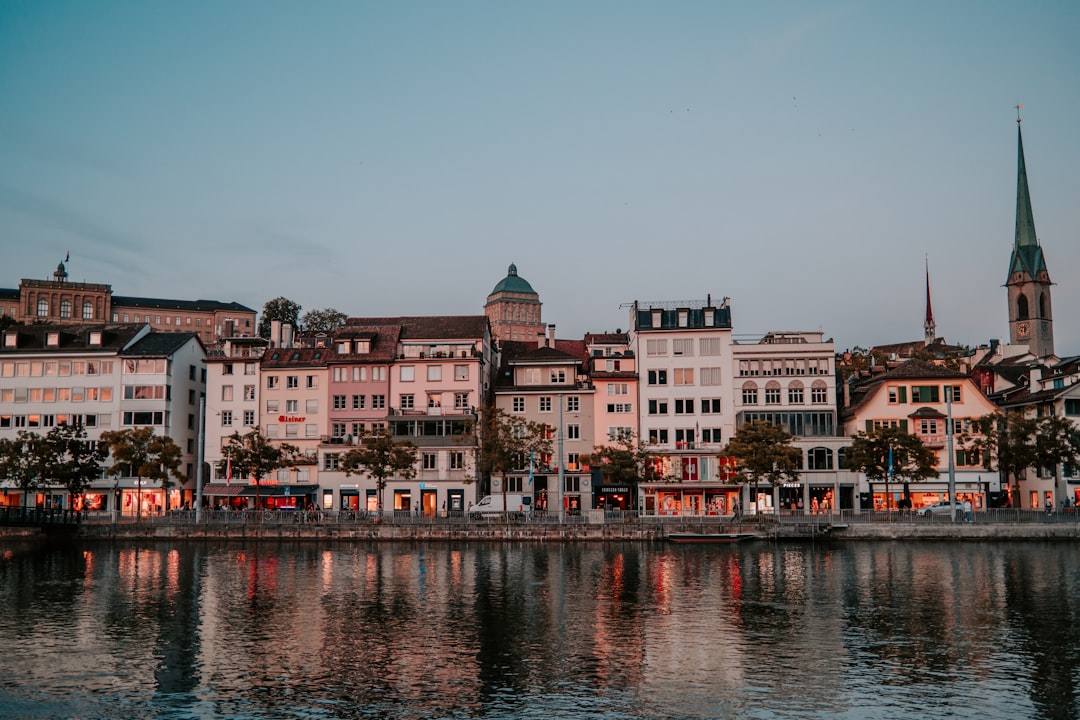
Cross the river from the Hauptbahnhof and you’re in Niederdorf, which manages to be both the tourist-friendly old town and something more stubborn than that. The lanes are narrow, the buildings are painted in faded pastels, and the ground floors are occupied by the kind of shops that sell one thing well — handmade candles, artisan chocolate, used books in four languages.
Cabaret Voltaire sits at Spiegelgasse 1, which is easy to walk past because nothing about it screams “birthplace of an art movement.” Hugo Ball and Emmy Hennings opened it in 1916, and the Dada movement — anti-war, anti-rational, gleefully absurd — launched from this room. It still functions as a cultural space with rotating exhibitions and performances. Most visitors heading for the Grossmünster walk right by it. Their loss.
The café culture in Niederdorf is less Instagram-ready than you’d expect and better for it. The places that have survived here serve good coffee and let you sit. That’s the pitch. Confiserie Sprüngli, a few streets over on Paradeplatz, is where you go for Luxemburgerli — Zurich’s answer to the macaron, except lighter, smaller, and sandwiched with buttercream. They’re not the same thing as French macarons no matter what the internet tells you. Buy a box. You’ll finish them before you reach the lake.
Into the Water: Zurich’s Badi Culture
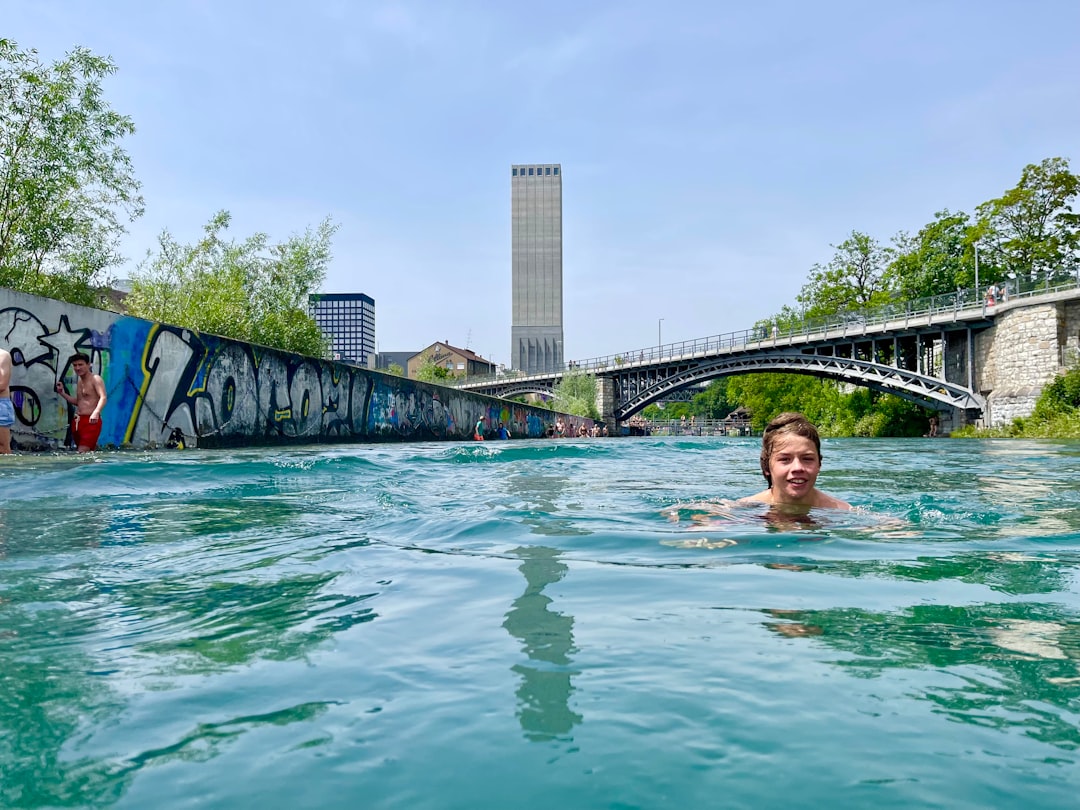
Here’s the thing about Zurich that changes how you experience the city: in summer, the water is the social infrastructure. The Limmat River and Lake Zurich aren’t scenic backdrops. They’re where people spend their evenings, their lunch hours, and in some cases, their commute.
The Badis — Zurich’s public bathing facilities — line both the river and the lake. These aren’t pools in the way North Americans think of them. They’re wooden platforms and changing cabins built over the water, with cafés and sundecks attached. Oberer Letten, on the Limmat, is the one the locals claim. People jump in, let the current carry them downstream for a few hundred meters, climb out, walk back, and do it again. Some of them do this on their way to work.
Seebad Enge, on the lake side, has a different energy — calmer water, grassy lawns, and a café that serves wine alongside the coffee. It’s the kind of place where the line between swimming and socializing dissolves completely. On a July evening, half the city seems to be floating somewhere.
This Badi culture is Zurich’s least-exported quality and the one that most changes how the city feels. When you spend an afternoon at Oberer Letten, the banking capital disappears entirely. What’s left is a river city that figured out how to use its water better than almost anywhere in Europe.
The Table: What to Eat and Where to Find It
Zurich’s food reputation lags behind the reality, which is fine because it keeps the reservations manageable. The city eats well — not just expensively (though it is expensive) but with a specificity that rewards knowing what to order.
Zürcher Geschnetzeltes is the local dish you should try at least once: sliced veal in a cream and white wine sauce, served over rösti. Kronenhalle is the legendary spot for it — a restaurant where the walls are hung with original Picassos and Chagalls and the Geschnetzeltes arrives without irony. It’s a splurge, but the room alone is worth the price of admission.
Birchermüesli was invented here by Dr. Bircher-Benner, and the versions you get at Zurich cafés bear little resemblance to the hotel-buffet approximation. It’s soaked overnight, served cold, and the texture is the whole point. Ask for the original preparation at a traditional café — the ones that make it fresh daily are still out there.
For fondue, skip the Bahnhofstrasse tourist spots and find a neighborhood Stübli. The smaller rooms where locals go serve better cheese, charge less, and don’t rush you. Fondue is meant to be slow.
The craft beer scene in Zürich West is worth an evening on its own. Several brewery taprooms have opened in converted industrial spaces, pouring styles that range well beyond the expected lagers. Pair that with a cheese plate and you’ve got a dinner that costs half of what the old-town restaurants charge.
When the City Throws a Party
Zurich’s events calendar tilts heavily toward summer, and timing a visit around one of them is worth the effort.
Street Parade, on August 8, 2026, is the one even non-techno fans should experience. The world’s largest techno parade sends thirty-plus Love Mobiles along the lakefront, and the energy transforms the entire city for a day. It’s free, it’s joyful, and it’s nothing like the sober reputation Zurich tries to project.
The Zurich Film Festival runs September 24 through October 4, screening roughly a hundred films over eleven days. It’s the most significant cinema event in the German-speaking world and genuinely accessible to non-industry attendees. If you’re in town for early autumn, it’s worth building a day around.
Caliente, in early July, brings Latin music, food, and market stalls for a long weekend. Theater Spektakel takes over the lakeshore in late August with international performing arts. Both feel like discoveries — events that most international visitors don’t know exist.
Where to Base Yourself
Kreis 5 / Zürich West is the pick for travelers who want the creative, neighborhood-feel Zurich. Hotels here tend toward industrial-chic design, and you’re walking distance to Im Viadukt, the breweries, and the best street art. It’s also a short tram ride to the lake.
→ Browse Zürich West hotels on Booking.com
Altstadt (Niederdorf side) puts you in the historic lanes with Cabaret Voltaire and Confiserie Sprüngli nearby. It’s the most walkable base for first-time visitors who still want character over chain-hotel polish.
→ Browse Altstadt hotels on Booking.com
Enge sits south of the center on the lake side, close to Seebad Enge and the quieter swimming spots. The neighborhood has a residential feel and excellent restaurants without the tourist markup.
→ Browse Enge hotels on Booking.com
The Practical Bits
Zurich is expensive. That’s the one thing its reputation gets right. A sit-down dinner for two with wine runs CHF 120–180 easily. Coffee is CHF 5–6. Budget accordingly and don’t fight it — the quality generally matches the price.
The ZVV transit system is excellent. Trams, buses, and S-Bahn trains cover the city efficiently, and a 24-hour pass is your best bet. Walk when you can — the city is compact enough that most neighborhoods connect on foot within twenty to thirty minutes.
The Swiss Travel Pass covers most intercity transport and museum admissions if you’re combining Zurich with other Swiss destinations. For a day trip, Rhine Falls and the medieval town of Stein am Rhein make an easy half-day excursion.
→ Rhine Falls & Stein am Rhein day trip
If you only have time for one bookable experience, the Lindt Home of Chocolate is a surprisingly good use of an afternoon — the production walk-through is genuinely interesting, the tasting is generous, and the building itself is worth the trip to Kilchberg.
→ Lindt Home of Chocolate Museum tickets
Tipping isn’t obligatory the way it is in North America, but rounding up or leaving 5–10% is standard in restaurants. Most places accept cards, but smaller market stalls and some traditional restaurants still prefer cash.
Plan Your Trip to Zurich
Best time to visit: June through September — the river swimming and lakeside Badis open up, events peak, and the city lives outdoors.
✈️ Getting There
Search flights to Zurich on Skyscanner
🏨 Where to Stay
Zürich West hotels — Industrial-chic neighborhood with creative energy and brewery taprooms
Altstadt / Niederdorf hotels — Historic lanes, walkable to everything, character-driven stays
🎟️ What to Book in Advance
Lindt Home of Chocolate Museum
Lake Zurich Cruise & Old Town Walking Tour
Rhine Falls & Stein am Rhein Day Trip
Some links in this post are affiliate links. If you book through them,
CuriosityTrail earns a small commission at no extra cost to you.
Recommendations are chosen on merit; commissions never decide what’s included.