Visiting Malacca, Malaysia: A Complete Guide
Quick Essentials
- 📍 Best Time to Visit: May through September — the driest months, before the Chinese New Year surge that doubles hotel prices and clogs Jonker Street.
- ✈️ Getting There: Search flights on Skyscanner | Direct from Singapore, Bangkok, Jakarta
- 🏨 Where to Stay: Browse Malacca hotels on Booking.com
- 🎟️ Don’t Miss: Melaka River Cruise on GetYourGuide
- 💰 Budget Range: $60–$150 per day for mid-range to splurge, meals included
Malacca doesn’t announce itself. There’s no skyline, no grand arrival, no postcard moment that makes you reach for your phone before you’ve set down your bag. What it has instead is something rarer: a city where five centuries of colonial ambition settled into the food, the architecture, and the particular way the light falls on a row of Peranakan shophouses at four in the afternoon.
The Portuguese built a fort here in 1511. The Dutch painted everything red and governed for 183 years. The British drew the administrative lines. And through all of it, the Peranakan community — Chinese merchants who married Malay women and created a culture that belonged to neither and both — kept cooking. Their laksa, their kuih, their gula Melaka desserts are still the best argument for what happens when cultures collide and nobody wins outright.
Most visitors come for Jonker Street’s night market and leave the next morning. That’s a mistake. Malacca is a two-day city minimum, and the best of it sits just off the tourist spine — across a bridge, down a quieter lane, in a kitchen that doesn’t have an English menu.
Three Empires, One River
You can walk through Malacca’s colonial history in forty-five minutes. Start at the Porta de Santiago — the last stone standing from A Famosa, the Portuguese fortress Alfonso de Albuquerque ordered built in 1512. It’s smaller than you expect, weathered into something that looks more ornamental than military. That’s because the Dutch and the British both dismantled pieces of it over the centuries, the way empires tend to erase what came before and call it urban planning.
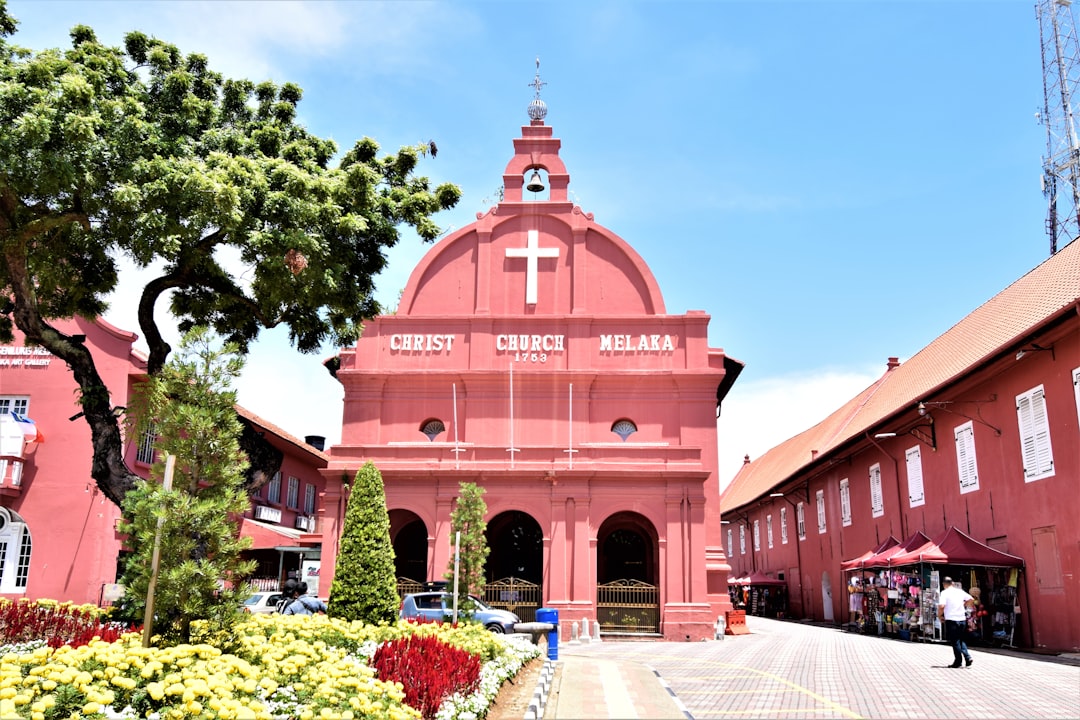
Walk uphill to St. Paul’s Church, roofless since the Dutch decommissioned it, and then down to the Stadthuys — that unmistakable terracotta-red compound the Dutch built starting in 1641. It’s the oldest surviving Dutch colonial building in Asia, and it functions now as a cluster of museums. The history museum inside is worth an hour if you’re interested in trade routes and spice-economy politics; skip the literature museum unless you read Malay.
The British period left less visible architecture and more invisible infrastructure — the legal system, the land registry, the road grid. What you notice walking around is how the three layers coexist without resolving. A Portuguese gateway leads to a Dutch church across the street from a row of Chinese shophouses built under British governance. Malacca doesn’t curate this tension. It just lives in it.
Where the Peranakan Kitchen Begins
If you’ve come this far and haven’t eaten yet, correct that immediately. Malacca’s food scene is the real heritage site, and Peranakan cuisine — called Nyonya cooking here — is its foundation.
Start with Nyonya laksa at Kedai Kopi Juat Lye. This is not the light, tangy laksa you get in Penang. Malaccan laksa is thick, built on a coconut-milk base dense with ground spices, poured over yellow noodles with tofu puffs bobbing on top. It’s a meal that means business. The shop is small and cash-only.
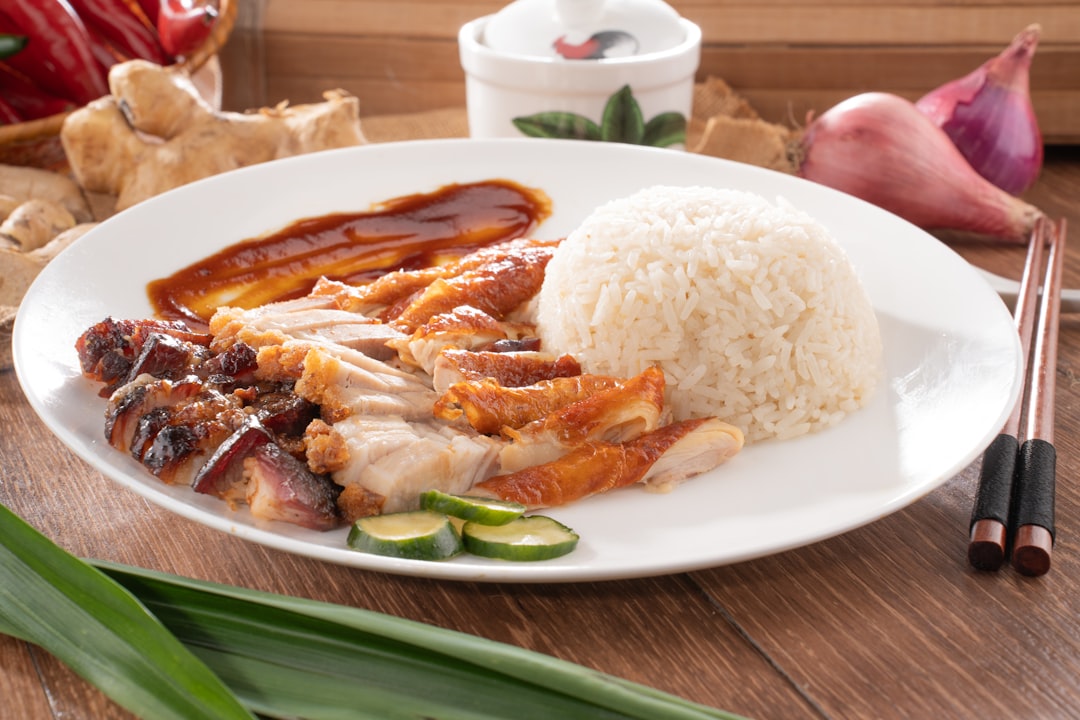
Then there are the chicken rice balls — Malacca’s most famous contribution to the regional food canon. At Hoe Kee, the rice is hand-rolled into compact spheres and served alongside poached chicken that’s been steamed until it barely holds together. The balls exist because traders needed portable rice they could eat with one hand. History you can taste.
For a deeper Nyonya experience, Donald & Lily’s has been serving since 1980 and earned a profile in the New York Times. The pie tee — tiny pastry cups filled with jicama and shrimp — are precise and addictive. Nancy’s Kitchen is the more polished option, with a full menu that covers the Nyonya greatest hits: otak-otak, ayam pongteh, and a kapitan curry that stains your memory.
And then there’s the sweet side. Cendol here is the real thing — shaved ice over green pandan jelly noodles, drenched in coconut milk and dark gula Melaka syrup. Gula Melaka is palm sugar made from coconut sap, boiled and set in bamboo tubes. It tastes like caramel’s more interesting cousin. Sago gula Melaka — silky tapioca pearls in coconut milk with that same dark syrup — is the Peranakan dessert you’ll think about on the flight home.
Along the River and Beyond Jonker Street
Jonker Street is fine. The night market has its charms — coconut shakes, trinket stalls, the ambient noise of a thousand tourists negotiating the same narrow sidewalk. Go once, on a Friday or Saturday evening when it’s at full volume. Then leave it behind.
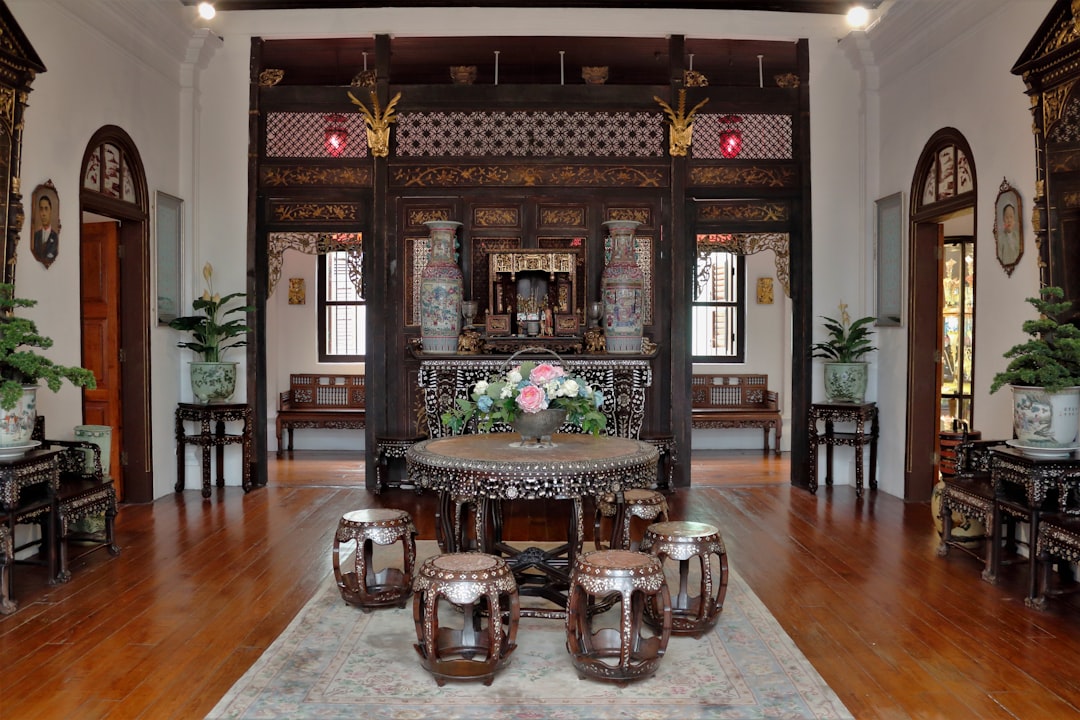
Heeren Street (Jalan Tun Tan Cheng Lock), one block south, is where the real atmosphere lives. The shophouses here are older, quieter, and better preserved. The Baba & Nyonya Heritage Museum occupies a restored 19th-century townhouse and gives you the domestic interior that Jonker Street’s shops won’t — carved wooden screens, ceramic tile work, the specific aesthetic of a community that merged Chinese proportions with Malay craftsmanship and Dutch street planning. It’s a small museum. Give it forty-five minutes.
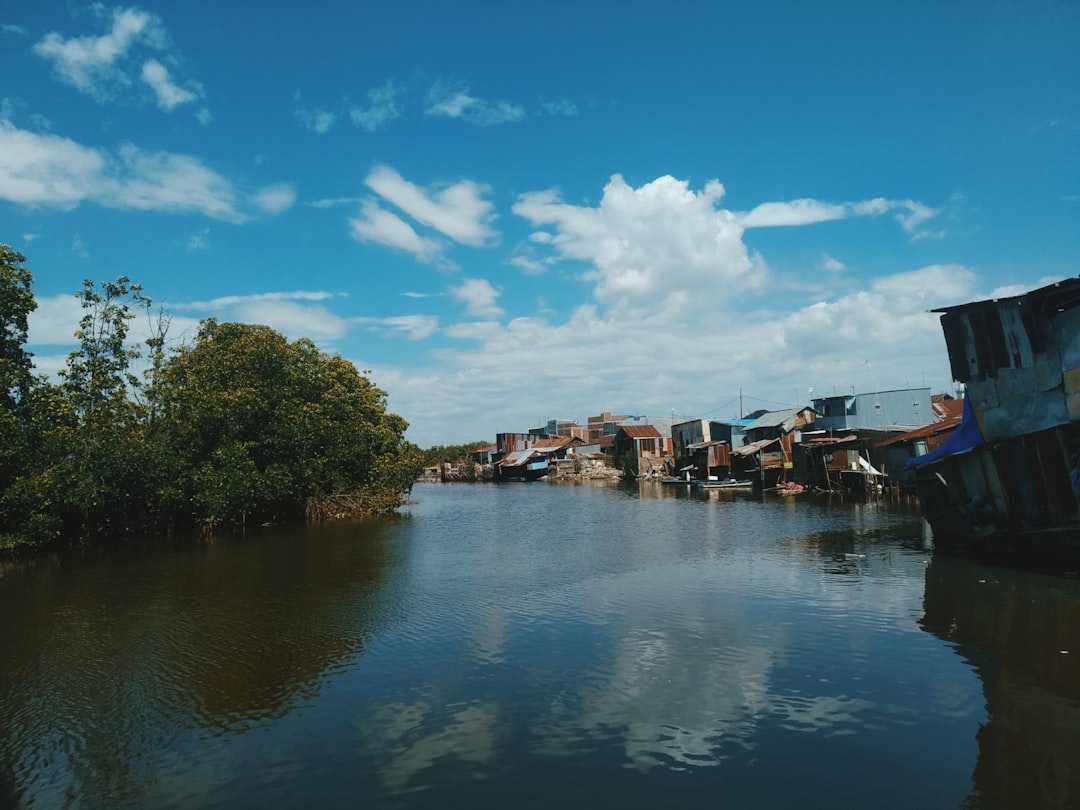
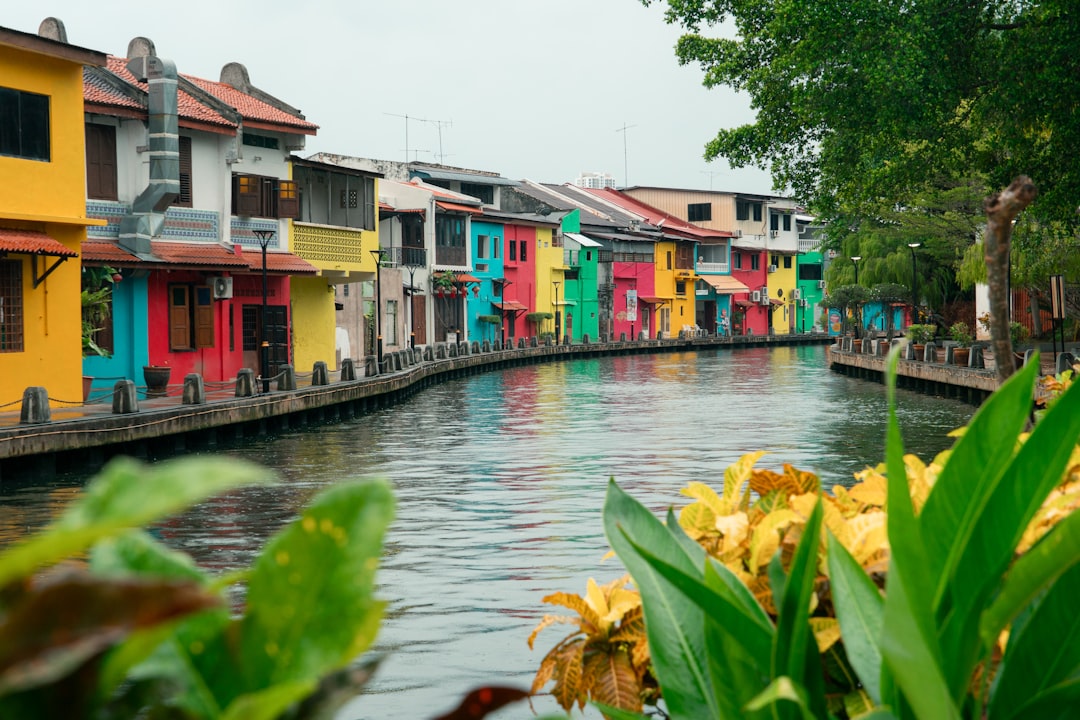
The Melaka River Cruise deserves the hype it gets. Forty-five minutes by boat, from Taman Rempah jetty south through the heritage zone. The street art on the riverbank walls is better seen from the water, and the colonial buildings take on a different character when you’re looking up at them from river level. Go after dark if you can — the murals are lit, the boat traffic thins, and the whole corridor feels less like a tourist attraction and more like a city breathing.
→ Melaka River Cruise tickets on GetYourGuide
Cross the pedestrian bridge near Kampung Morten and the whole register shifts. Kampung Morten is a living Malay village — about a hundred traditional wooden houses on stilts, laundry on the line, cats sleeping under the raised floors. Villa Sentosa, the village’s unofficial cultural center, opens its doors to visitors who ask politely. This is not a museum. It’s someone’s home, filled with generations of objects, and the family will walk you through it with genuine warmth. Most tourists never cross that bridge.
The Portuguese Settlement, a short Grab ride south, is another layer most visitors skip. The descendants of 16th-century Portuguese soldiers still live here, still fish, and still cook a devil curry — debal — that carries the heat of centuries. The grilled fish at the waterfront stalls is simple and excellent. Come for lunch on a weekday when the tables are mostly locals.
→ Malacca heritage walking tour on GetYourGuide
Where to Sleep in a Shophouse
Malacca’s best accommodation runs directly through its heritage. Skip the highway-strip business hotels and stay inside the old town.
Liu Men Hotel is the standout. Six pre-war shophouses restored with an art deco sensibility — exposed ceiling beams, antique fans, herringbone floors, free-standing bathtubs, wooden shutters that open onto the street. It manages the trick of feeling historic without feeling museum-stiff. Minutes from Jonker Street on foot.
→ Liu Men Hotel on Booking.com
The Majestic Malacca sits on the river and incorporates a 1920s mansion into its structure. The spa runs Peranakan-inspired treatments. It’s the splurge option, and it earns it — the common areas alone are worth walking through even if you’re not a guest.
→ The Majestic Malacca on Booking.com
For something more modest, the Heeren Street guesthouses put you in converted shophouses at a fraction of the hotel price. You’ll get character over amenities — creaky stairs, shared courtyards, air conditioning that works when it feels like it. That’s part of the deal.
→ Browse Malacca heritage hotels on Booking.com
Practical Notes
Malacca is flat and compact. You can walk from A Famosa to the Portuguese Settlement in thirty minutes if you’re motivated, and the entire heritage core fits inside a leisurely afternoon stroll. Grab is cheap and available for anything beyond walking distance — the app works the same as it does in KL and Singapore.
Avoid Chinese New Year (usually late January to mid-February) unless you specifically want the festival energy. Accommodation prices double, Jonker Street becomes a slow-moving crowd, and restaurant wait times stretch past an hour.
Cash is still preferred at hawker stalls and kopitiams, though most restaurants and hotels take cards. Singapore dollars are occasionally accepted at tourist-facing shops, but bring ringgit.
The heat is real — equatorial, humid, and persistent. Do your walking before 11am or after 3pm. The river cruise and Kampung Morten are both better in the late afternoon light anyway.
Ready to Plan Your Trip to Malacca?
You’ve done the reading. Here’s everything you need to make it happen.
🎟️ What to Book in Advance
Some links in this post are affiliate links. If you book through them, CuriosityTrail earns a small commission at no extra cost to you. Recommendations are chosen on merit; commissions never decide what’s included.