Saltfish, Georgian Columns, and Rum Shops: The Antigua Most Visitors Miss
Quick Essentials
- 📍 Best Time to Visit: December through April — dry trade-wind weather, calm seas, and if you time it for late April, Antigua Sailing Week fills English Harbour with racing yachts and an energy you won’t find the rest of the year.
- ✈️ Getting There: Search flights on Skyscanner | Direct from Miami, New York JFK, Toronto
- 🏨 Where to Stay: Browse Antigua hotels on Booking.com
- 🎟️ Don’t Miss: Nelson’s Dockyard, Shirley Heights & Ruins Tour on GetYourGuide
- 🚗 Car Rental: Compare rental cars on Skyscanner — you’ll want one for English Harbour and the east coast
- 💰 Budget Range: $150–$300 per day for mid-range to splurge travel (excluding resort rates)
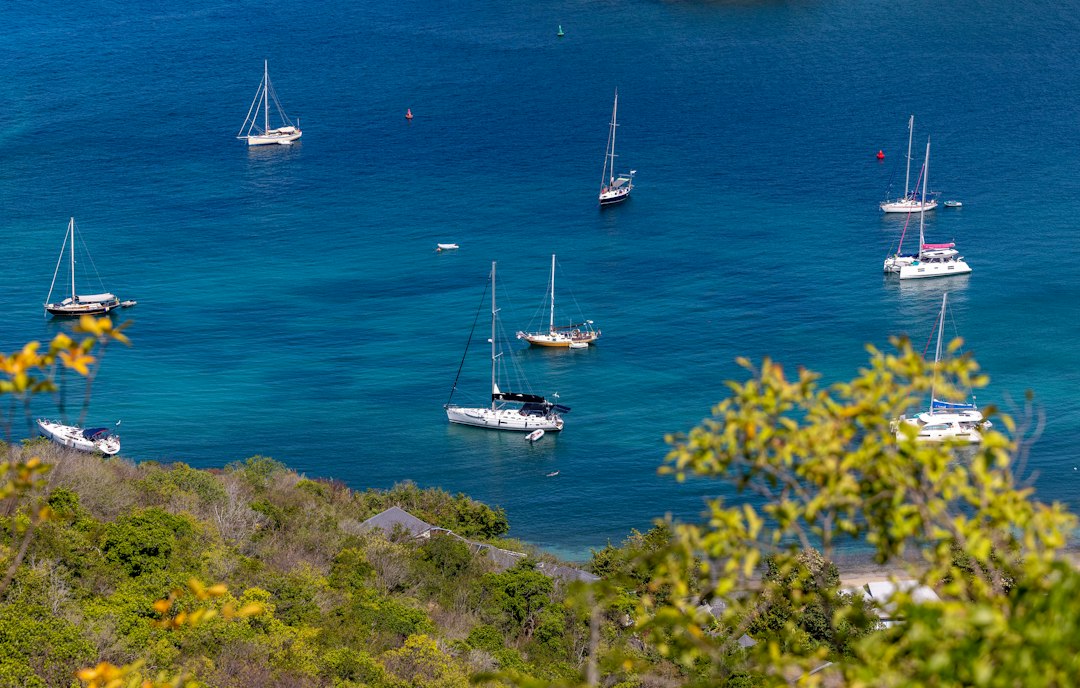
Most people who visit Antigua never leave their resort. They fly in, shuttle past St. John’s without stopping, check into a compound on the west coast, and spend a week looking at the Caribbean through the frame of a swim-up bar. It works. The beaches are genuinely exceptional — 365 of them, supposedly, one for every day of the year. But the beaches aren’t what makes Antigua interesting.
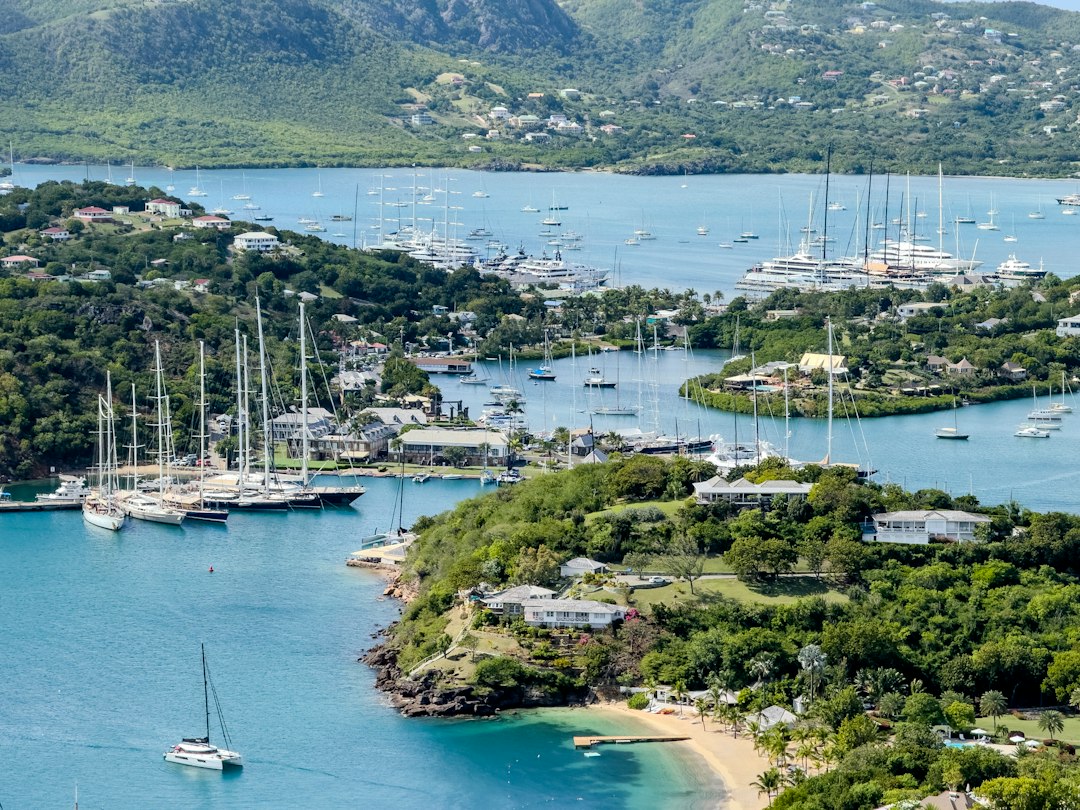
What makes it interesting is what’s behind the beach. St. John’s is a capital city with Georgian bones and pastel skin, a cathedral that’s been rebuilt twice after earthquakes, and a public market where you’ll find more black pineapples than selfie sticks. Thirty minutes south, English Harbour holds the only continuously working Georgian-era dockyard in the world — a place where restored 18th-century naval buildings stand alongside modern superyachts, and the rum punch has been flowing since before Nelson complained about being stationed here.
This is the Antigua worth the airfare. Not a resort. A place.
Walking St. John’s: Pastel Walls and Georgian Bones
The capital gets dismissed as a cruise port, which is unfair. Yes, Heritage Quay exists — a duty-free shopping strip aimed squarely at passengers with four hours to kill. Walk past it. The city has more to offer than that, and it starts about two blocks in.
St. John’s Cathedral dominates the skyline with its twin white baroque towers, visible from nearly everywhere in town. The current structure dates to 1845, rebuilt in stone after the previous wooden versions couldn’t survive the Caribbean’s habit of shaking the ground. The interior is encased in pitch pine — an 18th-century earthquake-proofing trick that gives the whole nave a warm, shiplike feel. It’s worth fifteen minutes even if churches aren’t your thing.
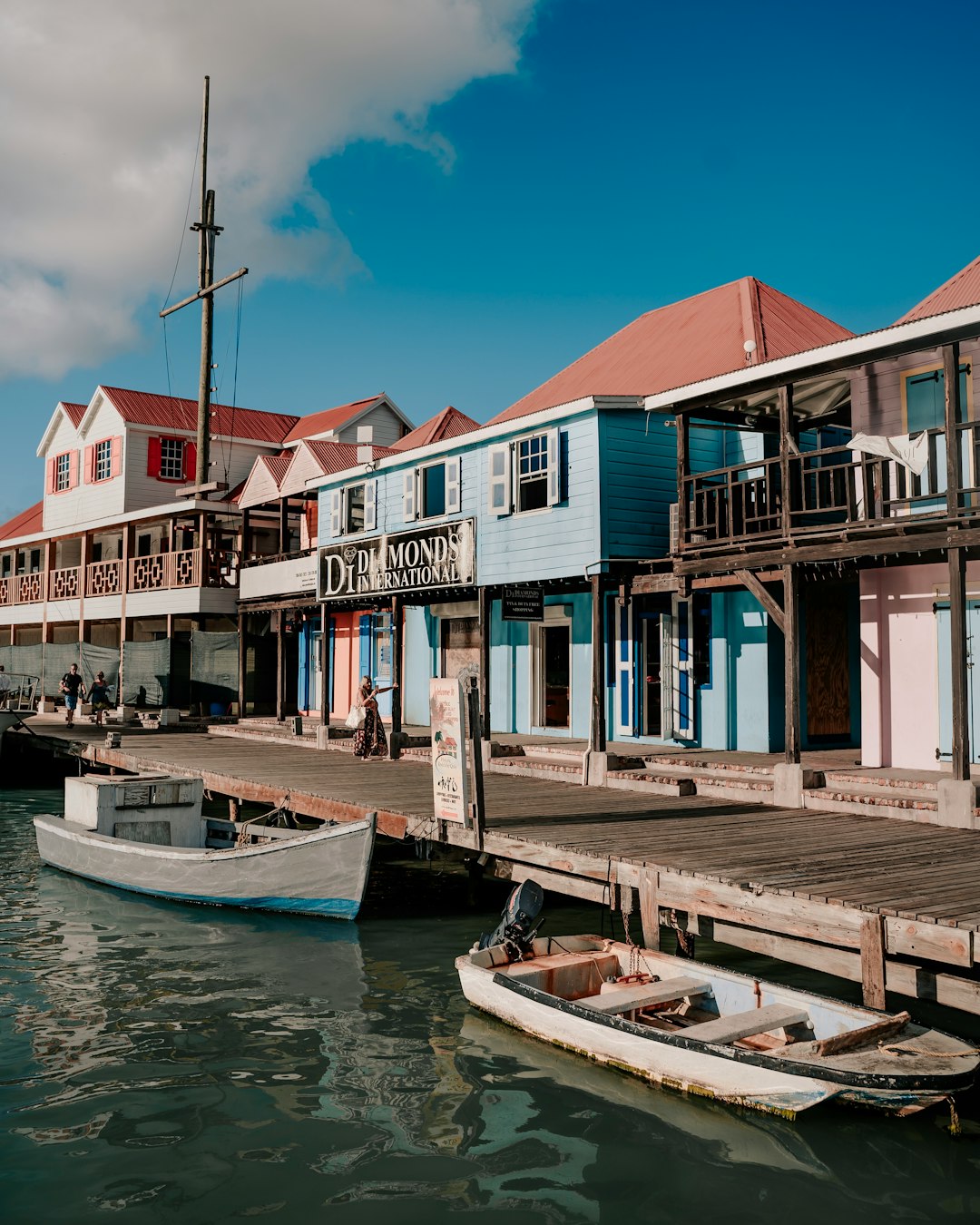
From the cathedral, walk south toward Market Street. The Public Market on Saturday morning is where St. John’s actually lives. Vendors sell black pineapples — a local variety that’s smaller, sweeter, and uglier than what you’re used to — alongside sorrel drinks, fresh nutmeg, and hot pepper sauces with handwritten labels. The conversations are free. This is the opposite of Heritage Quay, and it’s better in every way.
The colonial architecture along Redcliffe Quay is worth a wander. Restored brick and stone warehouses that once stored sugar and rum now hold cafés and small shops. The scale is human. Nothing’s been torn down for a parking garage. If you’ve seen San Juan’s Old Town, this feels like a quieter, less polished version — which is exactly its appeal.
English Harbour and the Dockyard That Time Didn’t Forget
Nelson’s Dockyard is the reason to rent a car for a day. It’s a half-hour drive south from St. John’s through hilly, green countryside, and when you arrive, you’re standing inside a UNESCO World Heritage Site that still works. Boats are still repaired here. Yachts moor where frigates once anchored. The old brick pillars and stone storehouses have been restored into restaurants, a small museum, a bakery, and a couple of bars that open directly onto the water.
Admiral Horatio Nelson was stationed here from 1784 to 1787 and reportedly hated it — the mosquitoes, the heat, the isolation. The museum tells you this with cheerful candor. The dockyard’s charm is that it hasn’t been theme-parked. You’re not walking through a reconstruction. You’re walking through the real thing, still functioning, with the same harbor breezes that annoyed a future admiral 240 years ago.
Budget a full half-day here. The Nelson’s Dockyard, Shirley Heights & Ruins Tour covers the highlights in about four and a half hours, including the dramatic hillside fortifications above the harbor. → Nelson’s Dockyard, Shirley Heights & Ruins Tour
Admiral’s Inn sits inside the dockyard itself, occupying four restored 18th-century naval buildings. You sleep in living history — literally, the walls are original — with modern comforts and a restaurant that opens onto the harbor. It’s the kind of place that earns the word “character.” → Admiral’s Inn on Booking.com
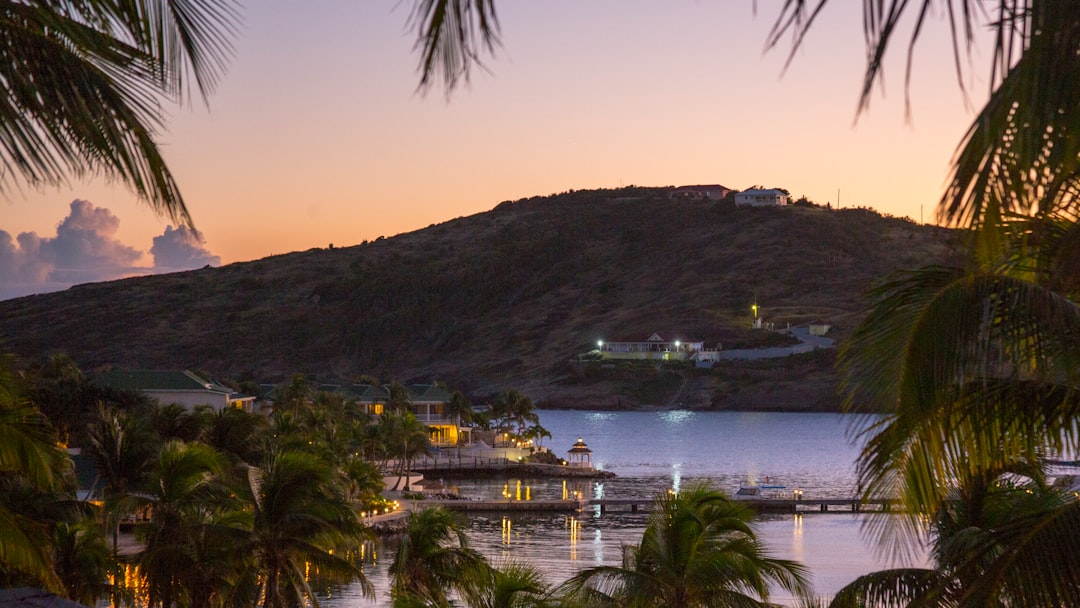
The Inn at English Harbour is on the coast just outside the national park. Boutique-scale, oceanfront, with a design that blends colonial bones and modern Caribbean restraint. If you want quiet and polish without the corporate sheen of a chain resort, this is the pick. → The Inn at English Harbour on Booking.com
Climbing to Shirley Heights for the Sunday Ritual
Shirley Heights is a military lookout point above English Harbour. The views are dramatic — two harbours spread below, the hills of Antigua rolling green behind you, Montserrat visible on a clear day. The ruins of the 18th-century fortifications are photogenic in that crumbling-stone way that looks good in any light.
But the real draw is Sunday. Every week, Shirley Heights hosts a barbecue and party that’s become the island’s most democratic gathering. Steel bands play. Rum punch flows from plastic cups. Grilled lobster and chicken come off open grills. Locals, expat sailors, and tourists all end up in the same crowd, watching the sun drop behind the harbor. It’s one of those Caribbean experiences that feels unrehearsed — because it mostly is.
Go before 4pm for the best light and a calmer vibe. By sunset, the crowd thickens and the volume goes up. Both versions are good, depending on what you’re after.
What to Eat When You Leave the Buffet Behind
Antigua’s food culture is real and specific. This isn’t a “Caribbean fusion” menu designed by a resort chef. This is home cooking with a lineage.
Saltfish and ducana is the national dish, and you should eat it at least twice. The saltfish is cod — salted, rehydrated, stewed with tomatoes, onions, and garlic until it’s savory and rich. The ducana is the surprise: sweet potato dumplings mixed with coconut and spices, wrapped in banana leaves, and boiled. The combination of salty and sweet is better than it sounds on paper. Find it at any local cookshop — the less polished the signage, the better the food.
Fungee and pepperpot is the comfort food. Fungee is cornmeal cooked with okra into something between polenta and fufu. Pepperpot is a slow-cooked stew built on spinach, salted meat, and whatever else went in that morning. Together, they’re filling and deeply satisfying.
Goat water shows up at weekend cookshops — goat meat simmered long with cloves, cinnamon, and herbs until it’s falling apart. Think of it as Antigua’s version of a Sunday roast, served in a cup.
English Harbour Rum is distilled on the island and deserves to be tried neat before you start mixing it. The aged expressions are smooth enough to sip. At the dockyard bars, the rum punch is made from it by default. Order one. Then another.
Johnny cakes from a roadside vendor in the morning, fried golden and slightly chewy, are the correct way to start any day here. Pair them with a cup of bush tea and you’ve got a breakfast that costs less than a resort coffee.
The Wild East Coast and Devil’s Bridge
Antigua’s west coast gets the resorts. The east coast gets the wind. The difference is worth experiencing.
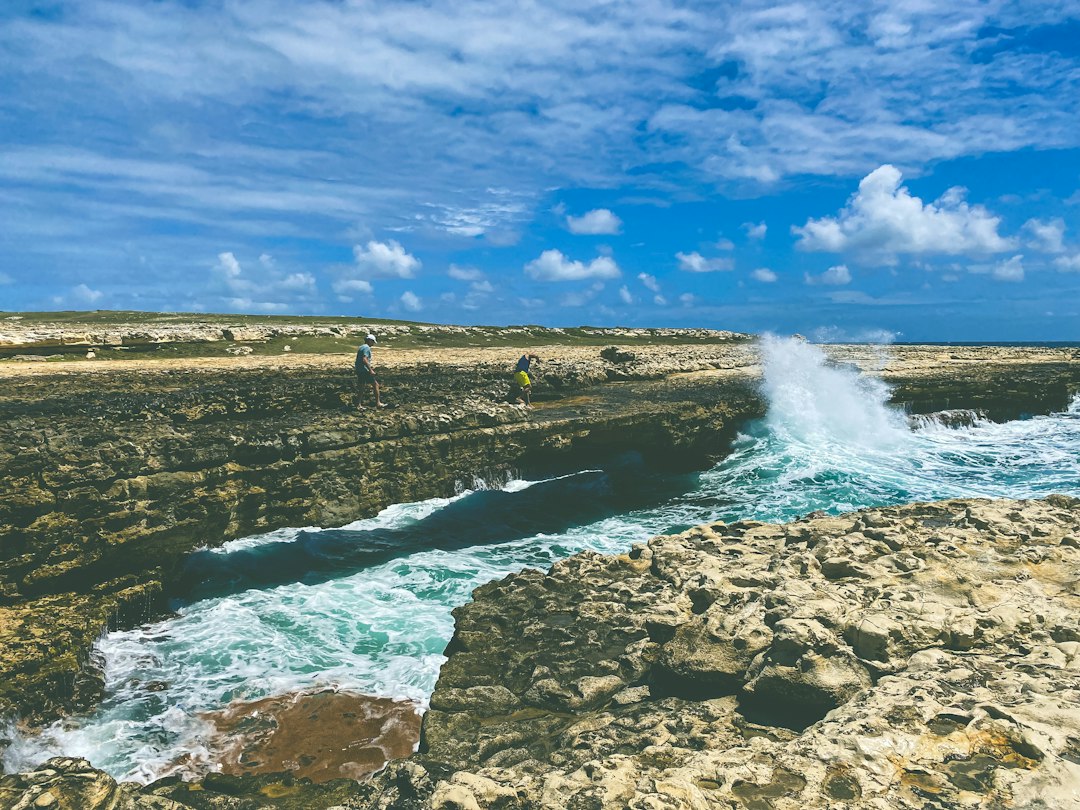
Devil’s Bridge is a natural limestone arch on the island’s exposed eastern shore, carved by centuries of Atlantic waves. The blowhole sends spray upward in bursts that feel theatrical. There are no guardrails, no ticket booths, and very few other visitors. It’s one of the most striking natural features on the island and most all-inclusive guests never hear about it.
The drive out passes through villages and farmland that look nothing like the resort strip. This is where you realize Antigua is an actual country with people who live here, not just a backdrop for vacation photos. Stop for a drink at a roadside rum shop — a small, often colorful bar that doubles as the neighborhood’s social hub. You’ll pay a few dollars for a rum and coke, and you might stay an hour.
When to Go and What You Should Know
December through April is the sweet spot — dry, breezy, and warm without the humidity that builds later. Water is calm, visibility is excellent for snorkeling, and the trade winds make everything bearable.
Late April brings Antigua Sailing Week, centered on English Harbour. It’s one of the world’s great regattas, and even if you don’t sail, the dockyard buzzes with an energy that’s infectious. Parties at Shirley Heights during Sailing Week are legendary.
Late July through early August is Carnival — ten days of steel pan, brass bands, calypso competitions, and costumed parades through St. John’s celebrating emancipation. It’s loud, colorful, and deeply meaningful.
Getting around: Rent a car. Driving is on the left (British legacy), roads are narrow, and some are rough. But taxis are expensive and public transport is limited. A rental gives you the freedom to reach Devil’s Bridge, English Harbour, and the quiet east coast on your own schedule.
Dickenson Bay is the better base if you want beach access and proximity to St. John’s without the resort lockdown. Several independent hotels line the bay, restaurants are walkable, and you’re fifteen minutes from downtown. → Hotels in Dickenson Bay on Booking.com
Ready to Plan Your Trip to Antigua?
You’ve done the reading. Here’s everything you need to make it happen.
🎟️ What to Book in Advance
- Nelson’s Dockyard, Shirley Heights & Ruins Tour
- Private Sailing Charter with Snorkeling
- Browse more Antigua experiences on Viator
📦 Pack Right
Reef-safe sunscreen — Antigua’s reefs are worth protecting, and the standard stuff damages them.
Some links in this post are affiliate links. If you book through them, CuriosityTrail earns a small commission at no extra cost to you. Recommendations are chosen on merit; commissions never decide what’s included.