Mechelen, Belgium: Bells, Beer and Burgundian Palaces Without the Tour Buses
Quick Essentials
- 📍 Best Time to Visit: Late May through early September — Monday-night carillon concerts run all summer and the Dijle terraces stay busy until dark.
- ✈️ Flights: Search flights to Brussels Airport | Direct trains reach Mechelen in about 15 minutes
- 🏨 Hotels: Browse hotels in Mechelen | Our picks below
- 🎟️ Top Experience: Guided historic walking tour of Mechelen
- 🚆 Getting Around: No car needed — Brussels and Antwerp are each about 20 minutes away by train
- 💰 Budget Range: €140–€300/day — mid-range comfort with one splurge dinner and a night in a converted church
Mechelen is the stop the Brussels–Antwerp train makes while you’re still finding your seat. Most people never get off. Get off, and the bells will probably give you a reason to miss the next train.
That’s the thing about Mechelen, Belgium. It has everything you go to Bruges or Ghent for — the cathedral tower, the gabled market square, canals catching the light, beer older than most countries — and almost none of the crowds. Five hundred years ago this was the capital of the Low Countries. Today it’s a city of about 90,000 people who seem faintly amused that you found them.
If you’ve already done the Flemish greatest hits, Mechelen is the encore. It is quieter and it has a few more rough edges, and the food is better than its reputation, partly thanks to one of the largest Moroccan-Belgian communities in Flanders.
The City That Rings
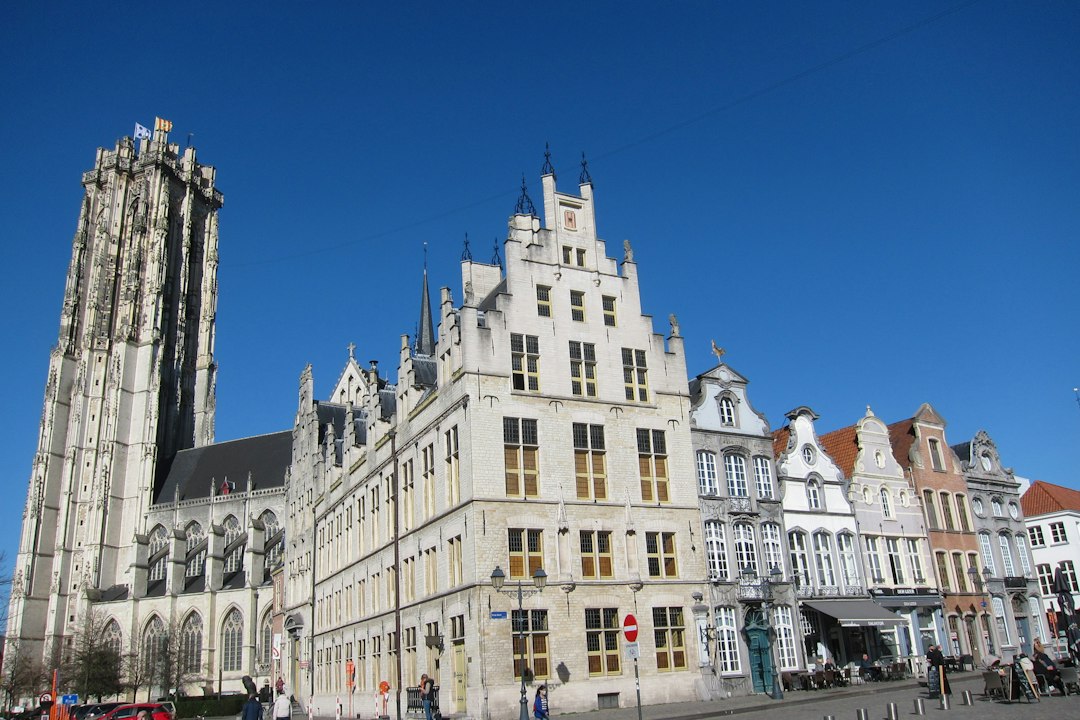
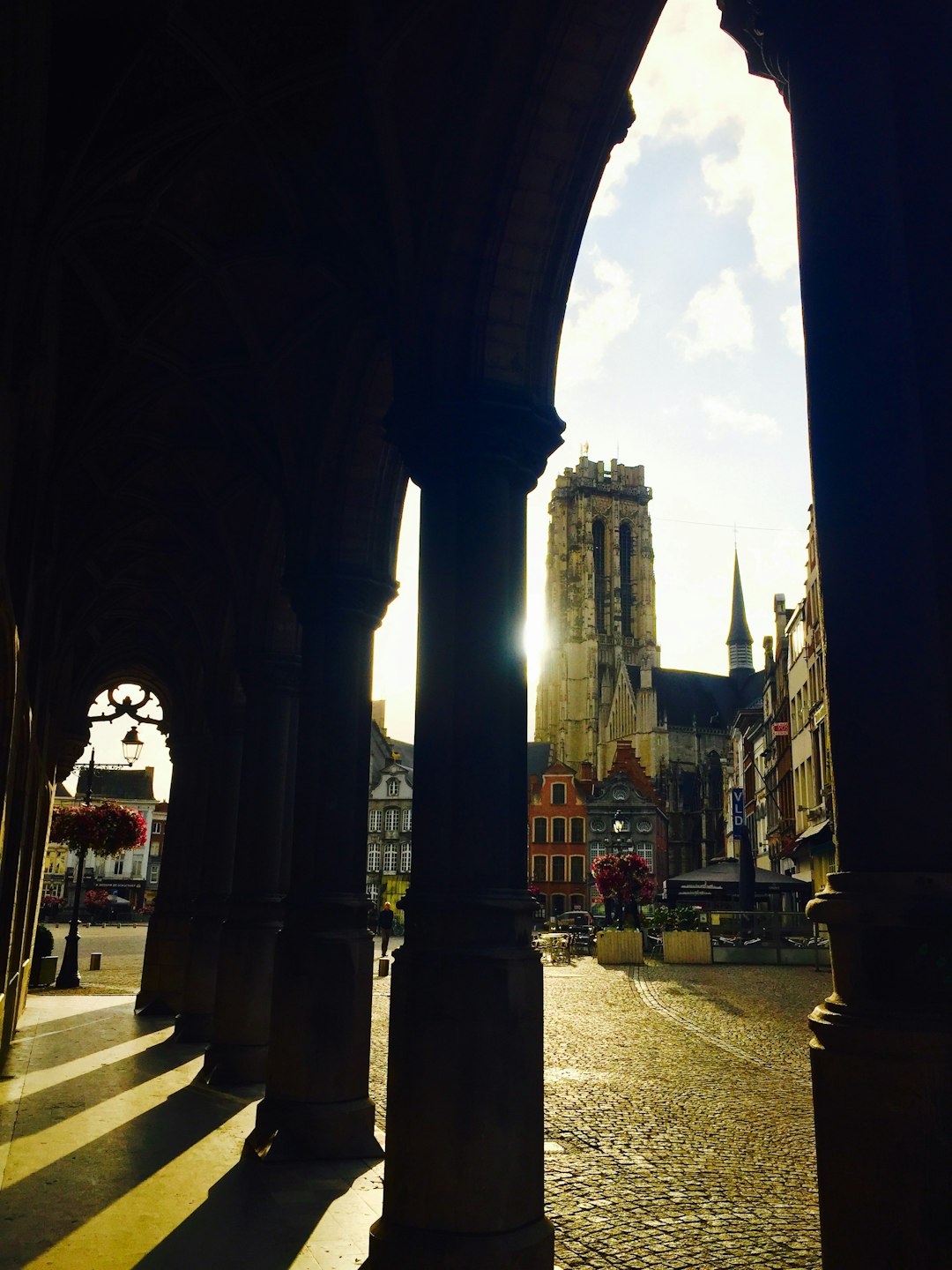
St. Rumbold’s Tower dominates the skyline the way a mountain dominates a valley town: you navigate by it, you complain about it, and eventually you climb it. It’s 97 metres tall and 538 steps to the top, and the stairwell narrows as you go until your shoulders brush stone on both sides. Near the top you pass the bells themselves, two full carillons hanging in the timber frame like a cathedral’s ribcage.
The reward at the top is the Skywalk, a walkway that rings the tower roof. On a clear day the whole flat Flemish plain opens out, with Brussels on the southern horizon and Antwerp to the north. Tickets are €8 for adults. Go on a weekday afternoon (the tower opens at 1pm on weekdays and Sundays, and at 10am on Saturdays) and you may have the top to yourself.
Here’s what most visitors don’t know: Mechelen is where the modern carillon was more or less saved. The Royal Carillon School, founded in 1922 by city carillonneur Jef Denyn, was the first of its kind in the world, and students still arrive from the US, Japan, and the Netherlands to learn to play an instrument that weighs several tonnes. The school runs guided visits where a carillonneur explains the technique — you play with your fists and feet, on wooden batons — and then gives a short concert on the chamber carillon in the hidden Sinte-Mette garden.
The combined version is better still: a visit to the school followed by the tower climb with the carillonneur, who knows every bell by name. It has to be booked in advance through Visit Mechelen, and it’s the best single hour you can spend in the city.
If you’re here between June and August, plan your week around Monday. At 8:30pm the summer concerts begin, free, and the best place to listen is the courtyard of the Cultural Centre on Minderbroedersgang. People bring wine and sit on the grass. Nobody talks. The sound arrives a half-beat late over the rooftops and the whole city seems to hold still.
→ Guided historic walking tour of Mechelen
Margaret’s Mechelen: The Capital Nobody Remembers
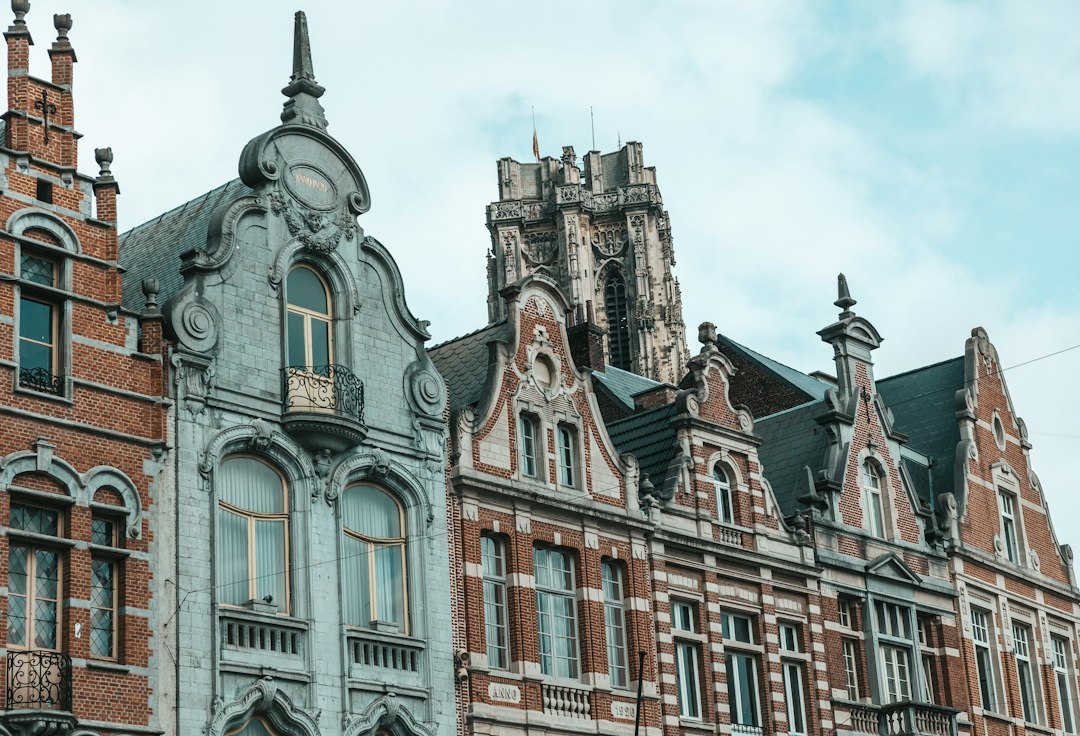
For a few glittering decades in the early 1500s, Mechelen was where the Low Countries were run. Margaret of Austria governed from here as regent, raising her nephew, the future Emperor Charles V, in a court that drew humanists, painters, and musicians from across Europe. Erasmus visited. Thomas More visited. The city has been slightly pleased with itself ever since, and frankly it’s earned it.
Margaret’s palace, the Hof van Savoye on Keizerstraat, is still Mechelen’s courthouse, which means two things: the building is in excellent shape, and almost nobody thinks to walk in. The city has begun opening parts of it to visitors through the Keizerstraat gate, including the throne room and an early Renaissance garden of clipped hedges and brick arcades that feels about as far from the Grote Markt as Montreal does from Moscow. Check Visit Mechelen for current opening hours. Across the street, the palace of her step-grandmother Margaret of York is now the city theatre.
Hof van Busleyden is where to go for the full story. It was the city palace of Jerome van Busleyden, a statesman who corresponded with Erasmus and More, and it’s now Mechelen’s museum of the Burgundian age. The building alone is worth the ticket, with its brick galleries, tiled floors, and a garden courtyard.
Inside, the showpiece is the Enclosed Gardens: late-medieval shrines filled with silk flowers, relics, and tiny painted figures, made by local religious women. They’re strange, intricate, and unlike anything you’ve seen in a museum before. The museum is closed Mondays and Tuesdays.
One more stop, and it isn’t optional. Kazerne Dossin, an 18th-century barracks on the edge of the old town, is where more than 25,000 Jews and Roma were held and deported to Auschwitz-Birkenau and other camps between 1942 and 1944. The memorial and museum facing it tell that story with precision and without melodrama. Give it two hours, and give yourself time afterward. It reframes everything else you’ll see in this pretty, prosperous town.
Where to Stay in Mechelen
Mechelen is small enough that you can walk from any central hotel to anything worth seeing in fifteen minutes. The question is mood, not logistics.
Martin’s Patershof. A 19th-century neo-Gothic Franciscan church turned into a hotel. You fall asleep under stained glass, and the bar sits in what used to be the nave. It’s a splurge, and it’s the rare converted-church hotel that feels respectful rather than gimmicky.
→ Martin’s Patershof, Mechelen
Hotel Vé. A boutique hotel in a former fish-smoking house a few steps from the Vismarkt, the old fish-market square on the Dijle. The original smokehouse structure sits inside a modern build, there’s a spa, and you’re right where the evening happens. This is the pick for a mid-range stay with character.
→ Hotel Vé, Mechelen
Around the Grote Markt. If neither suits, anything within a few blocks of the main square puts you under the tower. Ask for a room facing away from the square on Saturday if you want to sleep past the market set-up at dawn.
→ hotels near Mechelen’s Grote Markt

Beyond the Grote Markt
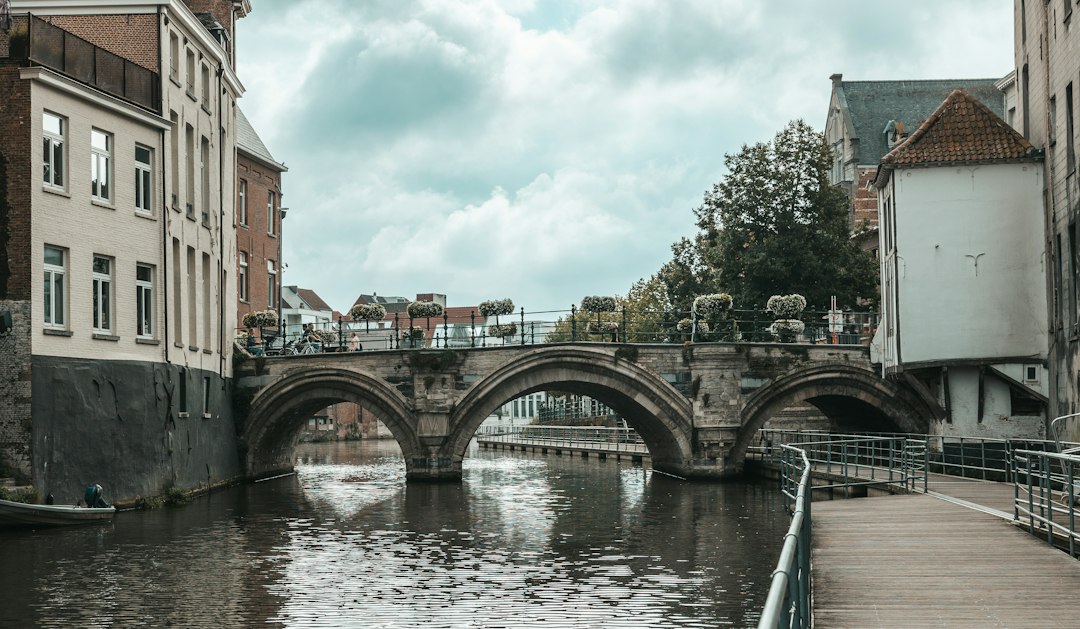
The Grote Markt is lovely, and you’ll pass through it a dozen times a day. But Mechelen gets interesting once you follow the water. The Dijle river curls through the old centre, and the city has built a floating boardwalk, the Dijlepad, that runs along it from Fonteinbrug to Lamotbrug. You walk at water level, under the back windows of merchant houses and past gardens you’d otherwise never see. It’s ten minutes long and worth walking more than once, in different light.
The boardwalk delivers you near the Haverwerf, the old oat quay, where three mismatched façades sit side by side: one timber-framed, one Gothic, one Baroque. From there it’s a short stroll to the Vismarkt, which is the closest Mechelen comes to nightlife. Cafés fill the old fish-market buildings and spill out along the quay, and on a warm evening it’s loud in the best way.
Further north, the Groot Begijnhof is one of Flanders’ UNESCO-listed béguinages: a walled quarter of small brick houses built for the lay religious women who lived here for centuries. It’s still residential, so walk quietly. On the way, duck into St. John’s Church, where Rubens’s Adoration of the Magi hangs above the altar in a church that rarely has more than a handful of visitors.
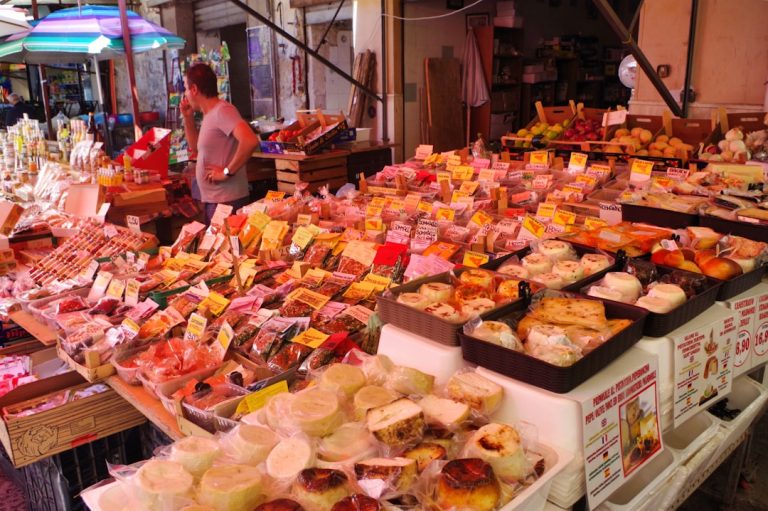
On Saturday mornings, from 8am until about 1pm, the Grote Markt fills with one of the biggest weekly markets in Flanders. Come hungry. There are cheese vans, fishmongers, flower sellers, and stalls selling olives and preserved lemons beside Flemish farmers selling leeks. In one square you can see the whole city as it is today.
The Table: Gouden Carolus, Cuckoo Chicken and Mint Tea
Mechelen eats better than a city its size has any right to. Here’s where to start.
Gouden Carolus at Het Anker. The brewery has made beer inside the Groot Begijnhof since 1471, and it’s one of the oldest in Belgium. Order the Gouden Carolus Classic in the brasserie, a dark ale with toffee, dried fruit, and a little spice. If you see the Cuvée van de Keizer, which is brewed once a year on Charles V’s birthday, order that too.
English-language brewery tours run several days a week. Book directly through the brewery, and know that there are about 100 stairs along the route. Het Anker also distils whisky from its beer, which is exactly as good an idea as it sounds.
Mechelse Koekoek. The Mechelen Cuckoo is a heritage chicken breed with grey-barred feathers, raised in the surrounding countryside and protected like a local treasure. Order it roasted, with fries, at any of the brasseries around the Grote Markt that list it by name. It tastes the way chicken did before chicken became a commodity.
White asparagus, if the season’s right. From May into June, Mechelse asperges appear on every menu, usually à la flamande, with chopped egg, butter, and parsley. It’s simple, it’s seasonal, and it’s worth timing a trip around.
Moroccan Mechelen. The city’s large Moroccan-Belgian community has shaped what you eat here as much as the brewery has. La Boya, on Gebroeders Verhaegenstraat, is a warm, unfussy Moroccan restaurant where the couscous comes out in a proper mound and the lamb tagine is the reason to go. Afterward, find a Moroccan patisserie nearby for honey-soaked pastries and a glass of mint tea. After two days of Gouden Carolus, your body will thank you.
‘t Ankertje aan de Dijle. End the night here on the Vismarkt, where Het Anker’s beers are poured beside the river. Sit outside if you can. If you’d rather taste your way through more than one brewery’s list, a guided tasting fills the gap.
→ Belgian beer tasting experience near Mechelen
When to Go (and Why You Don’t Need a Car)
Late May through early September is Mechelen at its best. The Monday carillon concerts run from June to mid-September, the boardwalk is busy with walkers, and the light lasts past 10pm in midsummer. May has a bonus: white asparagus season, and on the Sunday before Ascension Day, the Hanswijk procession, a centuries-old religious parade that winds through the old town.
Winter is quieter but not dead. December brings Christmas carillon concerts and a winter market. Just pack for a damp, grey cold, the kind that gets into your coat by 4pm. October and November are the hardest sell: short days and frequent drizzle. Still, the tower climb and the museums carry the city on their own.
You do not need a car. Trains from Brussels Central and Antwerp Central take about 20 minutes, and there are direct trains from Brussels Airport that take around 15. That makes Mechelen a better base than either big city: cheaper, calmer, and close to both for day trips. The station is a 15-minute walk from the Grote Markt, or a short bus ride if it’s raining, which it may be. If you’re building a longer Belgium trip, our Bruges guide is the natural next stop.
Practical Notes
Belgian service charges are included in the bill. Round up or leave a euro or two for good service; nobody expects 20%.
Many museums close one or two weekdays (Hof van Busleyden closes Mondays and Tuesdays; Kazerne Dossin closes Wednesdays), so check before you build a day around one. The carillon school tours need advance booking, and the summer concerts are free with no booking required. Bring a jacket to the tower even in July. It’s windy at 97 metres.
Plan Your Trip to Mechelen
Best time to visit: Late May through early September for the Monday-evening carillon concerts and long riverside evenings; December for Christmas carillon concerts.
✈️ Getting There
Search flights to Brussels Airport on Skyscanner — then a direct 15-minute train to Mechelen
🏨 Where to Stay
- Hotel Vé — boutique rooms in a former fish-smoking house steps from the Vismarkt
- Martin’s Patershof — sleep under stained glass in a converted neo-Gothic church
🎟️ What to Book in Advance
- Guided Historic Walking Tour of Mechelen
- Belgian Beer Tasting Experience
- Browse more Mechelen experiences on Viator
Some links in this post are affiliate links. If you book through them, CuriosityTrail earns a small commission at no extra cost to you. Recommendations are chosen on merit; commissions never decide what’s included.