Lyon Beyond the Plate: Traboules, Silk, and the Soul of France’s Gastronomic Capital
Quick Essentials
- 📍 Best Time to Visit: April through June — the terraces open along both rivers, the light stretches past 9pm, and you’ll eat outdoors without fighting for a table.
- ✈️ Flights: Search flights to Lyon–Saint Exupéry | Direct from Paris (1h TGV), London, Amsterdam, and most European hubs
- 🏨 Hotels: Browse hotels in Lyon | Our neighborhood picks below
- 🎟️ Top Experience: Guided tour of the traboules and Vieux Lyon’s hidden passages
- 💰 Budget Range: €120–€250/day for comfortable mid-range to occasional splurge — less than Paris, more than you’d expect from a city this good
Lyon gets introduced as France’s gastronomic capital so often that the phrase has calcified into a kind of background noise. Yes, the food is extraordinary. But reducing Lyon to its restaurants is like calling New Orleans a music city and leaving it at that — technically accurate and entirely insufficient. The kitchens here grew out of something, and what they grew out of is still visible if you know where to look: in the hidden passages that cut through Renaissance apartment blocks, in the steep streets where silk workers once hauled looms through doorways too narrow for a cart, in a covered food hall that carries a dead chef’s name like an oath.
This is a city that layers its histories on top of each other and lets you stumble between them. You can walk from a Roman amphitheater to a 16th-century passageway to a deconstructivist science museum in the same afternoon without once consulting a map. The gastronomic capital label isn’t wrong. It just stops too early.
Into the Traboules
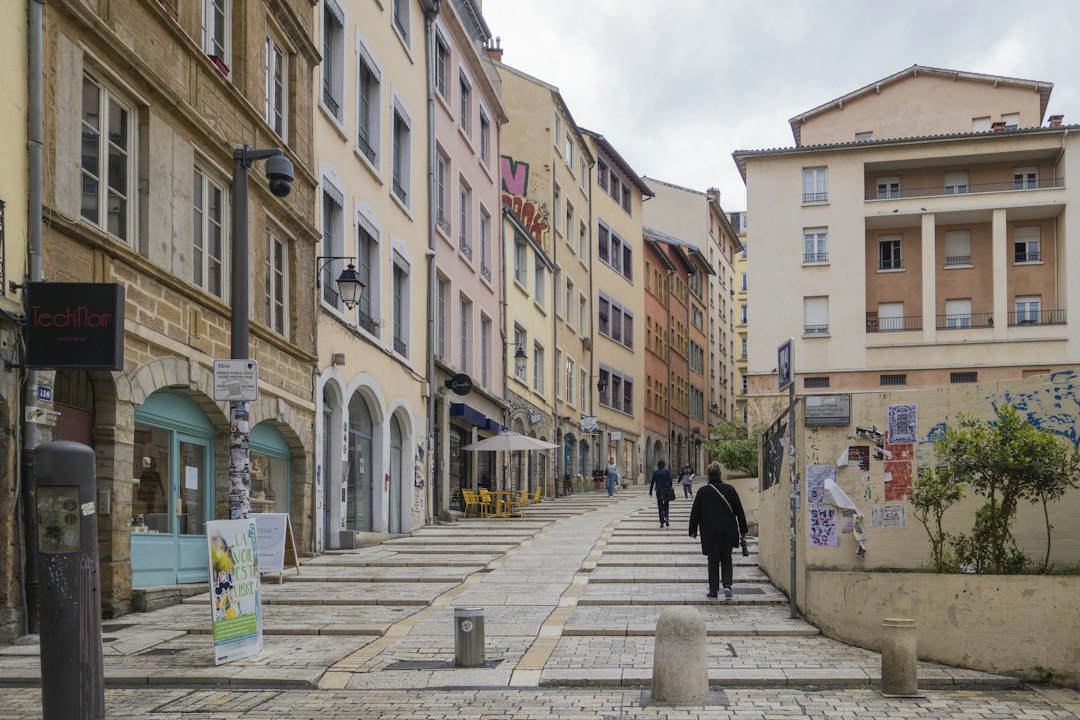
Lyon has roughly 500 traboules — covered passageways that thread through buildings, connecting one street to the next through courtyards and stairwells that the city keeps half-hidden behind unmarked doors. The word comes from the Latin trans ambulare, to pass through, and that’s exactly what they are: shortcuts that became architecture. About 80 are open to the public between 7am and 7pm, though you’d never know it from the street.
The most visited ones cut through Vieux Lyon, the Renaissance quarter that crowds the west bank of the Saône below the Fourvière hill. Start at Rue Saint-Jean and push through the heavy doors — most are unlocked during visiting hours, though nothing announces this. Inside, you’ll find spiral stone staircases, galleried courtyards with Italian-influenced loggias, and the particular silence of a space that’s technically private but has been walked through for five centuries.
The traboule at 54 Rue Saint-Jean connects four buildings across two streets. The one at 27 Rue du Boeuf opens into a courtyard so beautiful it feels staged. But the Vieux Lyon traboules, for all their elegance, are the ones everyone finds. The real surprise is across the river.
→ Book a guided traboules and Vieux Lyon walking tour
The Hill That Works
Croix-Rousse sits on the hill north of the Presqu’île, the peninsula where Lyon’s two rivers briefly run parallel before joining at the southern tip. The neighborhood is called la colline qui travaille — the hill that works — as opposed to Fourvière’s la colline qui prie, the hill that prays. The nickname stuck because this is where the canuts, Lyon’s silk workers, lived and labored from the 16th century onward.
The canuts didn’t just weave silk. They staged France’s first large-scale worker revolts in 1831 and 1834, and the streets still carry the evidence. The Montée de la Grande-Côte, the steep stairway connecting Croix-Rousse to the city center, is where the first clashes erupted. Walk it today and you’ll pass street art, coffee roasters, and a panoramic view of the Presqu’île that explains why someone would choose to live on a hill with no metro access.
Croix-Rousse has its own traboules — 160 of them, built wider and taller than their Vieux Lyon counterparts because the silk looms needed clearance. The standout is the Cour des Voraces on Place Colbert: a towering open staircase inside a courtyard that served as both a shortcut for hauling silk and an escape route during the revolts and, a century later, for the Resistance. It’s free, unguarded, and seldom busy.
The Maison des Canuts at 10 Rue d’Ivry is a former weavers’ cooperative turned museum. Working looms demonstrate how Jacquard-patterned silk was actually made — the answer involves an early form of punch-card programming that predates computers by two centuries. Allow 45 minutes. The Mur des Canuts, a few blocks away on Boulevard des Canuts, is a full-building trompe-l’œil mural depicting the neighborhood’s life. It’s been repainted several times since the 1980s and functions as a kind of evolving portrait.
Les Halles and the Bocuse Question
Paul Bocuse died in 2018. His name is still on the covered food hall in the Part-Dieu district, and the weight of that name is both the market’s greatest asset and its ongoing test. When Bocuse allowed the renaming in 2006, the implicit demand was clear: be worthy of it.
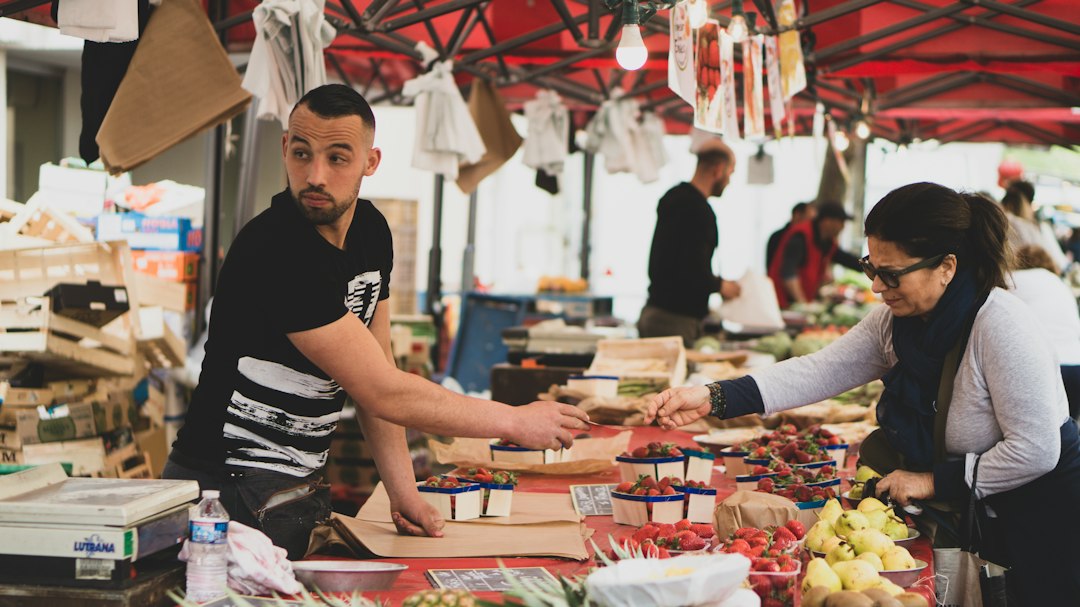
Les Halles de Lyon Paul Bocuse holds about 58 stalls, and the best of them are the kind of vendors who’d be famous in any city. Mère Richard sells Saint-Marcellin cheese so runny it has to be eaten with a spoon — it’s the version other cheese shops aspire to and rarely match. Sève is a chocolatier whose praline tarts and foie gras macarons draw lines by mid-morning. Trollier does hand-cut steak tartare at the counter. Bahadourian stocks candied fruits in colors that look hand-painted.
Come before 11am on a Tuesday through Saturday. Monday is thin. Weekends bring crowds. The market is ten minutes on foot from Part-Dieu station, which makes it a reasonable first or last stop if you’re arriving by TGV. Eat at the counter if you can — several stalls have bar seating — and don’t leave without trying a coussin de Lyon, the turquoise chocolate-almond-Curaçao candy that’s been made here since the 1960s.
The question Bocuse’s name keeps posing — whether Lyon can honor its culinary past without being trapped by it — is being answered a few arrondissements away. A new generation of chefs is working in what the guides call bistronomic mode: technically skilled, ingredient-obsessed, and largely unbothered by the bouchon playbook. Sarah Hamza at Söma in Vieux Lyon has Michelin’s attention. Bastian Ruga’s Circle in the 1st has a star. Louis Fargeton at l’Établi runs a kitchen that’s casual enough to feel like a dinner party and serious enough to justify the wine list. They’re not rejecting Bocuse’s legacy. They’re just cooking past it.
What to Eat and Where the Locals Actually Go
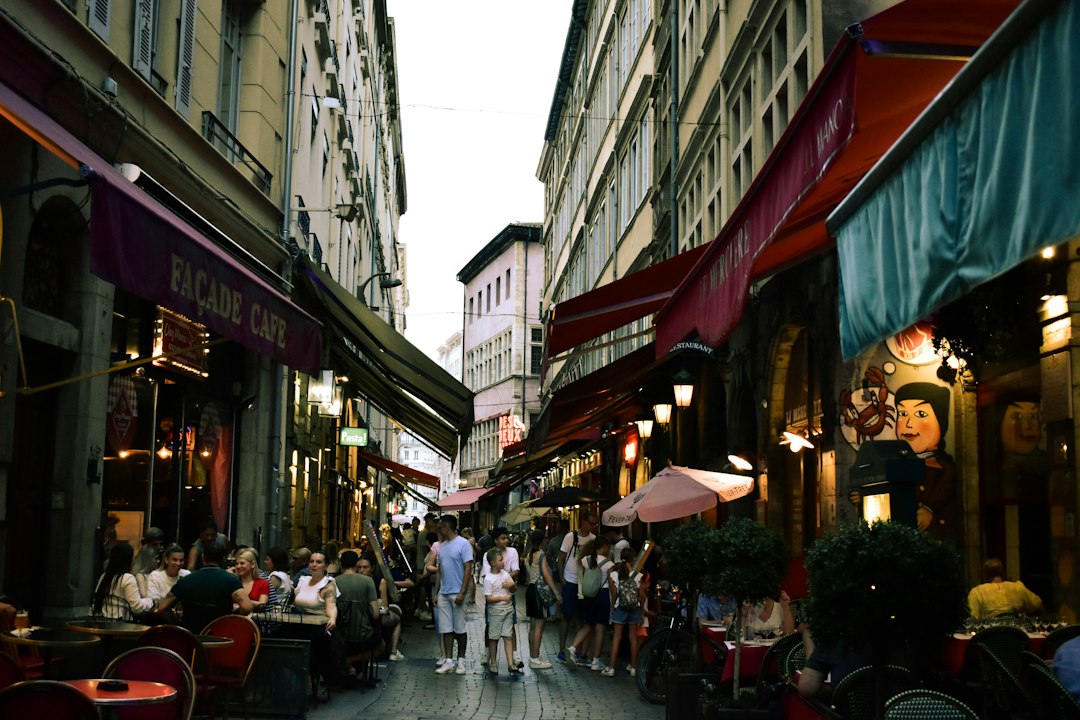
The bouchon is Lyon’s native restaurant form — small, loud, family-run, and devoted to a handful of dishes that haven’t changed in a century. The word originally referred to the bundles of straw hung outside taverns that served coachmen. Now it means pork-heavy, butter-forward, and unapologetically rich.
Order the quenelle de brochet at least once: a pike-mousse dumpling poached and baked in Nantua sauce, which is basically a crayfish-infused béchamel. It should arrive golden on top and trembling in the middle. If it’s dense, you’re at the wrong bouchon.
Tablier de sapeur sounds like a dare — it’s tripe, breaded and fried — but it’s genuinely delicious with the gribiche sauce (egg, mustard, capers) that always accompanies it. Cervelle de canut, despite the name (silk worker’s brain), is a fresh cheese whipped with herbs and shallots, served cold on bread as a starter. It costs almost nothing and anchors you before the heavier courses arrive.
For dessert, the tarte aux pralines is the signature: a crushed-almond filling dyed the particular pink that Lyon considers its pastry color. Boulangerie Jocteur at Les Halles does a version worth crossing the city for.
The bouchons worth your time include Daniel et Denise (multiple locations — the one on Rue de Créqui is the original), Le Musée on Rue des Forces, and Café Comptoir Abel, which claims to be the city’s oldest. Skip any bouchon with a multilingual menu at the door and a barker out front.
→ Lyon food tour with market tastings
Beyond the Plate
The Musée des Confluences sits at Lyon’s southern tip where the Saône meets the Rhône. The building is deconstructivist glass and steel — love it or argue about it, but go inside. The permanent collection covers human civilizations through science, anthropology, and natural history, and the temporary exhibitions are consistently better than they have any right to be.
The Presqu’île, the long peninsula between the rivers, is Lyon’s civic heart: Place Bellecour (one of Europe’s largest open squares), Place des Terreaux with its Bartholdi fountain, and the shopping and dining corridor of Rue de la République. It’s pleasant but not revelatory — useful for its restaurants and for orienting yourself.
Fourvière, the hill above Vieux Lyon, holds the basilica (overwrought on the outside, astonishing on the inside) and two Roman amphitheaters that host the Nuits de Fourvière performing arts festival each summer. Take the funicular up and walk down through the Rosaire garden.
If you’re here in December, the Fête des Lumières transforms the city for four nights (December 5–8 in 2026) with light installations projected onto every significant façade. Several million visitors descend for it. Book hotels by August.
When to Go and How to Sleep Well
Spring and early summer (April through June) are ideal: warm enough for terraces, cool enough for walking, long enough daylight to linger. September and October bring the harvest markets, early truffle season, and fewer tourists. July and August are hot and see some closures.
Presqu’île is the safe-money neighborhood: walkable to everything, dense with restaurants, well-connected by metro. Stay near Place Bellecour or along the Saône quays for the best of both banks.
→ Browse Presqu’île hotels on Booking.com
Vieux Lyon puts you inside the story — traboules on your doorstep, bouchons at every turn, cobblestones that are picturesque but punishing in heels. Best for atmosphere seekers.
→ Browse Vieux Lyon hotels on Booking.com
Croix-Rousse rewards repeat visitors and anyone who prefers a village feel to a hotel district. Morning markets, artisan shops, hilltop views.
→ Browse Croix-Rousse hotels on Booking.com
Lyon–Saint Exupéry airport connects to the city center via the Rhônexpress tram in 30 minutes. But the easiest arrival is by TGV — two hours from Paris, under two from Marseille — which drops you at Part-Dieu station in the middle of the city.
Plan Your Trip to Lyon
Best time to visit: April through June for terrace season and long evenings, or September–October for harvest markets and fewer crowds.
✈️ Getting There
Search flights to Lyon–Saint Exupéry on Skyscanner
🏨 Where to Stay
- Boutique hotels on the Presqu’île — central peninsula, walkable to both rivers and most restaurants
- Character hotels in Vieux Lyon — Renaissance atmosphere, traboules on your doorstep
🎟️ What to Book in Advance
- Guided Traboules & Vieux Lyon Walking Tour
- Lyon Food Tour with Market Tastings
- Browse more Lyon experiences on Viator
Some links in this post are affiliate links. If you book through them, CuriosityTrail earns a small commission at no extra cost to you. Recommendations are chosen on merit; commissions never decide what’s included.