Visiting Bayeux, France: A Complete Guide
Quick Essentials
- 📍 Best Time to Visit: Late May through mid-June — the D-Day Festival fills the coast with meaning, the light lasts past 10pm, and the Norman countryside is green enough to make you rethink your life choices.
- ✈️ Getting There: Search flights to Caen on Skyscanner | Direct trains from Paris Saint-Lazare (~2.5 hrs), or fly into Caen and drive 30 minutes west.
- 🏨 Where to Stay: Browse Bayeux hotels on Booking.com
- 🎟️ Don’t Miss: Guided D-Day Beaches tour from Bayeux
- 💰 Budget Range: €120–€250/day for a couple staying mid-range, eating well, and doing one guided experience
The Town Everyone Passes Through — and Shouldn’t
Bayeux has a problem, and it’s a flattering one. The town sits 15 minutes from Omaha Beach, which means most visitors treat it like a hotel with a breakfast buffet — a place to sleep before the real destination. They drive in, check in, maybe glance at the cathedral on the way to dinner, and drive out again the next morning toward the landing beaches.
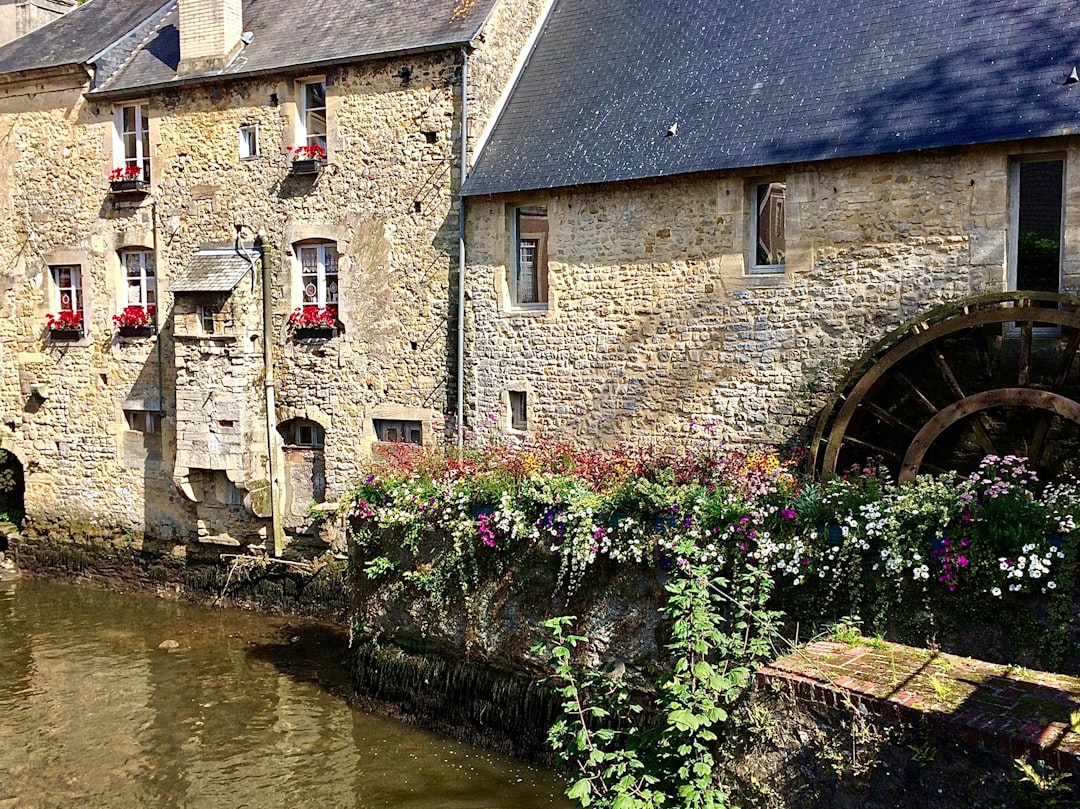
That’s a mistake. Bayeux was the first French town liberated in the Battle of Normandy, and one of the few in the region that survived the 1944 bombings intact. Its medieval center still looks medieval — not reconstructed medieval, but the real thing. Cobbled lanes, timber-framed houses, 17th-century stone facades that haven’t been touched up for Instagram. If you’ve been to Honfleur on a Saturday in July, you already know what a Normandy town looks like when tourism wins. Bayeux is what it looks like when the town wins.
The famous tapestry — that 70-meter-long embroidered fever dream of medieval propaganda — is reason enough to linger. So are the Calvados, the Camembert, the cathedral crypt, the Saturday market, and the quiet fact that three nights here opens up half of Normandy without moving your suitcase.
One note for 2026 visitors: the Bayeux Tapestry Museum is closed for renovations until 2027. The tapestry itself will travel to the British Museum in London starting September 2026. Worth knowing before you plan — but the town has more than enough to justify the trip without it.
A Cathedral Worth the Silence
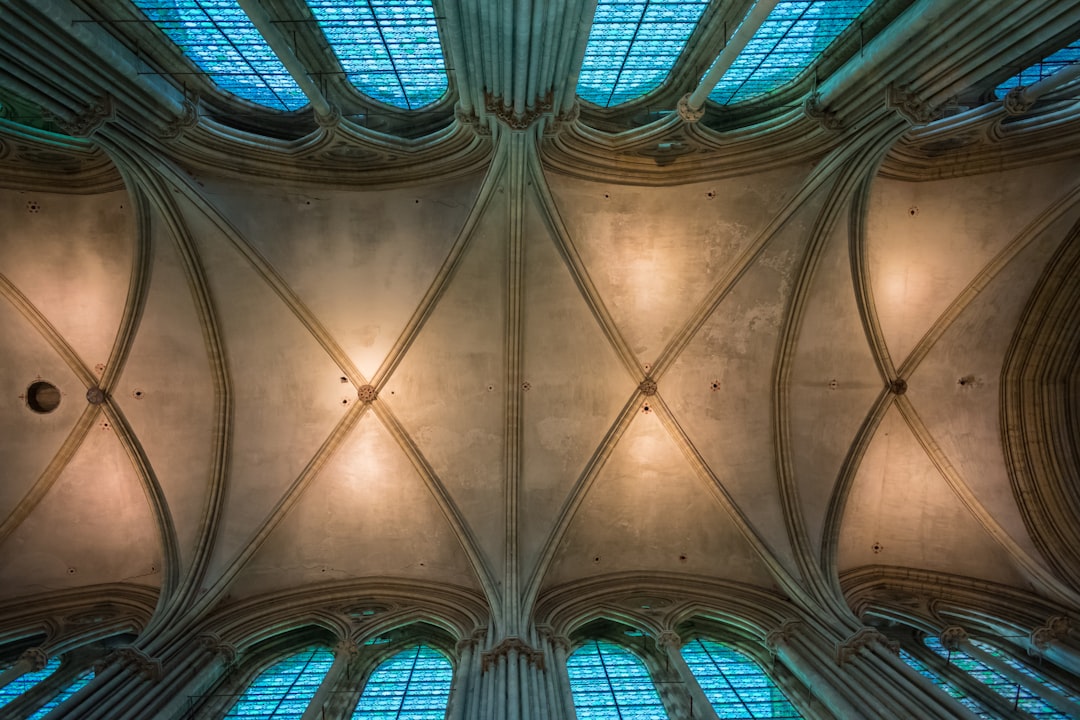
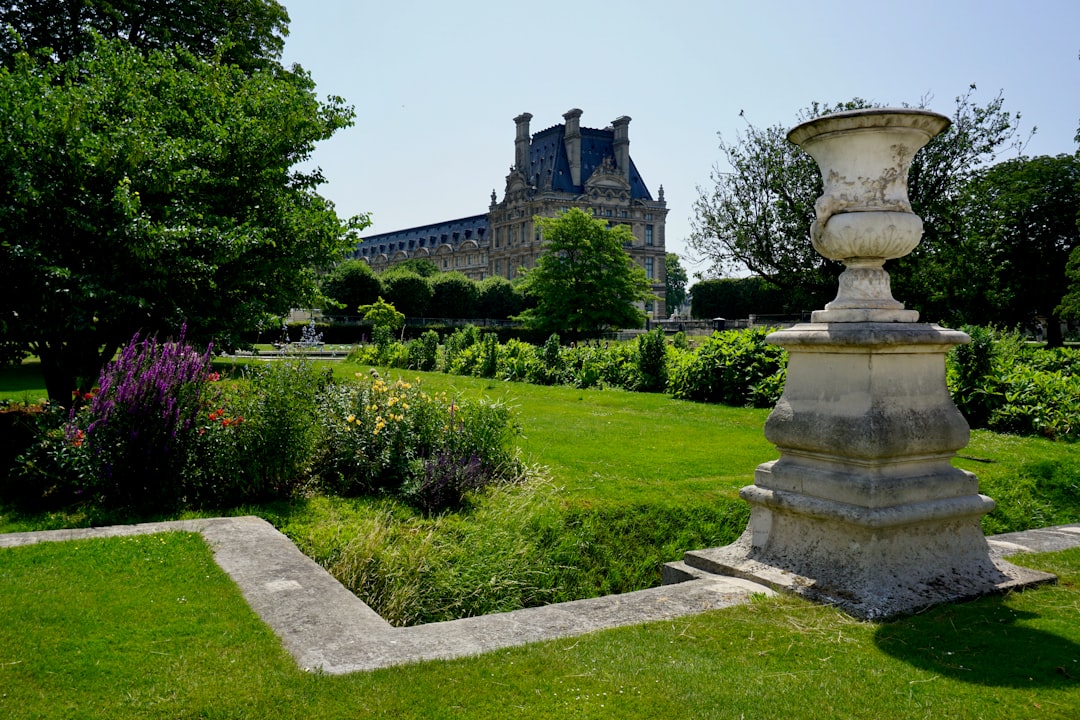
Notre-Dame de Bayeux was consecrated in 1077 with William the Conqueror in attendance, which is the kind of sentence that tends to flatten a building into a history textbook. Don’t let it. The cathedral is extraordinary in person, and it earns that word.
The nave is Norman-Romanesque at its most serene — rounded arches, thick columns, a weight and stillness that later Gothic churches traded away for height and light. The Gothic additions came later, and the two styles sit together in a way that feels less like compromise and more like conversation. Walk slowly. The proportions reward it.
The crypt is the hidden payoff. Dating from the 9th century but only rediscovered in the 15th, it’s a small, cool, low-ceilinged space with frescoed angels that most visitors miss because the signage is easy to overlook. Ask at the entrance if you can’t find it. Entry to the cathedral is free, but a guided tour with a local operator unlocks details — the carved capitals, the buried bishops, the medieval graffiti — that you’d walk right past alone.
Bayeux Cathedral guided visit on GetYourGuide
In July and August, the cathedral’s south facade becomes a screen for a free monumental light show projected after dark. It’s not a gimmick — it’s genuinely beautiful, and the square empties out quickly enough that you can watch most of it in near-solitude.
Eating and Drinking Like a Norman
Normandy doesn’t grow grapes. This is the most important thing to understand about eating here. Instead, Normandy grows apples — and from those apples come cider, pommeau, and Calvados, the apple brandy that has been aged in oak barrels in this region for centuries. The trou normand — a shot of Calvados served between courses to “make a hole” for more food — is not a novelty. It’s a serious tradition, and any restaurant worth its salt will offer it.
Start with cidre bouché: corked, bottle-fermented cider, either brut or doux, poured from an earthenware pitcher at most crêperies. Pair it with a buckwheat galette stuffed with Camembert, ham, and egg. This is the baseline Norman meal, and it’s nearly impossible to get wrong in Bayeux.
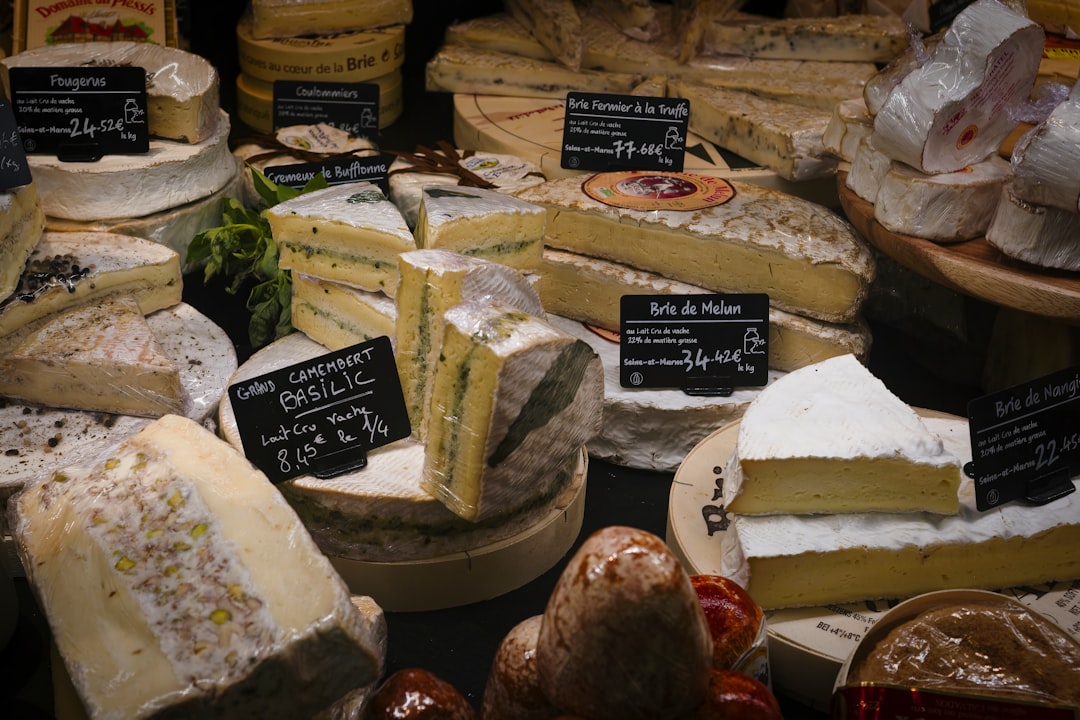
For the cheeses, go beyond Camembert. Livarot — pungent, washed-rind, wrapped in strips of dried sedge — is the cheese the locals argue is better than Camembert. Pont-l’Évêque is softer and creamier, less aggressive, and pairs beautifully with a glass of pommeau. Buy them at the Saturday market and eat them at room temperature. Never cold.
For a serious dinner, La Table du Lion at the Hôtel Le Lion d’Or serves a fusion of Norman ingredients and global technique — salmon from nearby Isigny, oysters from Asnelles, the occasional nod to Asia. La Rapière is smaller, more traditional, Michelin-recognized, and has a vegetarian menu that actually tries. Le Pommier does the classics well in a room that doesn’t need to prove anything.
If you have a car, drive to Port-en-Bessin (10 minutes) and eat oysters at a harborside table. The oysters from Asnelles and Isigny are briny, cold, and available year-round, though purists insist on the “R months” — September through April.
Where to Stay (and Why Location Matters)
Bayeux is small enough that staying in the old center puts everything within walking distance — the cathedral, the museums, the restaurants, the market square. There’s no wrong neighborhood here, only a choice between town and countryside.
Villa Lara is the town’s best hotel, and it knows it. Five stars, contemporary interiors behind a classic facade, and rooms with direct views of the illuminated cathedral at night. It’s the kind of place where the location alone justifies the rate. If you’re going to splurge in Normandy, this is where.
Villa Lara, Bayeux on Booking.com
Hôtel d’Argouges is an 18th-century townhouse with 28 rooms and the kind of character that chain hotels spend millions trying to manufacture. It’s mid-range, it’s central, and the garden out back is a genuine surprise. Good value for what you get.
Hôtel d’Argouges, Bayeux on Booking.com
La Ferme de la Rançonnière is the countryside play — a converted Norman farmstead with stone walls, an on-site restaurant, and a tempo that drops the moment you pull through the gate. It’s 15 minutes from Bayeux by car, which means you’ll need wheels, but the evening quiet and the prix fixe dinners make it worth the trade.
La Ferme de la Rançonnière on Booking.com
The Day Trips That Justify Three Nights
Bayeux earns its keep as a base camp. Three nights here opens up four distinct day trips, each one in a different direction, none more than 90 minutes away.
The D-Day beaches are the obvious draw, and they deserve a full day. Omaha Beach, the American Cemetery, Pointe du Hoc, and Arromanches — where the remains of the Mulberry Harbour still sit in the tidal flats — are best experienced with a guide who knows how to pace the emotion. Go small-group. The difference between a bus tour and an 8-person van with a historian is the difference between a museum and a conversation.
Guided D-Day Beaches tour from Bayeux on GetYourGuide
Mont-Saint-Michel is 90 minutes west and needs no introduction. Go early, stay late enough to see the light change on the bay, and wear shoes you don’t mind getting sandy. A day trip from Bayeux is the easiest way to avoid staying in the overpriced tourist cluster around the mount itself.
Mont-Saint-Michel day trip from Bayeux on GetYourGuide
The Calvados and cider route is the day trip nobody plans and everyone remembers. Maison Busnel, the oldest Calvados distillery in the region (since 1820), runs daily tours. Ferme de la Sapinière, near Omaha Beach, produces cider and apple aperitifs alongside its Calvados. Neither is in Bayeux proper, but both are easy stops on the way back from the beaches.
Calvados and cider tasting tour in Normandy on GetYourGuide
And if you have a fourth day, Honfleur — the painted harbor town that attracted half the Impressionists — is an hour northeast. It’s touristy, yes. It’s still worth it.
What Everyone Walks Past
The Bayeux Botanical Garden was designed in 1859 by the Bühler brothers and anchored by a weeping beech that’s been classified as a natural monument. It’s between the old town and the British War Cemetery, and most visitors treat it as a shortcut rather than a destination. Give it 30 minutes. The tree alone justifies the stop.
The MAHB (Musée d’Art et d’Histoire Baron Gérard) occupies the old Bishop’s Palace and covers Bayeux’s porcelain and lace-making heritage alongside a solid fine art collection. It is perpetually overshadowed by the Tapestry Museum next door, which — given the tapestry’s current absence — makes this the perfect year to visit it properly.
The Saturday morning market isn’t a tourist market. It’s where Bayeux does its weekly shop. Cheese vendors, fishmongers, flower stalls, cider sellers, and a rotation of seasonal produce that tells you more about the Norman calendar than any guidebook. Arrive before 10. Leave with Livarot.
When to Time It Right
Late May to mid-June is the sweet spot. The D-Day Festival (May 30 – June 14 in 2026) fills the landing coast with commemorations, parades, and a gravity that elevates the entire region. The weather is warm without being hot, the evenings are impossibly long, and the summer crowds haven’t arrived yet.
July brings the Médiévales de Bayeux (July 3–5, 2026), one of France’s three largest medieval festivals — 50,000 visitors, 150 craft vendors, performers around the cathedral, and a parade that takes itself just seriously enough. It’s spectacle, but it’s good spectacle. Just book early.
September is the quiet option. The harvest begins, the light softens, and the restaurants shift their menus. It’s the month for travelers who want Bayeux to feel like theirs.
Plan Your Trip to Bayeux
Best time to visit: Late May through mid-June for D-Day commemorations and long golden evenings, or September for harvest calm and thinner crowds.
✈️ Getting There
Search flights to Caen on Skyscanner — then a 30-minute drive or train to Bayeux. Alternatively, direct trains from Paris Saint-Lazare take ~2.5 hours.
🏨 Where to Stay
- Hôtel d’Argouges — 18th-century townhouse with a hidden garden, right in the center of old Bayeux.
- Villa Lara — Five-star with cathedral views from the room. The splurge that earns it.
🎟️ What to Book in Advance
- Guided D-Day Beaches Tour from Bayeux
- Mont-Saint-Michel Day Trip from Bayeux
- Calvados and Cider Tasting Tour in Normandy
📦 Pack Right
Arc’teryx Norvan LT Rain Jacket — Norman weather shifts fast. A packable shell that handles real rain (not a fashion mist layer) earns its suitcase space.
Some links in this post are affiliate links. If you book through them, CuriosityTrail earns a small commission at no extra cost to you. Recommendations are chosen on merit; commissions never decide what’s included.