St. Augustine Beyond the Trolley: Spanish Forts, Minorcan Chowder, and America’s Hidden History
Quick Essentials
- 📍 Best Time to Visit: March through May — warm enough for waterfront strolling, low enough humidity to actually enjoy it, and the spring festival calendar is quietly stacked.
- ✈️ Getting There: Search flights on Skyscanner | Direct flights to Jacksonville (JAX), 45 minutes north
- 🏨 Where to Stay: Browse St. Augustine hotels on Booking.com
- 🎟️ Don’t Miss: Guided tour of the Castillo de San Marcos on GetYourGuide
- 💰 Budget Range: $150–$300 per day for a couple — mid-range inn, two good meals out, one activity or tour
The City That Got Here First
Most people discover St. Augustine sideways. It turns up as a day trip from Jacksonville, a detour on the drive south from Savannah, a line on a Florida itinerary that otherwise revolves around theme parks and beach towns. They walk St. George Street, eat a scoop of something, take a photo of the old fort, and carry on.
That’s a mistake. Not a catastrophic one — you’ll still have a pleasant afternoon. But you’ll miss the actual city, which is considerably more interesting than its trolley-tour reputation suggests.
St. Augustine was founded in 1565, more than half a century before the Pilgrims showed up in Massachusetts. That fact tends to surprise Americans who assume their country’s history starts at Plymouth Rock. What surprises them more is how much of that history is still physically present — not as museum recreations, but as the actual street grid, the actual fort walls, the actual buildings where things happened. The Spanish colonial core isn’t a heritage district built around one preserved church. It’s a working neighbourhood where the 17th century and the 21st century share a pavement.
And then there’s the food. Minorcan clam chowder, datil pepper hot sauce, coastal Southern seafood done with a specificity that comes from three hundred years of cultural layering. The food scene alone is worth the trip. Everything else is a bonus.
Before the Mayflower: The Spanish Colonial Core
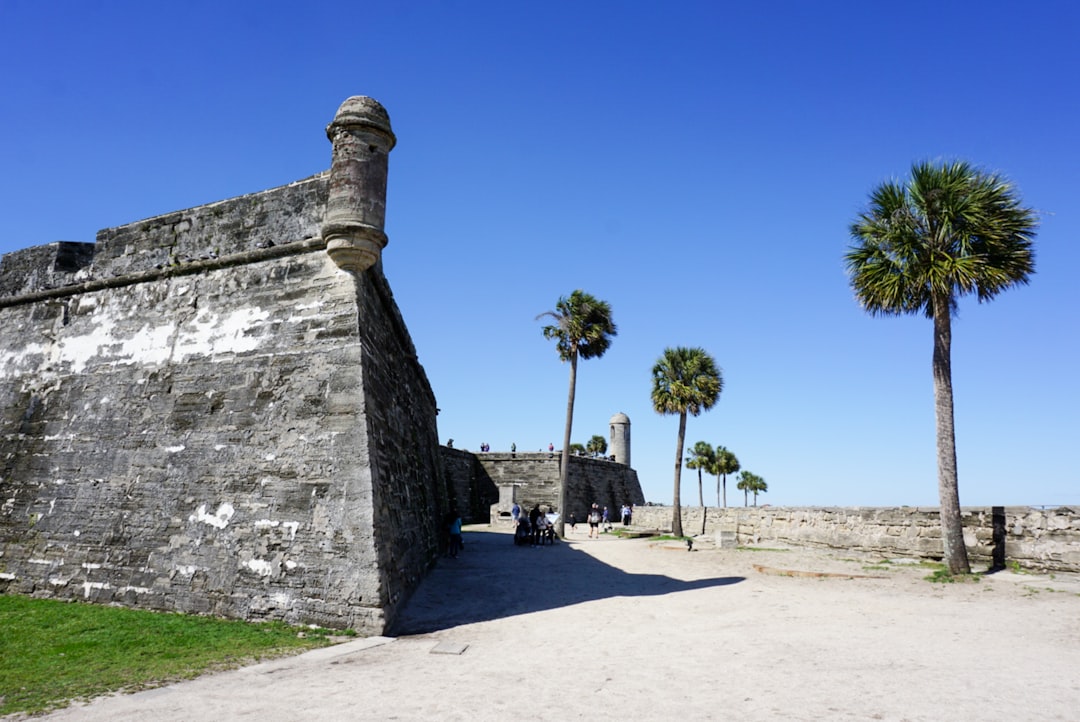
The Castillo de San Marcos is the obvious starting point, and it deserves the attention. Built between 1672 and 1695 from coquina — a local limestone made of compressed shells — the fort was designed by Spanish military engineers who understood that this was the edge of an empire. The coquina turned out to be a brilliant choice: cannonballs don’t shatter it, they sink into it. The British tried twice to take the fort by force and failed both times.
Walk the ramparts and you’ll notice the views haven’t changed much since the garrison soldiers saw them. Matanzas Bay to the east, the marshes to the north, the tight grid of the old town stretching south. A guided tour here adds layers you won’t get from the plaques alone — the stories of the siege of 1740, the prisoners of war, the Seminole warriors held here in the 1870s. Book a guided tour of the Castillo de San Marcos
Beyond the fort, the colonial quarter unfolds in narrow streets and coquina walls. The Cathedral Basilica, built in 1797, anchors the Plaza de la Constitución — a town square that’s been in continuous use for over four centuries. On any given morning you’ll find locals cutting through on their way to coffee, kids running across the grass, and a handful of visitors working out that this isn’t a museum courtyard but an actual public square that never stopped being one.
This is one of those places where you don’t need a map. The streets are short, they curve gently, and they’ll bring you back around. Pay attention to the building material as you walk — the coquina shows up everywhere, warm and rough-textured, the colour of old sand. It gives the whole quarter a visual coherence that most “historic districts” in American cities can only approximate.
The Gilded Age Arrives by Rail
Henry Flagler made his fortune with Standard Oil, and then he discovered Florida. In the 1880s he built the Florida East Coast Railway and began constructing resort hotels along it, starting with St. Augustine. The Hotel Ponce de León, designed by the New York firm Carrère and Hastings, opened in 1888 and immediately became the most lavish winter resort in the country.
The building is still standing. It’s now Flagler College, a small liberal arts school whose students eat lunch beneath Louis Comfort Tiffany’s stained glass ceiling and walk to class past Spanish Renaissance Revival towers capped in terra-cotta. The student-led legacy tours are open to the public, and they’re remarkably good — the guides know their architecture and their anecdotes. Book the Flagler College legacy tour
Across the street, Flagler’s other grand hotel — the Alcazar — is now the Lightner Museum. It’s a strange and wonderful collection of Gilded Age curiosities: Tiffany glass, Victorian mechanical musical instruments, a Crystal Ballroom, and, in the basement, what was once the world’s largest indoor swimming pool, now converted into a café. You can sit down there with a coffee and look up at the tiled walls and arched windows of a pool that once hosted Gilded Age socialites. The Lightner gets less foot traffic than the Flagler College tours. That’s to your advantage.
Fort Mose and Lincolnville: The History That Matters Most
Two miles north of the old town, Fort Mose Historic State Park marks the site of the first legally sanctioned free Black settlement in what is now the United States. In 1738, the Spanish governor of Florida offered freedom to enslaved people who escaped British colonies to the north, provided they converted to Catholicism and served in the militia. The settlement they built — Gracia Real de Santa Teresa de Mose — predates the Underground Railroad by more than a century, except this one ran south.
The fort site itself is quiet. Marshland, interpretive signs, a visitor centre with a small but powerful exhibition. It’s not flashy. But understanding what happened here changes how you read the rest of St. Augustine — and, frankly, how you read American history. The Black militia at Fort Mose fought alongside Spanish regulars to repel a British invasion in 1740. That story doesn’t make it into most school textbooks.
Closer to the old town, the Lincolnville neighbourhood tells the next chapter. Founded in 1866 by freedmen and named for the president who freed them, Lincolnville became one of the strongest Black communities in the South. A century later, it became a flashpoint of the Civil Rights movement. Martin Luther King Jr. was arrested here in June 1964 during his last major campaign before the passage of the Civil Rights Act.
The ACCORD Freedom Trail connects thirty-one markers across the neighbourhood. There’s a free cell-phone audio tour that walks you through each site. It’s uncrowded, deeply moving, and essential. If you visit one thing in St. Augustine that isn’t on the standard tourist circuit, make it this.
Datil Peppers and Minorcan Chowder: Eating Through Three Centuries
The food story in St. Augustine starts with a pepper. The datil is a small, golden-orange chili grown almost nowhere else on earth — St. Johns County claims it as a near-exclusive crop. It’s got a sweet, fruity heat comparable to a habanero but with more personality. How it got here is debated, but the Minorcan community adopted it and made it the backbone of local cuisine.
The Minorcans themselves arrived in 1768, brought as indentured labourers to a British plantation at New Smyrna, sixty miles south. Conditions were brutal — nearly a thousand of the original fourteen hundred died. The survivors walked to St. Augustine in 1777 and stayed. Their descendants — an estimated 25,000 still live in St. Johns County — left a permanent mark on the food.
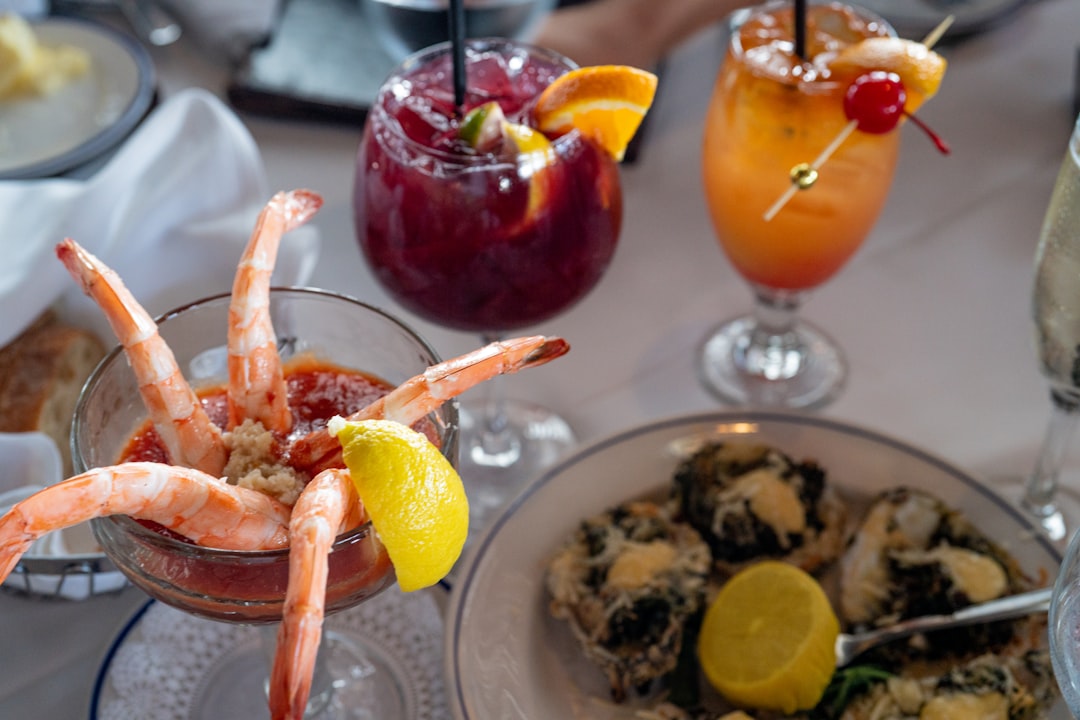
Minorcan clam chowder is the signature dish: tomato-based, not cream, spiked with datil pepper. It’s nothing like New England chowder and everything like the Mediterranean. Try it at Catch 27, where the version comes alongside devilled eggs with fried oysters, or at St. Augustine Fish Camp on Riberia Street, where the shrimp and grits with tasso ham is nearly as good. The Columbia Restaurant — Florida’s oldest, originally opened in Tampa in 1905 — does reliable Spanish and Cuban cooking, and the tableside 1905 Salad is a bit of theatre worth ordering once.
For drinks, Ice Plant Bar is the essential stop. It’s housed in a 1927 ice factory, the cocktails are made with spirits from the St. Augustine Distillery next door, and the Minorcan Mule is exactly what it sounds like: a Moscow Mule with datil pepper heat. The building alone is worth a visit — industrial bones, excellent lighting, the kind of bar that knows what it’s doing without making a fuss about it.
Where to Sleep, When to Go
The historic district is compact enough that you don’t need a car once you’re here. Stay within it and you can walk to everything.
The Collector Inn occupies what was once the Dow Museum of Historic Houses — a cluster of centuries-old structures now converted into a boutique hotel that treats its own history as part of the guest experience. It’s the kind of place where the building tells you a story if you let it. Check availability at The Collector Inn
St. George Inn sits right on the main drag — thirty-five rooms across six historic buildings, most with balconies and rocking chairs overlooking St. George Street. Central, comfortable, no pretension. Check availability at St. George Inn
For a different perspective, look at staying in Lincolnville. The neighbourhood is a short walk south of the colonial core, and staying here puts you closer to the local rhythm than the tourist one. Several B&Bs and guesthouses operate in the historic cottages along the tree-lined streets. You’ll hear screen doors and lawn mowers instead of trolley bells. For a city break, that’s not a bad trade.
Timing: March through May is the sweet spot. The weather is warm without the punishing humidity of summer, and the spring festival calendar includes the Food + Wine Festival (early May) and the Gamble Rogers Folk Festival (April). September and October are similarly pleasant. If you come for the Nights of Lights — the annual holiday light display that blankets the old town from late November through mid-January — book early and expect crowds. It’s genuinely impressive, but it’s no secret.
The Bottom Line
St. Augustine is the kind of city that gets dismissed as a day trip and deserves a long weekend. The Spanish fort is real, the Flagler architecture is astonishing, and the Minorcan food tradition is unlike anything else in the American South. But it’s the history beneath the tourist surface — Fort Mose, Lincolnville, the Civil Rights trail — that makes this place genuinely important, not just charming.
Come for three days minimum. Walk the colonial quarter, eat the chowder, spend a morning at Fort Mose when it’s quiet. You’ll leave thinking about the layers — and probably about coming back.
Ready to Plan Your Trip to St. Augustine?
You’ve done the reading. Here’s everything you need to make it happen.
🎟️ What to Book in Advance
- Guided tour of the Castillo de San Marcos
- Scenic sunset sail on Matanzas Bay
- Browse more St. Augustine experiences on Viator
Some links in this post are affiliate links. If you book through them, CuriosityTrail earns a small commission at no extra cost to you. Recommendations are chosen on merit; commissions never decide what’s included.