Visiting Vientiane, Laos: A Complete Guide
Quick Essentials
- 📍 Best Time to Visit: November through February — dry, cool, and the That Luang Festival in November turns the city’s greatest stupa into a lantern-lit pilgrimage site.
- ✈️ Getting There: Search flights on Skyscanner | Direct from Bangkok, Hanoi, and Kuala Lumpur
- 🏨 Where to Stay: Browse Vientiane hotels on Booking.com
- 🎟️ Don’t Miss: Half-day Buddha Park cultural tour on GetYourGuide
- 💰 Budget Range: $50–$120 per day for comfortable mid-range to boutique-level travel
Most travelers treat Vientiane as a layover. They land, check off Pha That Luang, eat a plate of laap near the night market, and catch the morning bus to Luang Prabang. Their loss.
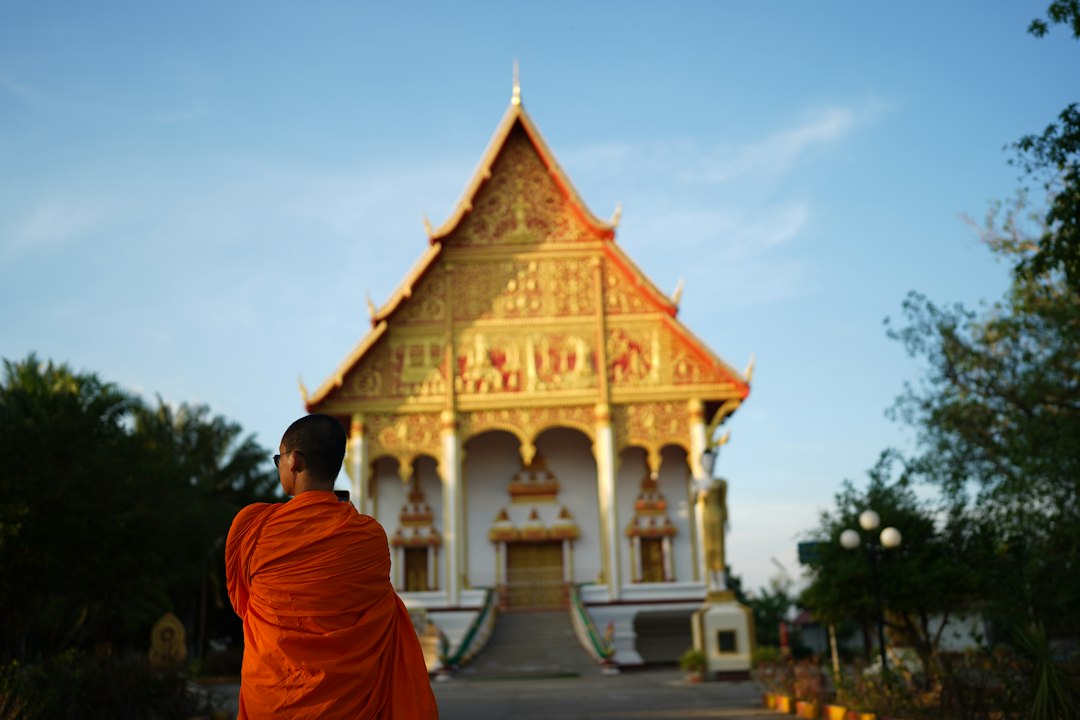
Laos’s capital doesn’t compete with Luang Prabang’s postcard beauty, and it knows it. What it offers instead is a city that moves slowly enough for you to actually notice things — the way a crumbling French shophouse wall still holds a faded Dubonnet advertisement, the low hum of monks chanting behind a temple gate at six in the morning, the particular quality of light on the Mekong at five in the afternoon that makes you stop walking and just stand there.
Vientiane is one of those rare Southeast Asian capitals where the dominant sound is still birdsong. It’s growing, certainly — new concrete is going up along the ring road — but in the old colonial quarter, the scale stays human and the pace stays gentle. For travelers who’ve already done Bangkok and Hanoi and want something with a lower center of gravity, this city rewards you simply for showing up with nowhere to be.
Why Vientiane, and Why Now
The Laos rail link from China has funneled more visitors northward to Luang Prabang, which means Vientiane’s own tourism numbers haven’t surged the same way. The city is still quiet, still inexpensive, and still remarkably free of the infrastructure that turns Southeast Asian cities into open-air malls.
Timing matters. The cool season from November through February is genuinely pleasant — clear mornings, temperatures in the mid-twenties, and the Mekong at its most photogenic post-monsoon width. Come in November and you’ll overlap with the That Luang Festival, which brings thousands of pilgrims to the golden stupa for candlelight processions and a sprawling trade fair. It’s the most important religious event in Laos, and it happens to take place in the capital.
Walking the Colonial Quarter
Start at the Nam Phou fountain — a modest roundabout that functions as the hinge between the French quarter and the riverfront. From here, Setthathirath Road runs east through café-lined shophouses where the architecture tells you exactly who built this city and who inherited it. Louvered shutters. Plaster façades in faded ochre and pale blue. A boulangerie that opens at six. The scale feels like a small Provençal town that got rerouted to the tropics.
Walk south from the fountain and you’ll hit Fa Ngum Quay, the riverside promenade where the Ban Anou Night Market sets up each evening. The stalls here are modest — grilled sticky rice, skewered meats, fresh fruit shakes — and the crowd is almost entirely local. The food is better than anything in the tourist quarter, and a full dinner costs less than a Bangkok taxi ride.
The real discovery is what happens when you keep walking past the market. The Mekong levee promenade extends fourteen kilometers in either direction, well beyond the tourist strip. Go south and the crowd thins to fishermen, temple spires, and that golden late-afternoon light that Vientiane does better than anywhere else on the river.
The Temples Worth Your Morning
Vientiane’s temples are not Luang Prabang’s — they’re less manicured, less visited, and often more interesting for it.
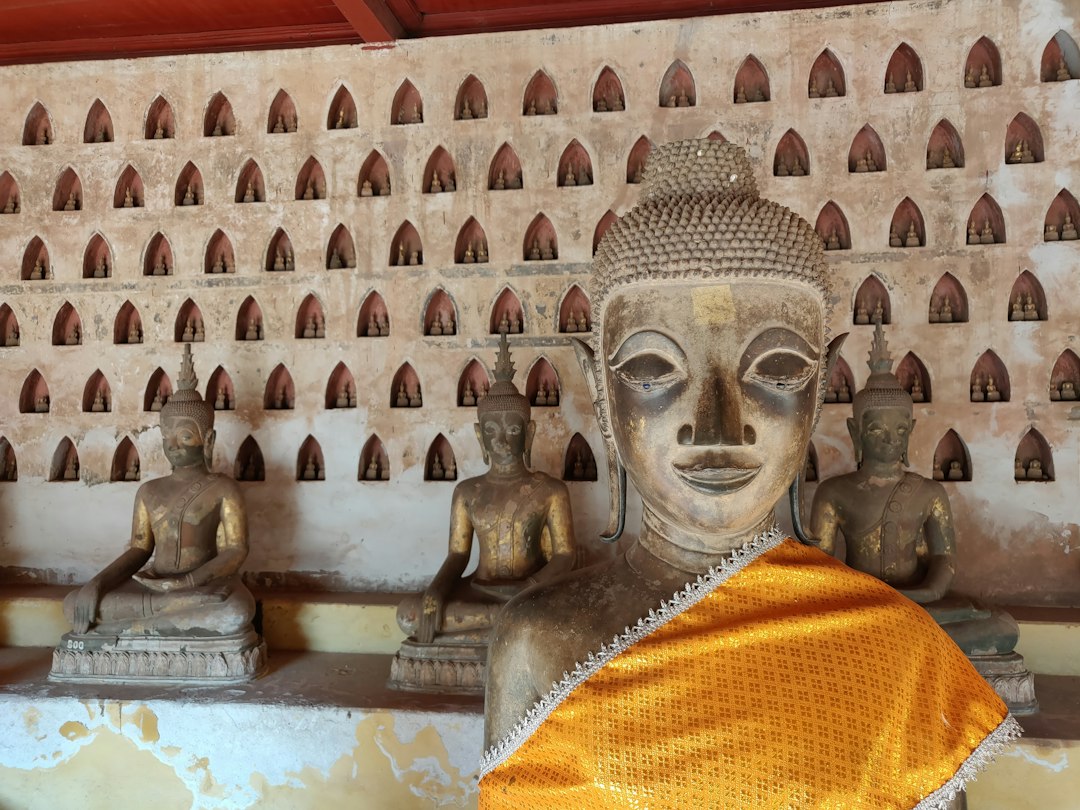
Wat Si Saket is the one even guidebooks agree on, and for once they’re right. Built in 1818, it survived the Siamese sacking that flattened most of the city because its architecture followed the Thai style — so the invaders spared it. The cloister walls hold over six thousand small Buddha statues in neat rows, some missing heads, some leaning at angles that make them look like they’re whispering to each other. Go early. The light through the cloister is worth the alarm.
Pha That Luang is the national symbol, a 45-meter gilded stupa that looks like it belongs on a larger city’s skyline. Up close, the gold leaf is peeling in places and the surrounding courtyards are more worn than the photos suggest. That’s part of what makes it feel real. This is a working pilgrimage site, not a museum piece.
Wat That Khao is the one most visitors miss entirely. A neighborhood temple without a souvenir stall, with a reclining Buddha that has the quiet dignity of a place where monks actually live and pray, undisturbed by tour groups.
Eating Like a Local in Vientiane
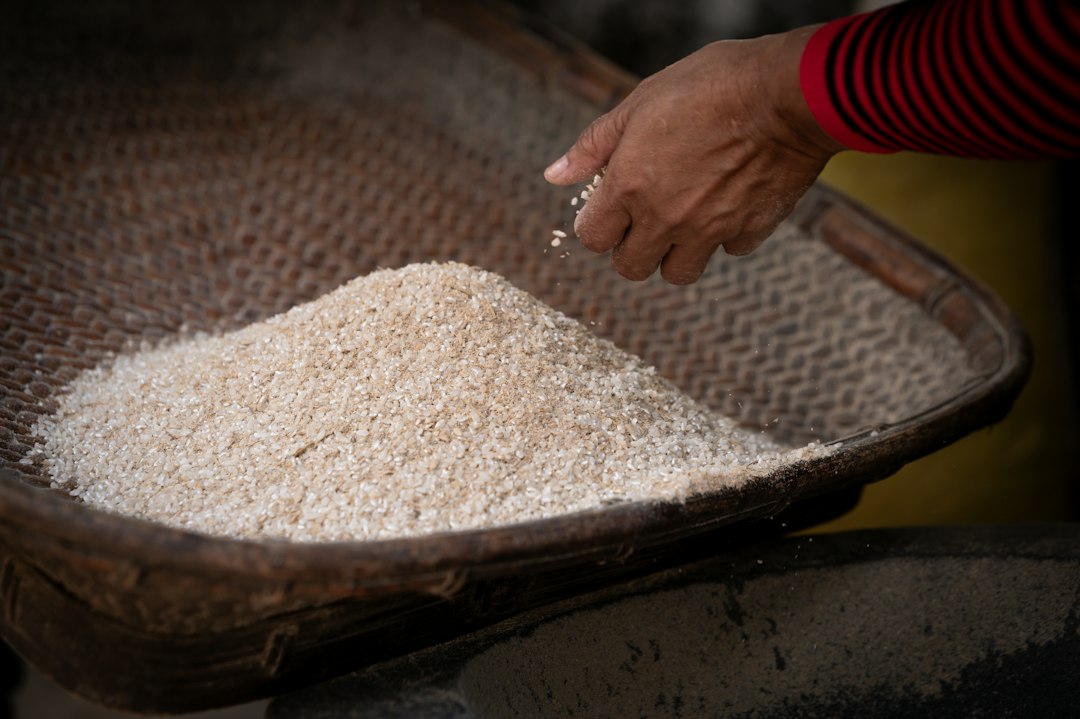
Lao food is built on a foundation so simple it seems like it shouldn’t work this well: sticky rice, pulled from a woven bamboo basket with your fingers, alongside whatever’s on the table. The sticky rice is the utensil, the plate, and half the meal.
Laap is the dish that defines Lao cooking. Minced meat — pork, duck, fish, or beef — pounded with roasted rice powder, lime juice, fish sauce, chilies, and more fresh herbs than seem reasonable. At Pa Kham Tan, a local spot that few tourists find, the laap comes seasoned with bile, which sounds aggressive but adds a bitter depth that makes the ordinary version seem incomplete afterward. This is the real thing.
Khao Jee — grilled sticky rice patties, sometimes topped with egg — appears on street carts every morning. Simple, portable, and inexplicably satisfying at seven a.m.
Beerlao needs no introduction to anyone who’s spent time in the region, but the dark version is harder to find and worth asking for. It’s richer, slightly sweet, and exactly right with a plate of laap on a warm evening.
For something completely different, drive twenty minutes north to the Tha Ngon floating restaurants. Locals rent personal houseboats — about fifteen dollars for a ten-person vessel — staffed with dedicated waiters who bring trays of laap, grilled fish, and cold Beerlao. It’s karaoke-optional and barely known to tourists. This is how Vientiane locals actually spend a Saturday afternoon.
The Mekong at Golden Hour
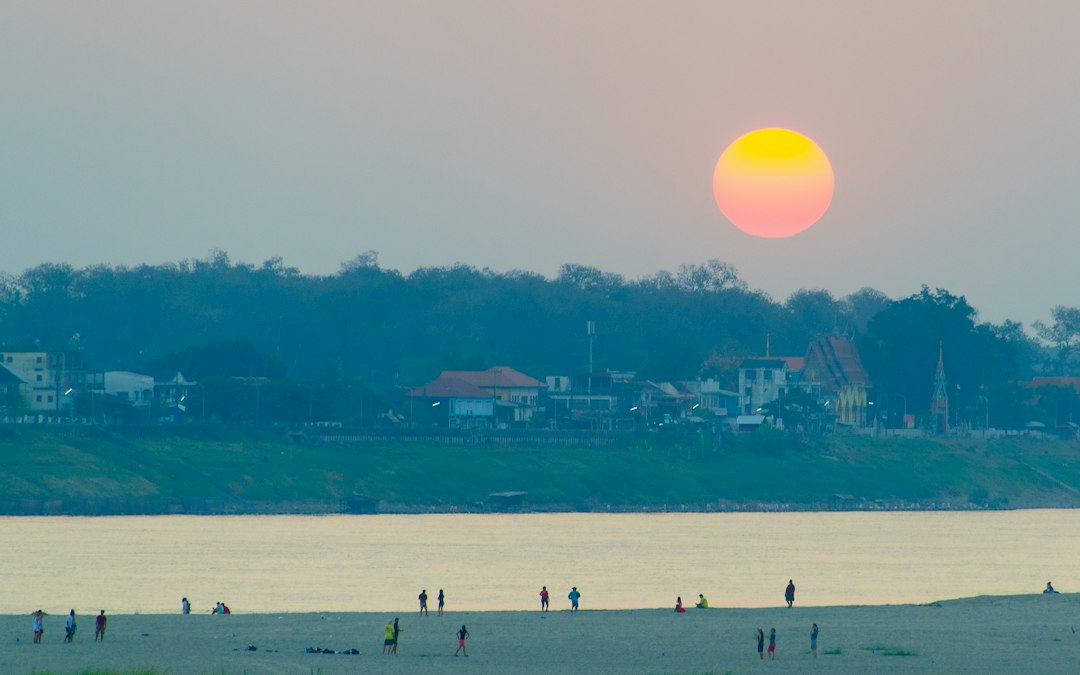
There’s a specific window — roughly 4:30 to 5:45 p.m. in the dry season — when the light along the Mekong turns the color of raw honey and the entire riverfront seems to exhale. Joggers appear on the promenade. Families spread out on the grass. Vendors set up folding tables with papaya salad and grilled sausages.
This is the best free experience in Vientiane, and it happens every single day. The river at this hour is wide and slow and gold, and the far bank — which is Thailand — sits low on the horizon like a smudge of green. No temples to tick off, no entrance fees, no guidebook telling you where to stand. Just the river doing what it does.
Buddha Park and COPE — Two Essential Half-Days
These are the two excursions that pull you out of the city center, and they couldn’t be more different.
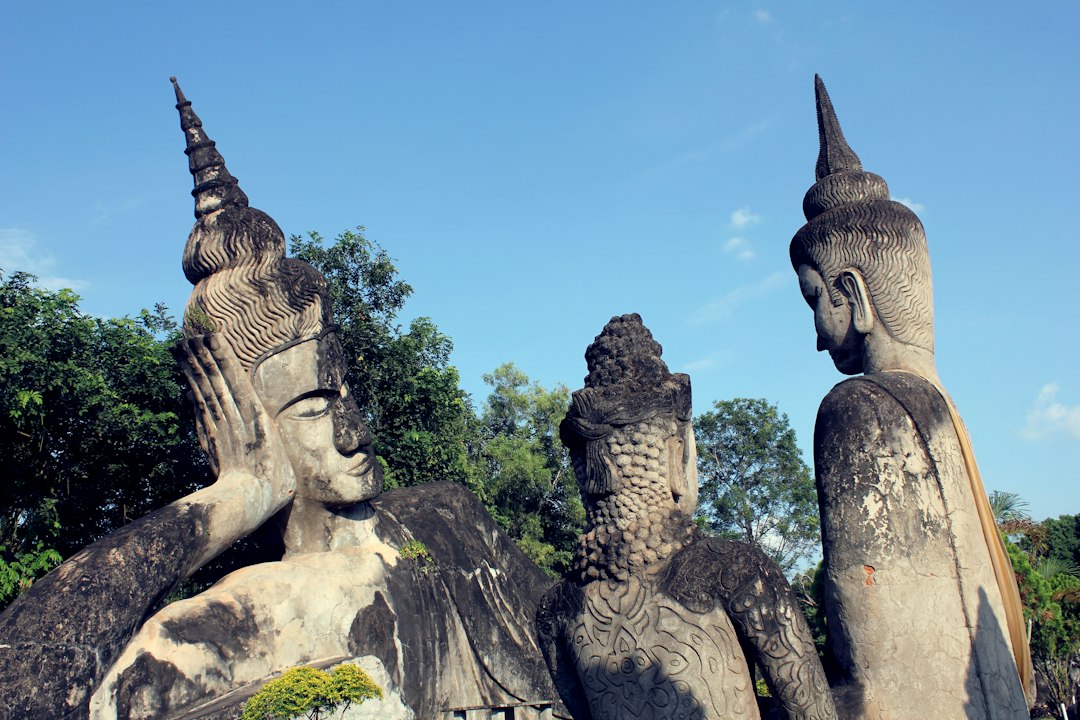
Xieng Khuan (Buddha Park) sits twenty-five kilometers southeast of town on the Mekong bank. Built in 1958 by a monk-shaman named Luang Pu Bunleua Sulilat, it’s a sprawling concrete fever dream of over two hundred Buddhist and Hindu statues — some towering, some grotesque, all strange. You can climb through a giant pumpkin-shaped structure that represents hell, earth, and heaven across three levels. The #14 bus from the central station costs about a dollar and takes an hour. Book a guided Buddha Park half-day tour on GetYourGuide
The COPE Visitor Centre is free, and it’s essential. Laos is the most heavily bombed country in history per capita — more ordnance was dropped here during the Vietnam War than on all of Europe in World War II. COPE documents the ongoing effort to clear unexploded bombs and provides prosthetic limbs to survivors. It’s sobering, clear-eyed, and not exploitative. Understanding this history changes how you see the rest of the country.
Planning Your Visit
Getting there. Wattay International Airport has direct flights from Bangkok (1 hour), Hanoi (1.5 hours), and Kuala Lumpur (3 hours). From Luang Prabang, the Laos-China Railway now makes the journey in about two hours. Search flights to Vientiane on Skyscanner
Where to stay. The colonial quarter around Nam Phou Square and Ban Mixai is the ideal base — everything worth seeing is walkable from here. The Settha Palace Hotel is a restored colonial property with real character and a good restaurant. Check rates at Settha Palace Hotel on Booking.com. For a quieter riverside setting with a pool, the Amari Vientiane in the Ban Khunta neighborhood delivers without pretending to be something it’s not. Check rates at Amari Vientiane on Booking.com
Getting around. Vientiane is flat, compact, and best explored on foot or by bicycle. Tuk-tuks handle anything beyond walking distance — agree on a fare before climbing in. For Buddha Park, the public bus is cheap and easy.
Practical notes. The Lao kip is the currency, but Thai baht and US dollars are widely accepted. ATMs are plentiful in the city center. Tipping is not expected but appreciated. Many small restaurants and market stalls are cash-only.
Ready to Plan Your Trip to Vientiane?
You’ve done the reading. Here’s everything you need to make it happen.
🎟️ What to Book in Advance
- Half-day Buddha Park and Patuxay cultural tour
- Vientiane city tour by tuk-tuk with temple entry
- Browse more Vientiane experiences on Viator
Some links in this post are affiliate links. If you book through them, CuriosityTrail earns a small commission at no extra cost to you. Recommendations are chosen on merit; commissions never decide what’s included.