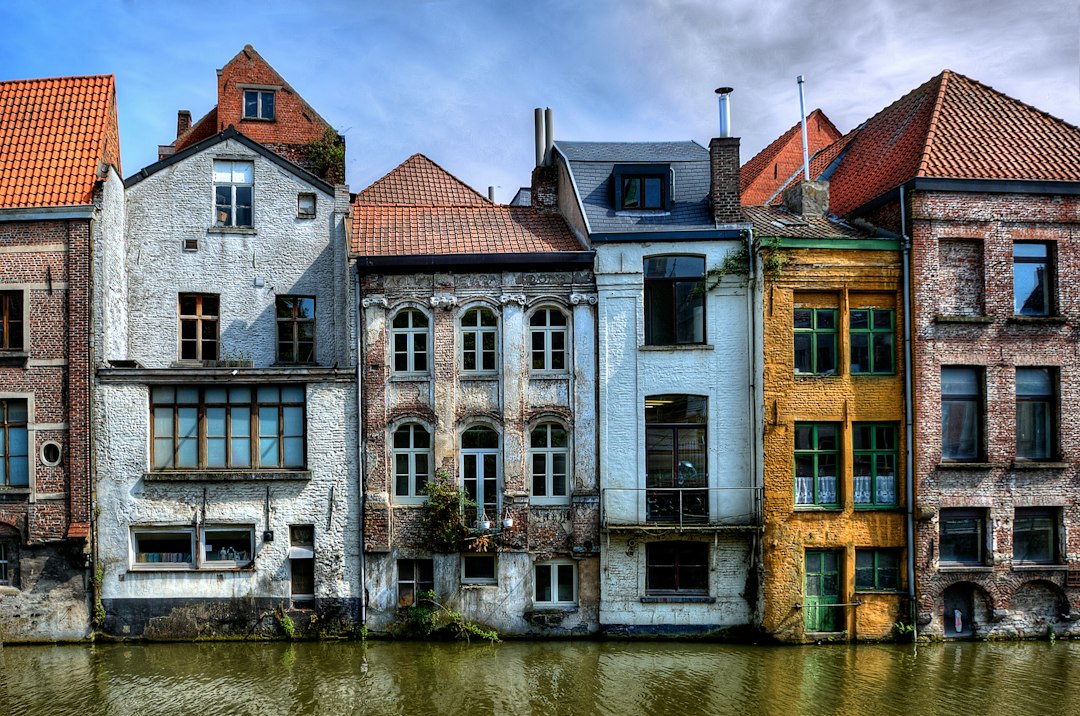
Ghent, Belgium: The Flemish City That Still Has Residents
Quick Essentials
- 📍 Best Time to Visit: April to June and September to October, when the quays have long evenings, the university is back in session and July’s festival crush is out of the picture.
- ✈️ Getting There: Search flights to Brussels on Skyscanner | Then a direct train that averages 36 minutes to Ghent
- 🏨 Where to Stay: Browse Ghent hotels on Booking.com | Our picks below
- 🎟️ Don’t Miss: Ghent canal boat trip through the medieval centre on GetYourGuide
- 🏰 Must See Places: Gravensteen castle, Belfry, St Bavo’s Cathedral and the Ghent Altarpiece, MSK and S.M.A.K. museums, Design Museum Gent, Graslei and Korenlei quays
- 💰 Budget Range: Mid-range to splurge; rates jump sharply during the July festivities, so check current prices before you fix your dates.
Part of our Belgium guide, which helps you choose between the towns around Brussels. Next on the route: Bruges and Mechelen.
Bruges is the town that gets the influencers. Ghent gets the locals, and that turns out to be the better deal. The two cities share the same stepped gables, the same canals, the same Flemish obsession with getting a building’s proportions exactly right. However, Ghent kept what Bruges mostly lost: people who live there and aren’t selling anything.
You notice it on the Graslei at seven in the evening. The quay that looks like a postcard in daylight becomes a living room after dark: legs hanging over the water, cans of beer, a bike leaning against every second bollard. Nobody’s posing for the ‘gram. And the guild houses behind them are lit anyway.
This guide is for the reader who has done the touristy stuff and wondered whether Belgium had anything left to say. It does. Ghent has plenty to offer: a contemporary art scene and fifteenth-century masterpieces under restoration, right across the street from each other.
A City That Didn’t Become a Museum
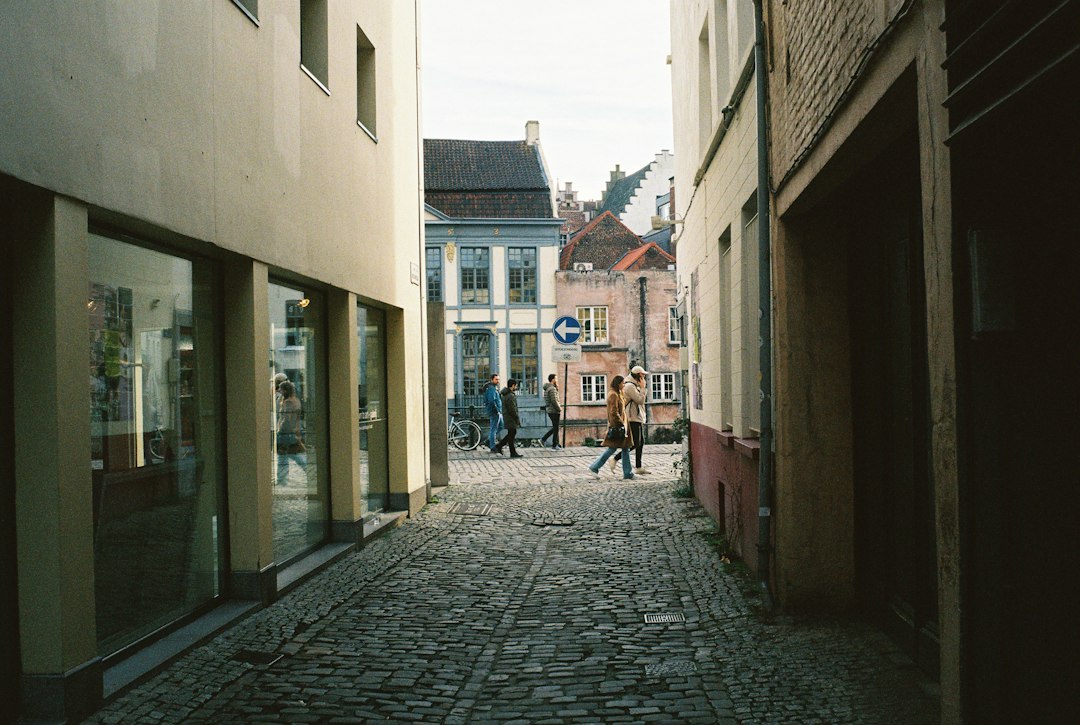
Ghent’s medieval centre is enormous by Flemish standards, which helps. The crowds spread out. The Gravensteen, the Counts’ castle that looks like it was drawn by a child who had just discovered turrets, attracts its share, but a short walk into the Patershol puts you in narrow lanes of restaurants where the menus are in Dutch first – a sign that locals go there.
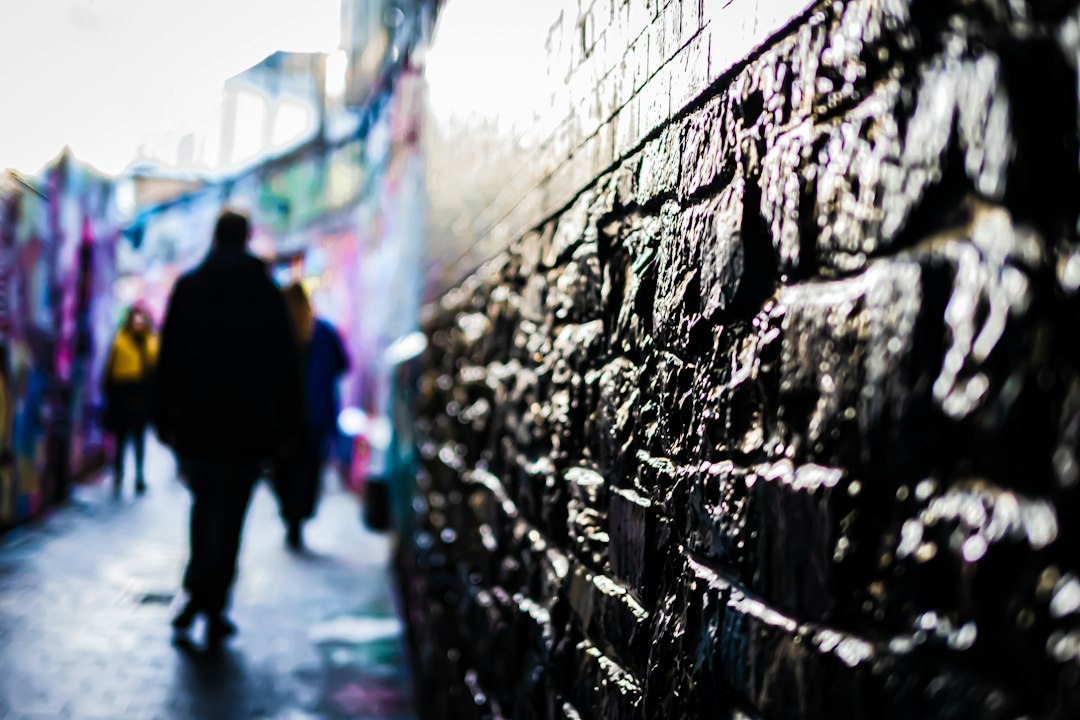
The university is the reason. A large student population keeps the bars open late, the bike racks full and the prices on the side streets honest. It also keeps the city slightly scruffy at the edges, which is a compliment. Werregarenstraat, the narrow lane off the Hoogpoort where graffiti is legal and repainted constantly, wouldn’t last a week in Bruges.
The Vrijdagmarkt is one of the city’s great squares, ringed with guild houses and cafés, and on market days it is full of people buying cheese and bread rather than photographing them. The statue of Jacob van Artevelde, the fourteenth-century leader who sided Ghent with England against the French crown, presides over it with the air of a man who would still pick that fight.
There’s another reason why Ghent is an old city living in the modern world: it never fully stopped working. It was an industrial city long after its medieval wealth faded, and the docks to the north are only now finishing their second life.
Where to Stay in Ghent: Quays, Patershol or a Townhouse
Where you sleep decides what kind of Ghent you get. The quays give the best view, the Patershol gives you easy access to dinner, and the streets west of the centre give you quiet.
1898 The Post. The splurge, in the neo-Gothic former post office on the Graslei, with a cocktail lounge and the most photographed waterfront in Belgium outside the window. → 1898 The Post on the Graslei
Pillows Grand Boutique Hotel Reylof. A converted eighteenth-century townhouse on the Hoogstraat with a spa. It’s a short walk from the centre and pleasantly removed from the evening noise of the quays. → Pillows Grand Boutique Hotel Reylof, Ghent
Hotel Harmony. The mid-range pick, on the Kraanlei at the edge of the Patershol, with canal-view breakfasts and the old leather-workers’ quarter at the back door. → Hotel Harmony on the Kraanlei
ibis budget Gent Centrum Dampoort. The budget pick. It’s a chain hotel and makes no claim to charm. Accor puts it about 500 m from Dampoort station and about 950 m, a 12-minute walk, from the historic centre. → ibis budget Gent Centrum Dampoort
During the Ghent Festivities in July the whole city books out. Rates climb. Outside that window, Ghent is usually easier on the budget than Bruges for a comparable room.
The Art Ghent Doesn’t Advertise Enough
Start with the Van Eyck brothers, because everyone does. After that, though, go somewhere they don’t.
The Adoration of the Mystic Lamb, the Ghent Altarpiece, is in the visitors’ centre of St Bavo’s Cathedral. The standard ticket is €12.50, or €16 with the augmented-reality tour that takes you down into the crypt to tell the altarpiece’s long, stolen-and-recovered history. The AR tour sounds like a gimmick, but it’s not: it puts the painting in context before you stand in front of it. Book online; on weekends and holidays the panels are arranged so both the open and closed sides can be seen in the first and last time slots. → Ghent Altarpiece and St Bavo’s Cathedral tour
Here’s what most visitors miss. The upper register of the altarpiece’s inner panels is under restoration at the MSK, the Museum of Fine Arts, and from Tuesday to Friday you can watch the conservators work. Watching someone lift five centuries of overpaint from a Van Eyck with a scalpel is more affecting than any finished panel. Check the museum’s page for current hours before you go.
Then cross the road. S.M.A.K., Ghent’s municipal museum of contemporary art, sits directly opposite the MSK, and the juxtaposition is the whole point. One building holds the Flemish Primitives; the other holds whatever artists are arguing about this decade. S.M.A.K. is closed on Mondays. Admission is €17, free for anyone 18 or under. On the first Thursday of each month it stays open until 10 pm for Late Thursday, which is the best way to see it: a younger crowd, a bar, and the galleries at their least reverent.
The newest reason to come is the Design Museum Gent. It reopened in October 2026 after a long renovation, with a new timber wing. The reopening exhibitions began on 3 October 2026. The museum now has the space to show far more of its collection than before. If you have a soft spot for chairs, lamps and the history of how ordinary objects got their shapes, give it a long morning.
Finish on Werregarenstraat. It’s not a gallery and nobody curates it, but after a day of Van Eyck it’s a useful reminder that not all of Ghent’s art scene sits behind glass.
The Belfry and the Gravensteen
For the lovers of old things, two medieval landmarks sit a short walk apart, and they do different jobs.
The Belfry was the city’s watchtower and strongbox. The dragon on top has been there since 1377, and the town once kept its privileges locked in a chest inside. Today you climb for the view over the rooftops. A lift starts at the first floor, so the lower stretch is on foot. The city states plainly that the Belfry isn’t accessible to visitors with reduced mobility. It’s open daily from 10 am to 6 pm, and admission is €13 at the time of writing, per the city’s own pages. Book online, or buy at the box office if there’s room. It closes around Christmas and New Year. The city’s pages list the exact days differently, so confirm before you go.
The Gravensteen is the one with the moat. Count Philip of Alsace built it in 1180, and the city calls it the only remaining medieval castle in Flanders with a moat and a largely intact defence system. You get the gatehouse, ramparts, keep and count’s residence, a collection of torture equipment, and a view from the battlements. The audio guide comes with the ticket, in five languages, and you can pick a shorter tour or a comic one voiced by a Flemish comedian. Allow about an hour to an hour and a half. Admission is €15 at the time of writing. The castle recommends booking online. It stops selling tickets at 4:40 pm and is closed on 24, 25 and 31 December and 1 January. → Ghent Gravensteen tickets and tours
If you can only do one, the castle gives you more to look at and the Belfry gives you the better view of the quays you came for.
The Water, Old and New
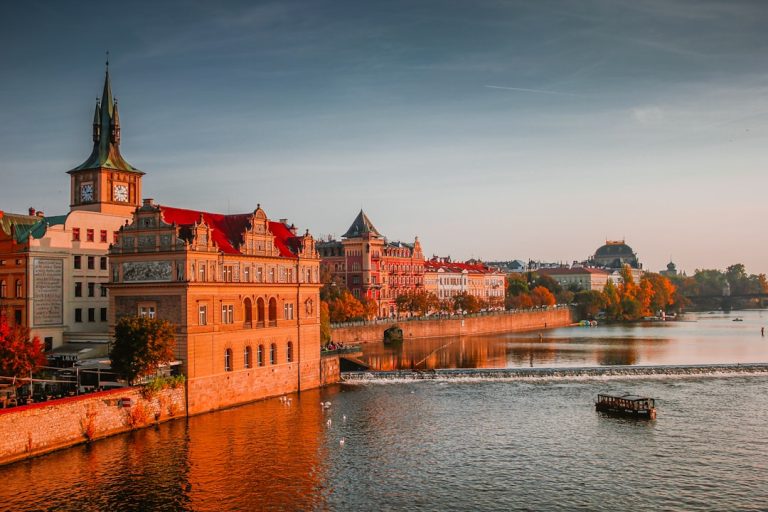
Ghent is built on the meeting of the Leie and the Scheldt, and the canals aren’t decoration. The classic view is the Graslei facing the Korenlei across the Leie, with St Michael’s Bridge to frame it. Go early. Before the terraces set up, the guild houses have the quay to themselves.
The boat trip is worth it. Even for people who usually skip boat trips. Boat in Gent runs covered boats every 30 minutes, with the captain doubling as guide. The basic ticket is €11. Booking is required. From November to the end of March, departures move to the Korenlei jetty, so check where you’re meeting the boat before you set out. The route slides under bridges and past the backs of houses you’ll never see from the street, which is the real reason to go. → Ghent canal boat trip through the medieval centre
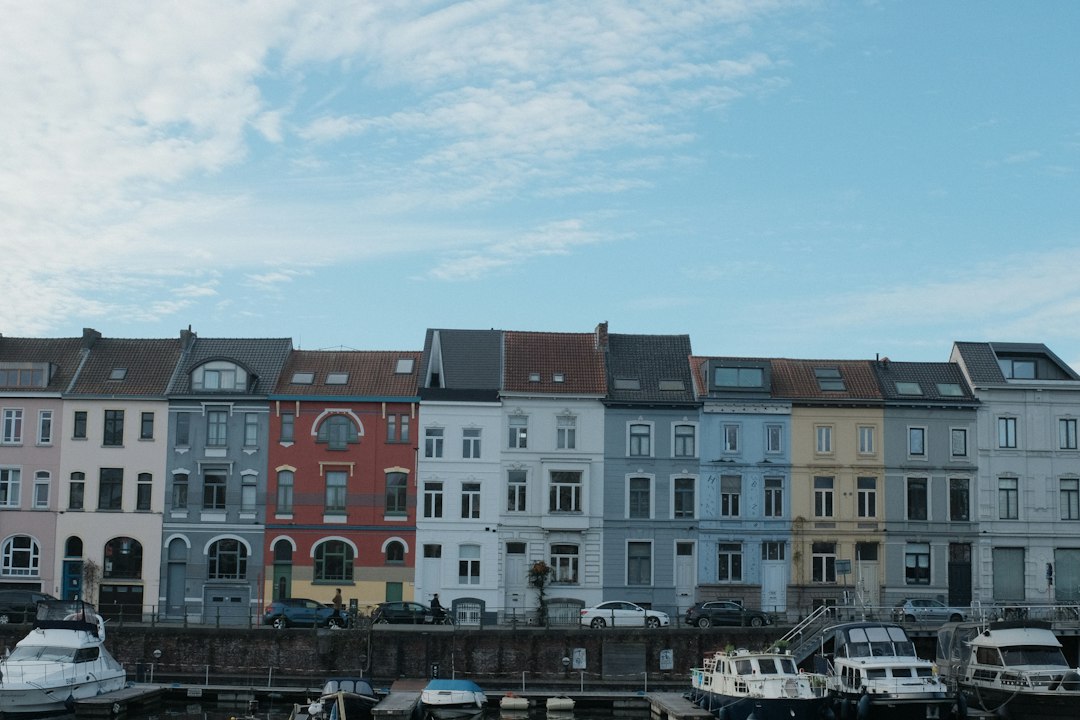
For the other half of Ghent’s waterfront, head north to the Old Docks, the Oude Dokken. Three former port basins, the Houtdok, Handelsdok and Achterdok, have been rebuilt into a waterside district of apartments, quays, houseboats and a park. It isn’t pretty the way the Graslei is pretty. It’s more interesting. The tourist office’s signed walking route covers 7.5 km, with an optional 2.5 km loop through the Voorhaven, and the map is available at the Museum of Industry. For something a little on the adventurous side you can rent a canoe on the Houtdok and see the city from water level.
The Table: Waterzooi, Mustard and a Vegetable Restaurant the World Noticed
Ghent eats better than its reputation, and its reputation is already good.
Gentse waterzooi. The city’s own dish, a creamy broth that started with freshwater fish and is now usually made with chicken. Order the chicken version somewhere in the Patershol, with bread for the broth.
Tierenteyn mustard. The shop on the Groentenmarkt still makes its sharp mustard in the cellar. Buy a stoneware pot to take home. It’s the most useful souvenir in the city.
Cuberdons. The cone-shaped raspberry sweets with a liquid centre that locals call neuzekes, or little noses. They’re sold from carts around the Groentenmarkt and Korenmarkt. Eat them fresh; they don’t keep.
Waterhuis aan de Bierkant. A brown pub at Groentenmarkt 9 on the water, with a list of 165 beers and three house brews, Gandavum, Klokke Roeland and Mammelokker. Sit at the bar. → Ghent food and beer walking tour
For the serious end of the table, two names. Publiek, from chef Olly Ceulenaere, is where Ghent’s modern Flemish cooking is at its most confident. Vrijmoed, from chef Michaël Vrijmoed, was ranked fifth on the Top 100 Best Vegetable Restaurants of the World list in 2026. Both need reservations well ahead. Check each restaurant’s own page for current hours and booking.
Further down the price scale, Confiserie Temmerman on the Kraanlei still makes poepkes, an old-fashioned Ghent sweet. It’s the kind of shop that shouldn’t exist anymore, which is the best reason to go in.

When to Go (and How to Get Here Without a Car)
April to June and September to October are the sweet spot. The evenings are long enough for the quays, the terraces are open, and in autumn the university brings the city back to full strength.
July is a different city. The Gentse Feesten, the Ghent Festivities, take over the centre with free music and street theatre; the 2026 edition ran from 17 to 26 July 2026. The festival dates change each year, so check the city’s site before booking. Go if you want the party. Avoid it if you came for the museums.
Winter is quiet and cold, with short days and a city that turns inward. The Ghent Light Festival is held every three years, but no edition is currently scheduled, so don’t plan a trip around it without checking the official calendar.
Getting here is easy. Fly into Brussels and take the direct train, which averages 36 minutes to Ghent. A car is a liability in the centre, which has a low-emission zone and is built for bikes and trams.
Stay in Ghent, or Day-Trip From Brussels?
You can make Ghent THE destination and stay local, but it’s also super easy to access from Brussels for a day trip.
Stay in Ghent if you can give it two nights or more. The evenings are the point: the Graslei after seven, a late dinner in the Patershol, a walk home along a quay that has emptied of day-trippers. You also start the museums at opening time instead of arriving mid-morning.
Base in Brussels if you want one hotel for everything. The direct train averages 36 minutes and the Belgian rail site counts about 86 a day, so a day in Ghent costs little effort.
Brussels and Bruges are the natural companions to Ghent. Our Bruges guide covers the canals most visitors miss, and Mechelen is an easy rail hop for a third day.
Practical Notes
Mondays. S.M.A.K. is closed on Mondays. Plan the art day for Tuesday to Friday, when you can also catch the restorers at the MSK.
Book ahead. The Ghent Altarpiece, the boat trips and the top restaurants all work better with advance booking. Reduced altarpiece rates are not available at the box office.
Bikes and trams. Ghent is one of the most bike-friendly cities in Europe, and the centre largely belongs to cyclists, pedestrians and trams. Look both ways twice; the bikes are silent and they have right of way more often than you expect. The tram network links the station to the centre, and walking covers the rest.
Bruges as a day trip, not the other way round. If you want to see Bruges, sleep in Ghent and take the train over for the day. You get Bruges at its best and Ghent at night, which is when it’s at its best too.
The Gravensteen and the Belfry. Both open daily from 10 am to 6 pm, and the castle stops selling tickets at 4:40 pm, so give them the morning or early afternoon.
Ready to Plan Your Trip to Ghent?
You’ve done the reading. Here’s everything you need to make it happen.
🎟️ What to Book in Advance
- Ghent canal boat trip through the medieval centre
- Ghent Altarpiece and St Bavo’s Cathedral tour
- Browse more Ghent experiences on Viator
Some links in this post are affiliate links. If you book through them, CuriosityTrail earns a small commission at no extra cost to you. Recommendations are chosen on merit; commissions never decide what’s included.
Sophie Tremblay
Sophie writes about food markets, local transit and layered European cities.
More posts from Sophie →