Visiting Prague, Czech Republic: A Complete Guide
Quick Essentials
- 📍 Best Time to Visit: Late September — the summer hordes thin, golden light flatters every façade, and the Vinohrady vinobraní wine harvest is in full swing.
- ✈️ Getting There: Search flights on Skyscanner | Direct from London, Paris, Amsterdam, and most major European hubs; 1-stop from North American cities.
- 🏨 Where to Stay: Browse Prague hotels on Booking.com
- 🎟️ Don’t Miss: Art Nouveau and Cubism Walking Tour on GetYourGuide
- 💰 Budget Range: €120–€200 per day for mid-range to splurge-worthy dining, a good hotel, and museum or tour admissions.
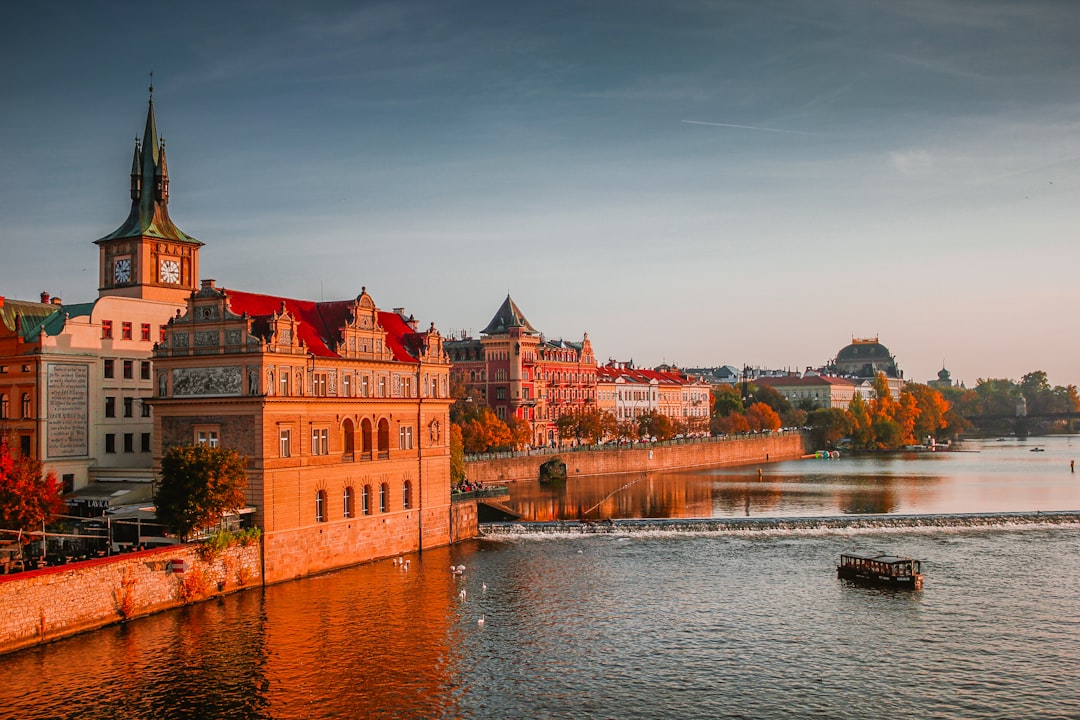
Prague gets a lot right that other European capitals struggle with. The beer is superb and absurdly cheap. The public transit is clean and logical. The light, particularly along the river in shoulder season, has a quality that makes you slow down and actually look at buildings. And that’s the problem — most visitors look at the wrong ones.
The Charles Bridge, the Astronomical Clock, the castle at sunset: yes, fine. But Prague’s most compelling architectural story is Art Nouveau, and the best of it isn’t in the Old Town at all. It’s on residential streets in Vinohrady where the façades are still painted in their original pastels. It’s along the Masarykovo nábřeží, where an entire riverside parade of apartment mansions faces the Vltava and almost nobody stops to photograph them. It’s tucked inside coffeehouses with ceramic ceilings that haven’t changed since Franz Kafka sat in them.
This is a post about the Prague you walk past. The one that starts when you leave the tourist spine and follow the tram tracks south into neighborhoods built during the most exuberant decade in European design.
Why Prague’s Art Nouveau Belongs to You
A quick note on history, but only the part that matters for what you’ll see on the street. Prague’s Art Nouveau moment arrived in the 1890s and burned bright for roughly twenty years. Two forces aligned: the city was expanding into newly annexed suburbs — Vinohrady, Žižkov, Holešovice — and the reigning architectural style happened to be the most decorative one since the Baroque.
The result is that entire neighborhoods were built in Art Nouveau from scratch. Not a building here and there. Whole blocks. When you stay in Vinohrady, you’re sleeping inside the subject of this post.
The Municipal House (Obecní dům) gets the most press, and it deserves it — Alfons Mucha painted the Mayor’s Hall, and the café downstairs is an Art Nouveau showroom. But treating it as the only stop is like visiting Paris for the Eiffel Tower and calling it a day.
The Walk: Nové Město to the Embankment
Start on Vodičkova street, just off Wenceslas Square. This is commercial Art Nouveau — shopfronts and entrance halls designed to seduce you into spending money, which they still do. The standout is Lucerna Palace, an arcade built by Václav Havel’s grandfather in the early 1900s. The mosaic floors are original. So is the ambition: Lucerna was Prague’s first reinforced-concrete building, and it still houses a cinema, a concert hall, and a music bar. Look up in the central atrium for David Černý’s absurdist sculpture — Wenceslas astride an upside-down dead horse, dangling from the glass ceiling. Prague doesn’t take itself as seriously as you’d expect.
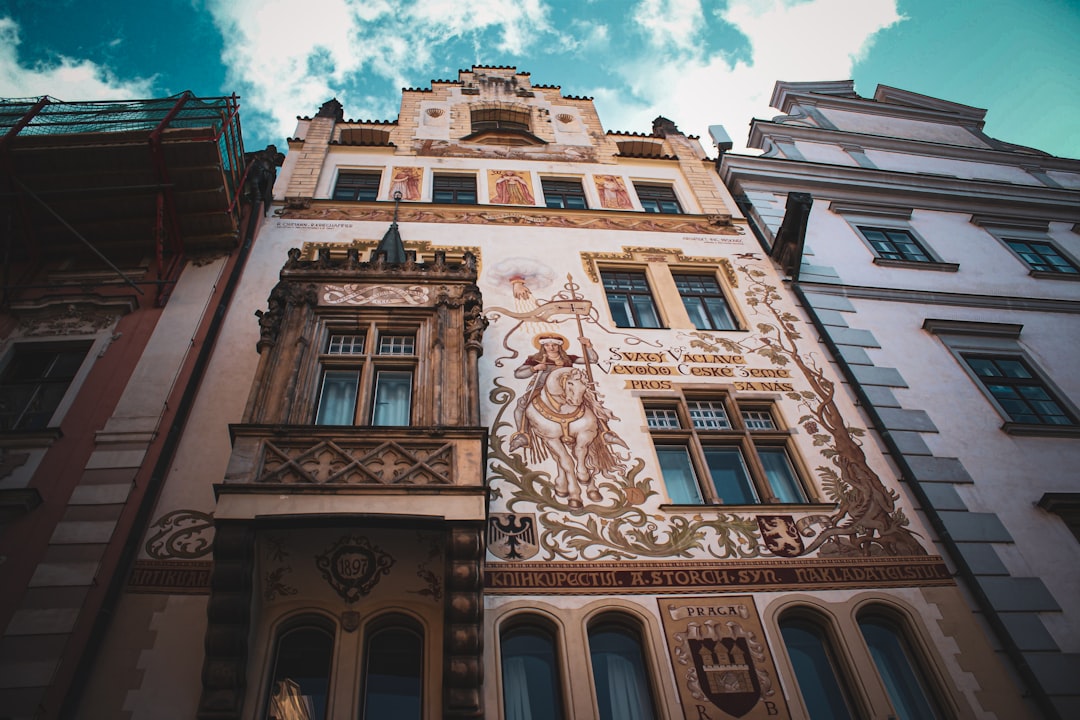
Walk south to Národní třída and you’ll pass the Topičův dům, a publishing house with one of the most photographable façades in the city. The ornamental details here reward slow observation: carved botanical motifs, tile panels, a sense of confident artistry that never crosses into excess.
Continue to the Vltava and turn left along Masarykovo nábřeží. This is the stretch worth returning to. The entire riverside between Palackého Bridge and the National Theatre is a continuous wall of late-nineteenth-century apartment buildings, most with Art Nouveau flourishes — cornices, iron balconies, decorative plasterwork in muted greens and golds. The Hlahol building stands out: it’s the headquarters of a choral society, with a painted mosaic and sculptural façade that makes you wonder why it isn’t in every Prague guidebook. It isn’t because it’s on the wrong side of the tourist map.
The best way to see all of this with context is the Art Nouveau and Cubism Walking Tour, a 3-hour guided walk with an architectural historian.
Josefov: The Art Nouveau Quarter Hiding in Plain Sight
Everyone visits Josefov for the synagogues and the old cemetery. Fair enough — they’re remarkable. But the quarter was almost entirely rebuilt in the 1890s and 1900s after a massive urban clearance program that razed most of the medieval ghetto, and the replacement architecture is overwhelmingly Art Nouveau.
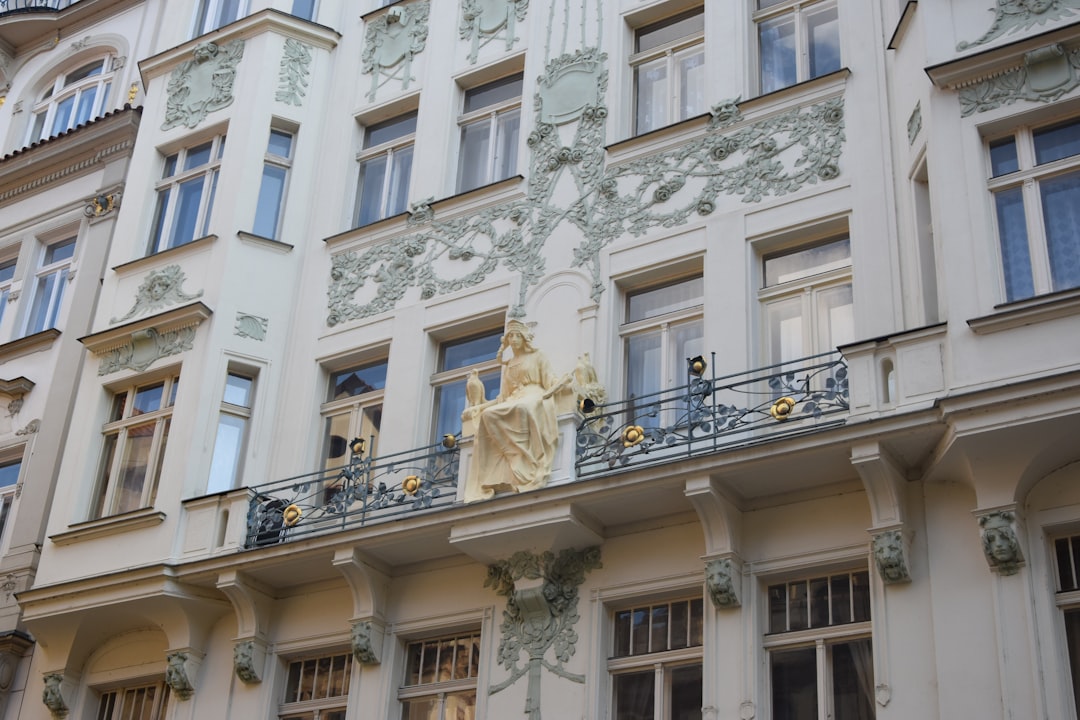
Walk the streets around Pařížská — not the luxury boutiques at street level but the buildings above them. Carved masks, floral cartouches, wrought-iron balconies, ceramic tile panels. The builders of these blocks were working in the same moment as the designers of the Municipal House, and they brought the same sensibility to residential construction. You just have to look up.
The side streets off Pařížská reward wandering. Maiselova and Široká are lined with buildings where the Art Nouveau ornamentation varies from block to block — one doorway framed with sinuous vegetal curves, the next topped by a stern classical mask. The architects were competing with each other, and the result is a district-wide gallery of decorative invention that nobody markets as such. Bring a camera with a zoom lens, or just your phone and some patience. The best details are three stories up.
The Coffeehouses: Prague’s Quiet Answer to Vienna
Vienna gets the coffeehouse reputation. Prague deserves more of it.
The kavárna — Czech for café, but carrying more cultural weight than the translation suggests — was the intellectual engine room of Prague for decades. Writers, dissidents, artists, and architects met over vídeňská káva (Viennese-style coffee) in rooms designed to make you stay. Then the communists closed most of them. What reopened after 1989 had to earn its way back, and the best ones did.
Café Louvre sits on the first floor of a building on Národní avenue and hasn’t tried to be trendy since it opened in 1902. Pastel tones, Art Nouveau furniture, large mirrors, stucco ceilings. Einstein used to play billiards here, and the billiard room is still open. The coffee is correct. The strudel is better. Order both and take the corner table by the window if it’s free — it won’t be for long.
Café Imperial is the theatrical option. The interior is a wall-to-wall Art Nouveau ceramic mosaic — tiled walls, tiled ceiling, tiled columns — designed by Jan Beneš in the early 1910s. The room appeared in a 1939 Czech film, and watching it today, you’ll notice the interior hasn’t changed. The food has been elevated under various Michelin-recommended chefs over the years, but you can still sit with just a coffee and soak in a room that cost more to tile than most buildings cost to construct.
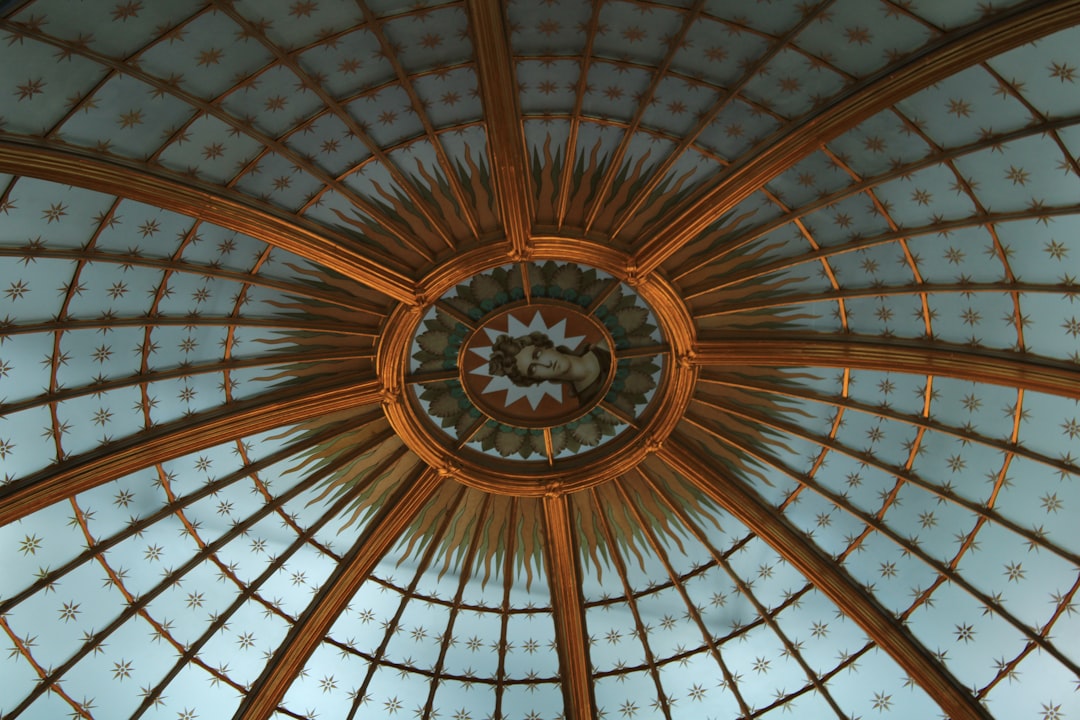
Café Savoy leans toward the Viennese model — a neo-Renaissance painted ceiling, white tablecloths, proper pastry service. It’s in Malá Strana, near Kampa Island, and it’s the one to pick if you want a quieter morning. The original opened in 1893 as a deliberate imitation of Vienna’s coffeehouses, which makes it the most honest café in Prague — it never pretended to be anything but an import done with Czech precision.
Café Slavia has the view. Opened in 1884, it faces the Vltava, the National Theatre, and Prague Castle in one sweep. It was the meeting place of the Czech avant-garde in the early twentieth century and of dissidents during the communist regime. The coffee itself isn’t the point here. The window table is.
Vinohrady: Where the Locals Live Inside Art Nouveau
If you only visit one neighborhood beyond the center, make it Vinohrady. Annexed into Prague in 1887 and built out during the height of the Art Nouveau era, it’s an entire district of residential architecture in the style — pastel façades, decorative plasterwork, balconies you want to lean on. The metro stop is Náměstí Míru, and the Church of St. Ludmila anchoring the square is a good orientation point.
The architecture hunters should seek out the Šalounova vila on Slovenská 6, the former studio of sculptor Ladislav Šaloun (who created the Jan Hus Memorial in Old Town Square). Jan Kotěra’s Jan Laichter House is nearby — it’s a bridge between Art Nouveau and early Modernism, with Northern European brick influences that feel almost Scandinavian.
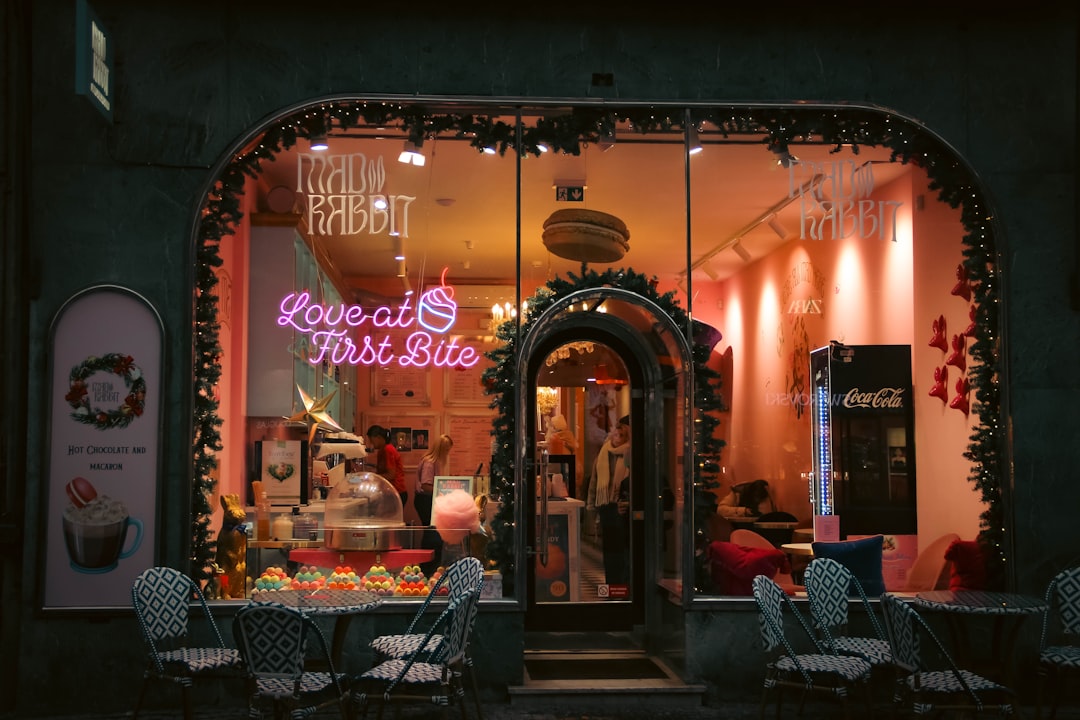
But Vinohrady isn’t just about buildings. The neighborhood kavárnas here are where contemporary Prague café culture layers itself on top of the old tradition. You’ll find third-wave roasters and natural wine bars occupying the ground floors of century-old Art Nouveau apartment blocks. It’s the kind of neighborhood that’s “almost” gentrified but still has butcher shops next to coffee bars.
Stay here if you can. The Julius Prague gets it right — well-designed rooms, central Vinohrady location, walking distance to the best cafés, and rates that feel like a steal compared to Old Town tourist hotels. → The Julius Prague on Booking.com
For a splurge: Le Palais Art Hotel is the only five-star in the neighborhood, with a terrace overlooking Nusle Valley. → Le Palais Art Hotel on Booking.com
What to Order, What to Skip
Svíčková na smetaně is the dish. Braised beef in a creamy root-vegetable sauce with bread dumplings — the dumplings exist to soak up the sauce, and good ones do their job silently. Judge a restaurant by this order.
Kulajda is a creamy mushroom-and-dill soup with a poached egg floating in it, slightly sour from vinegar. It appears on traditional kavárna menus and is worth ordering every time.
Skip the trdelník stands on the tourist streets — they’re a Hungarian import dressed up as Czech tradition. If you want real Czech pastries, ask for koláče at a neighborhood bakery.
Czech beer needs no introduction, but go beyond Pilsner Urquell. Prague’s craft scene has exploded: Matuška, Zíchovec, and Clock are names worth seeking out. Czechia consumes more beer per capita than anywhere on earth, and the locals aren’t drinking it in the Old Town.
At the coffeehouses, order a vídeňská káva (Viennese coffee) or a turecká (Turkish) for the full historic experience. The espresso is fine, but it’s not why you’re there.
A Few Things Worth Knowing
Prague’s tram system is one of the best in Europe and the fastest way to move between the neighborhoods in this post. Buy a 72-hour pass at any metro station and use it on trams, buses, and the metro — it’s valid on all three. The tram stops at Národní divadlo, Jiráskovo náměstí, and Náměstí Míru will cover most of this itinerary.
Tipping in Czech restaurants is simpler than you’d expect: round up or leave 10 percent. Service is included in the price at most kavárnas, but leaving the change is standard. Cash is still preferred at some traditional spots, though card acceptance has expanded rapidly. One thing that genuinely surprises North American visitors: Prague restaurants often seat strangers together at shared tables during busy periods, particularly at the historic cafés. Don’t take it personally — it’s the tradition.
If you’re timing your trip around the architecture-and-café angle, give yourself at least three full days. One for the Nové Město and embankment walk, one for Josefov and the coffeehouses, one for Vinohrady at a slower pace. A fourth day lets you add the Municipal House interior tour and Prague Castle without rushing. If your route continues to Berlin, its Cold War trail goes well beyond Checkpoint Charlie, and its eating is best explored one neighborhood at a time.
Ready to Plan Your Trip to Prague?
You’ve done the reading. Here’s everything you need to make it happen.
🎟️ What to Book in Advance
- Art Nouveau and Cubism Walking Tour
- Private Architecture Tour from Central Station
- Browse more Prague experiences on Viator
Some links in this post are affiliate links. If you book through them, CuriosityTrail earns a small commission at no extra cost to you. Recommendations are chosen on merit; commissions never decide what’s included.