Traverse City Beyond Cherry Season: Food, Wine, and Water Worth Every Mile
Quick Essentials
- 📍 Best Time to Visit: Late August through mid-October — the vineyards are harvesting, the restaurants are at their sharpest, and the Cherry Festival crowds have gone home.
- ✈️ Flights: Search flights to Traverse City | Direct from Detroit, Chicago, Minneapolis
- 🏨 Hotels: Browse hotels in Traverse City | Our neighborhood picks below
- 🎟️ Top Experience: Old Mission Peninsula wine tour — 10 wineries on one 18-mile road
- 🚗 Car Rental: Compare rental cars in Traverse City
- 💰 Budget Range: $180–$350 per day for a couple eating well and tasting often
Traverse City is easy to write off — the way you write off places you think you already understand. Cherry capital. Tourist town in July. Fudge shops and traffic on M-72.
It is one of the most compelling food-and-wine destinations in the Midwest. The region’s lakeshore and small-town character reward a slow, exploratory trip — and it has almost nothing to do with cherries.
Here’s what changes the picture: chefs and sommeliers are relocating to Traverse City from New York and Chicago. Not as a lifestyle downshift — as a career bet. Modern Bird made the New York Times’ 50 best restaurants list. The Cooks’ House earned its chefs James Beard finalist status. Eater named TC one of the top 15 food destinations in the country in 2026. This isn’t a quaint lakeside town with nice restaurants. This is a food scene that happens to be in one of the most beautiful settings in America.
The Food Scene That Earned Its Reputation
The thing about Traverse City’s restaurants is that they don’t try to be anything other than where they are. The ingredients come from the farms and orchards and lake within an hour’s drive, and the chefs know exactly what to do with them.
Modern Bird is the one you’ve probably heard about if you follow food media. It deserves the attention — this is serious cooking in a town of 15,000 people, and the fact that it works says everything about how the local food economy has matured. Order the whitefish — it’s an outstanding preparation.
Trattoria Stella sits inside the Village at Grand Traverse Commons, which I’ll get to in a moment because the setting alone is worth a section. The restaurant is Italian by framework but northern Michigan by ingredient, and Advanced Sommelier Amanda Danielson pairs everything with local wines in a way that makes you wonder why more Michigan restaurants don’t do this. It’s the kind of restaurant where you stay longer than you planned to. That’s the best thing a restaurant can do.
The Cooks’ House is smaller, more personal — chefs Jennifer Blakeslee and Eric Patterson were named James Beard finalists in 2025, and you feel that level of attention in every plate. American Spoon, founded here and still here, is the place to load up on cherry preserves and cherry salsa that actually earn their reputation. Left Foot Charley is downtown, in the Village, and doubles as both a winery and the kind of gathering place where locals and visitors end up at the same tables.
And the whitefish. I need to say more about the whitefish. It’s from Grand Traverse Bay, it’s on every menu worth sitting down at, and it doesn’t taste like this anywhere else. Smoked, pan-fried, or in a dip — order it however it comes.
Two Peninsulas, Fifty Wineries
Traverse City’s wine region splits into two peninsulas that jut into Grand Traverse Bay like outstretched fingers, and choosing between them is the first pleasant decision you’ll make.
Old Mission Peninsula is the narrow one — 18 miles long, ten wineries, a single road running its length with the bay visible on both sides. The drive is beautiful in a way that doesn’t need embellishment. The microclimate here sits on the 45th parallel, the same latitude as Bordeaux, and the cool-climate Rieslings and Pinot Noirs are increasingly world-class. Mari Vineyards has a $12 million Tuscan-inspired estate that sounds excessive until you’re standing in it, and then it just feels like someone who loves wine built exactly the place they wanted. Book an Old Mission Peninsula wine tour
Leelanau Peninsula is broader, more pastoral, with 25-plus tasting rooms spread across rolling hills. It feels less curated than Old Mission and more like actual wine country — farms between the vineyards, small towns with one-street downtowns, fruit stands that operate on the honor system. Black Star Farms is the showpiece: a 160-acre estate with an inn, restaurant, winery, hiking trails, and an equestrian center. If you want to sleep in wine country rather than commute from downtown, this is where. Check availability at Black Star Farms
The wine to seek out is Riesling — this region does it better than almost anywhere in North America. David Bos’s biodynamic bottles are worth asking about specifically. But the Cabernet Franc and Chardonnay are also strong, and there’s an increasing number of natural winemakers who are making interesting, sometimes unusual things with these grapes. Bryan Ulbrich at Left Foot Charley is the one to start with if you’re curious about that side of things. Explore the Leelanau Peninsula wine trail
The Water That Makes It All Work
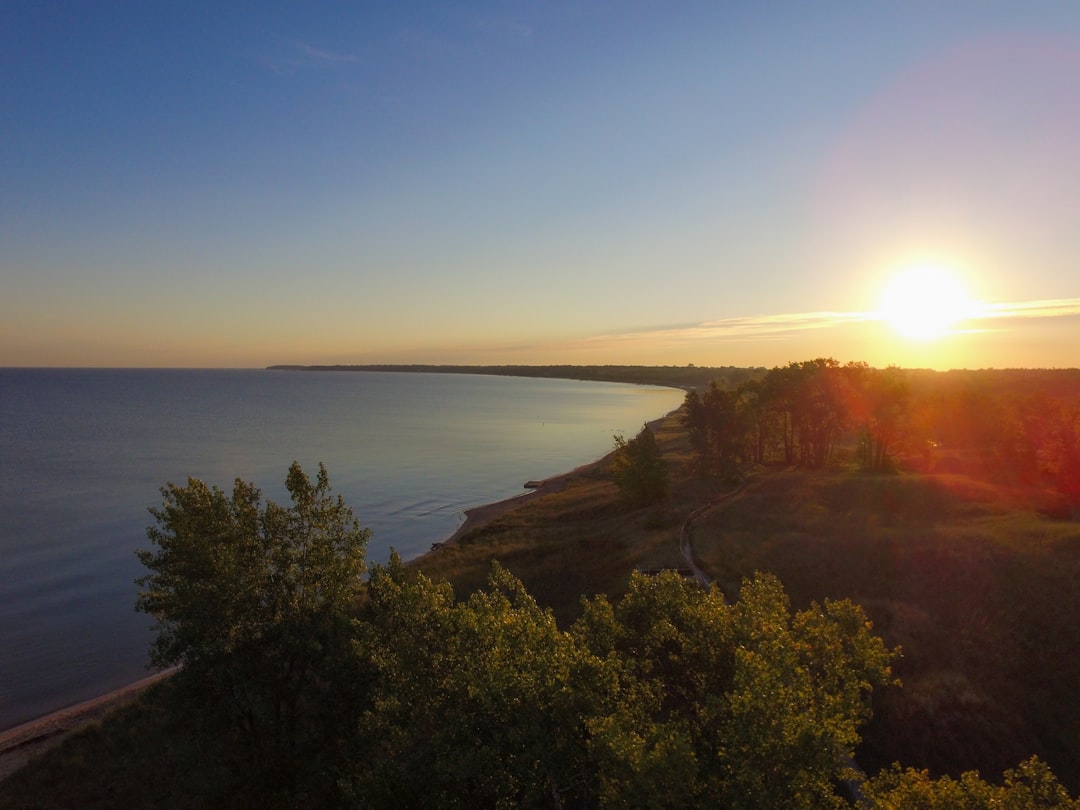
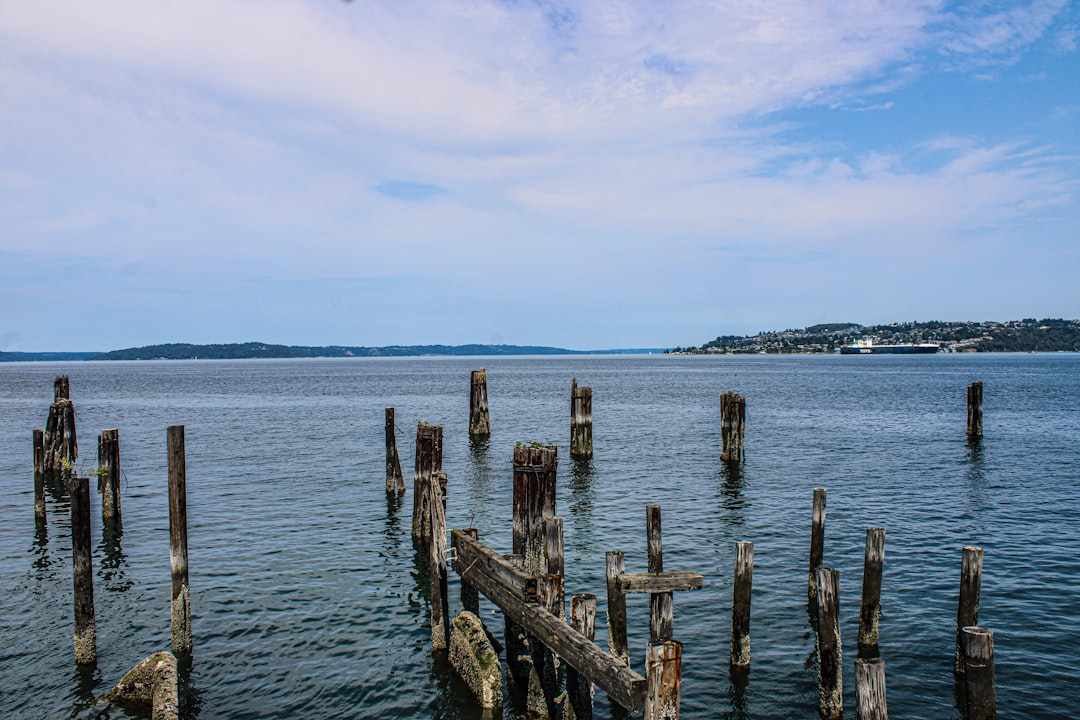
You can visit Traverse City for the food and wine alone, and plenty of people do. But ignoring the water would be like visiting Napa and never noticing the mountains. Grand Traverse Bay is the reason everything here exists — the microclimate, the agriculture, the town’s entire personality.
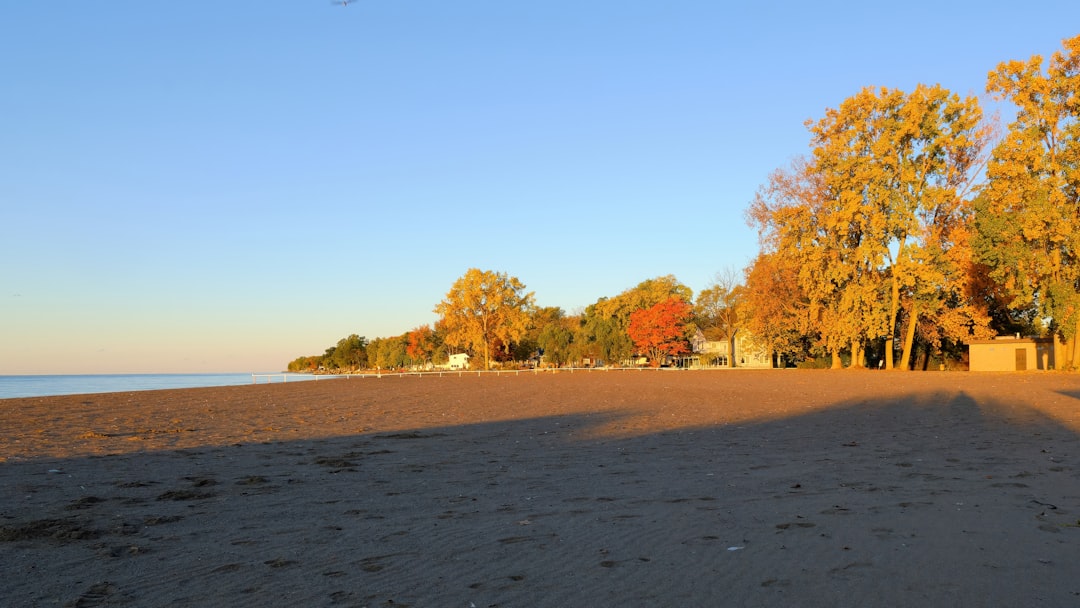
The beaches are the biggest surprise. Expect more than pleasant but unremarkable freshwater shoreline: soft white sand and water so clear it looks Caribbean in the right light. Good Housekeeping named TC one of the best beach towns in North America in 2026.
Clinch Park is the downtown waterfront — easy to walk to from Front Street, good for a morning stroll or an afternoon sitting on the sand doing very little. Bryant Park, a bit further west, is quieter and has better sunset views. If you want to get on the water itself, a sunset sail on Grand Traverse Bay is one of those experiences that sounds touristy until you’re actually on the boat, the sun going down behind the Leelanau Peninsula, and you understand why people move here. Book a Grand Traverse Bay sunset sail
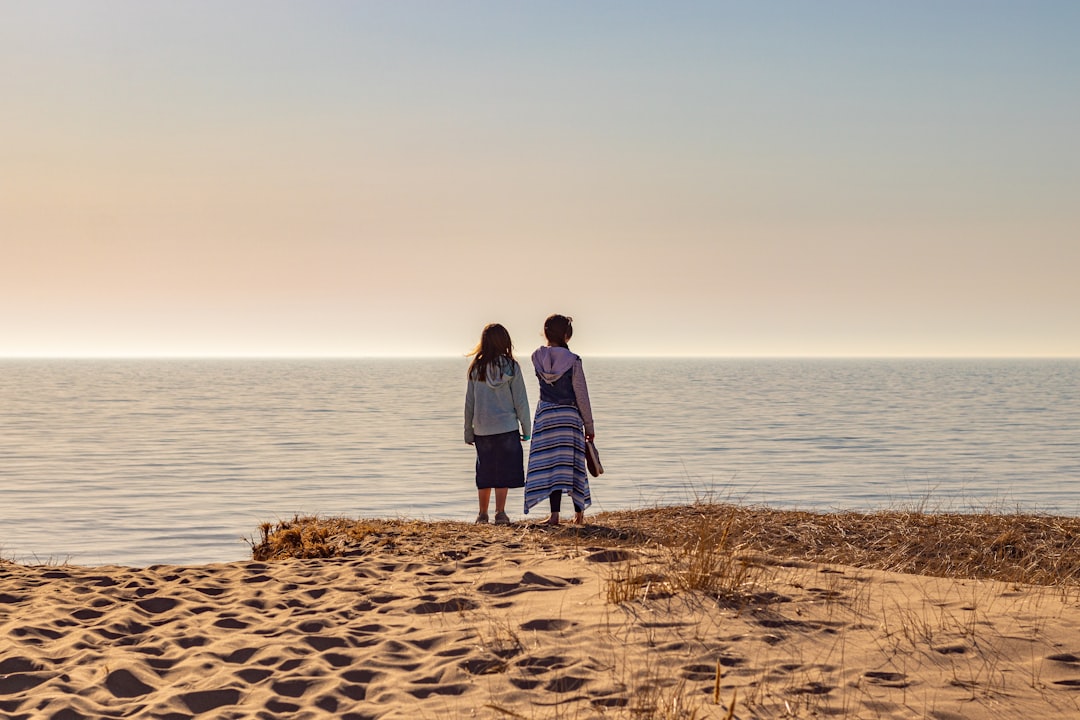
Sleeping Bear Dunes National Lakeshore is thirty minutes west and worth every one of them. Sixty-four miles of beaches, coves, islands, and sand dunes perched up to 400 feet above Lake Michigan. The Pierce Stocking Scenic Drive is the accessible way in — you don’t need to be a hiker to appreciate it, and it suits the scenic-drive-and-short-walk crowd. The overlook at Stop 9 is the kind of view that makes you go quiet for a minute.
The Village at Grand Traverse Commons
This is the thing most visitors miss entirely, and it might be the most interesting thing about Traverse City.
The Village is a former state psychiatric hospital campus — a collection of Victorian Italianate buildings designed by the same architect who did the Smithsonian Castle. In the early 2000s, the entire campus was converted into a mixed-use development of restaurants, shops, galleries, wineries, and residences. The architecture is striking. The adaptive reuse is thoughtful. And the result is a walkable neighborhood that feels nothing like a mall and everything like a place with genuine history.
Trattoria Stella is here. Left Foot Charley is here. There are bookshops and galleries and a cafe worth stopping at for espresso. You could spend half a day wandering and never feel like you’ve exhausted it.
Most visitors heading straight to the wineries don’t know about the Village. That’s a mistake worth correcting.
When to Come (and When to Stay Away)
The National Cherry Festival runs July 4–11 in 2026 and brings 500,000 people to a town of 15,000. If that sounds appealing, go then. If it doesn’t, you have better options.
Late May through June brings cherry blossoms and spring energy without the festival crowds. August is increasingly the prestige month: the Traverse City Food & Wine Festival runs August 19–23, with celebrity chefs, cooking demonstrations, farm tours, and wine pairings. It’s only in its second year and already feels like an event worth planning around.
September and October are, quietly, the best months. The vineyards are harvesting. The fall colors on Old Mission Peninsula are extraordinary — better than most of New England, though that’s a fighting claim. The restaurants are still open, the tourists have mostly gone, and the weather is perfect for wine tasting with the windows down. This is when Traverse City becomes most itself.
Where to Stay and What to Book
Downtown / Front Street is the right choice if you want to walk to restaurants and the waterfront. The Cambria Hotel is well-located and modern; boutique options along the bay offer water views from your room. Staying here means you can walk to Trattoria Stella and back without a car, which is worth everything. Browse downtown Traverse City hotels
East Munson Avenue is the waterfront strip east of downtown — quieter, with some of the best bay views in town. The Bayshore Resort is solid for couples who want the water without the bustle. See waterfront hotels on East Munson
Old Mission Peninsula puts you in wine country. Black Star Farms on the Leelanau side is the most complete experience — inn, restaurant, winery, trails — but it means driving to everything else. Worth it if wine is the primary reason you’re here. Check Black Star Farms availability
Plan Your Trip to Traverse City
Best time to visit: Late August through mid-October — harvest season on the peninsulas, fall colors, and the sharpest version of the food scene without the summer crowds.
✈️ Getting There
Search flights to Traverse City (TVC) on Skyscanner
🏨 Where to Stay
- Downtown Traverse City hotels — Walking distance to restaurants, waterfront, and the Village at Grand Traverse Commons
- Black Star Farms — 160-acre wine-country estate with its own inn, restaurant, and tasting room
🎟️ What to Book in Advance
📦 Pack Right
Insulated wine tumbler — Some peninsula tasting rooms are outdoors, and you’ll want one.
Some links in this post are affiliate links. If you book through them, CuriosityTrail earns a small commission at no extra cost to you. Recommendations are chosen on merit; commissions never decide what’s included.